
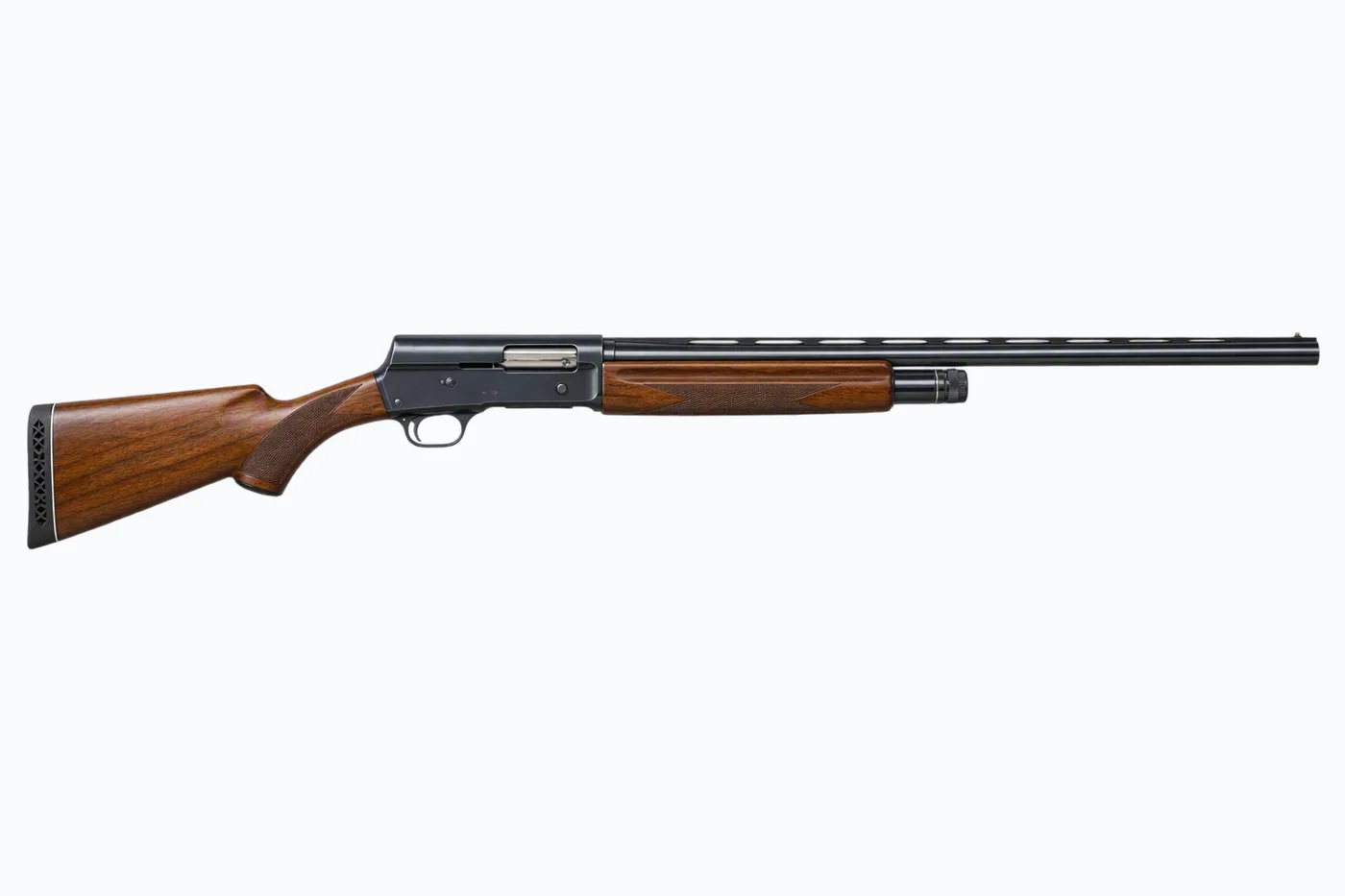
Browning · Shotgun
Browning Auto-5
Long recoil · 12 Gauge · introduced 1902
Also known as Auto-5, A-5, Automatic Five
About the Browning Auto-5
The Browning Auto-5 is the first successful semi-automatic shotgun ever produced, designed by John Moses Browning and patented in 1898, with full-scale production commencing in 1902 at Fabrique Nationale d'Herstal (FN) in Belgium. Browning himself considered it his finest achievement, and it introduced the long-recoil operating system that still bears his name as the archetypal implementation of the technique. The action cycles when both the barrel and bolt travel rearward together for the full length of the shell, approximately 70 millimeters, before the bolt is held back, the barrel returns forward ejecting the spent hull, and the bolt then slams forward chambering a fresh round from the four-round under-barrel tubular magazine. The Auto-5 is instantly recognizable by its distinctive 'humpback' receiver profile -- a straight, flat-topped receiver that made sighting along the barrel exceptionally natural and which became the defining visual signature of the design. Chambered primarily in 12 gauge but also produced in 16 gauge (the beloved Sweet Sixteen) and 20 gauge (the Light Twenty), the Auto-5 employed adjustable friction rings surrounding the recoil spring that allowed the shooter to tune the action for light field loads or heavy magnum loads. In an era dominated by pump-action and break-action shotguns, the Auto-5's ability to fire five shells as fast as the trigger could be pulled gave it an overwhelming advantage in the field, the trap range, and eventually on the battlefield. Licensed production in the United States by Remington Arms as the Model 11 (1905-1947) produced approximately 850,000 units and was widely issued as a combat shotgun in both World Wars, while Savage Arms produced the Model 720 under license from 1930 to 1949. The Auto-5 remained in continuous production at FN and later at Miroku in Japan from 1975 onward, until the final 'Final Tribute' commemorative models rolled off the line in 1998 -- a 97-year production run, the longest of any sporting firearm design in history. Over 2.75 million Belgian-built Auto-5s were produced, with millions more licensed copies from Remington, Savage, Breda, and others.
In January 1902, John Moses Browning walked into Winchester's offices in New Haven after a 19-year partnership to offer them his revolutionary self-loading shotgun -- and walked out forever when they refused to pay per-unit royalties. He went to Remington next; while waiting in the outer office, Remington's president collapsed and died of a heart attack. Within weeks Browning was aboard a steamship to Belgium, where FN Herstal accepted his terms and launched the design that defined the semi-automatic shotgun for the next 97 years -- the longest continuous production run of any sporting firearm in history and the origin of Browning's century-long partnership with FN.
Browning Auto-5 specifications
General
- Type
- Shotgun
- Action
- Long recoil
- Firing mechanism
- Hammer-fired
- Trigger
- Single stage
- Calibres
- 12 Gauge, 16 Gauge, 20 Gauge
- Magazine capacity
- 4 rounds
- Magazine
- Tubular magazine
Dimensions
- Barrel length
- 711 mm (28.0 in)
- Overall length
- 1270 mm (50.0 in)
- Weight (empty)
- 3.86 kg (8.50 lb)
Barrel
- Rifling
- None
Materials
- Barrel
- Steel
- Receiver / frame
- Steel
- Stock
- Wood
- Finish
- blued
Performance
- Muzzle velocity (typical)
- 396 m/s (1299 fps)
- Muzzle energy (typical)
- 2500 J (1844 ft·lb)
- Effective range
- 40 m
History
- Introduced
- 1902
- Discontinued
- 1998
- Production status
- Discontinued
- Country of origin
- BE
- Designer
- John Moses Browning
Available calibres
Features
- Humpback receiver
- Long recoil action
- Friction ring recoil brake
- Under barrel tube magazine
- Magazine cutoff lever
- Bottom ejection port side
- Bottom loading
- Adjustable friction rings
- Bead front sight
- Checkered walnut stock
- Engraved receiver
- Takedown design
- Interchangeable barrels
Safety
- Crossbolt safety
- Magazine cutoff
The Auto-5 was originally offered to Winchester in 1902, but when Winchester refused to pay royalties on each unit sold (demanding a flat buyout instead), John Browning walked out of their Connecticut offices -- ending a 19-year business relationship -- and took the design to Remington in New York. Browning was waiting in the Remington president's outer office when the president died of a heart attack, so he boarded a steamship to Belgium and struck a deal with FN Herstal, establishing the partnership that would define Browning's brand for the next century. The long-recoil action requires tuning via the friction ring stack around the magazine tube: rings arranged one way for light loads, inverted for heavy magnum loads -- failing to adjust correctly could damage the stock or cause failures to cycle. The 'humpback' receiver profile is so iconic that the 2012 modern A5 retains the silhouette despite using an entirely different short-recoil Kinematic Drive action. Military trench shotgun variants featured shorter 20-inch barrels, bayonet lugs, heat shields over the barrel, and military sling swivels. The Remington Model 11 was the first autoloading shotgun manufactured in the United States and was the standard U.S. military combat and training shotgun through WWII. Clark Gable, Ernest Hemingway, and John Wayne were all prominent Auto-5 owners. FN produced the Auto-5 from 1902 to 1975 in Belgium (interrupted only by WWII German occupation), after which production moved to Miroku in Japan from 1976 until the 1998 Final Tribute run. The Auto-5 was briefly revived for commemorative production but the line remained closed after 1999.
Browning Auto-5 variants
Similar models
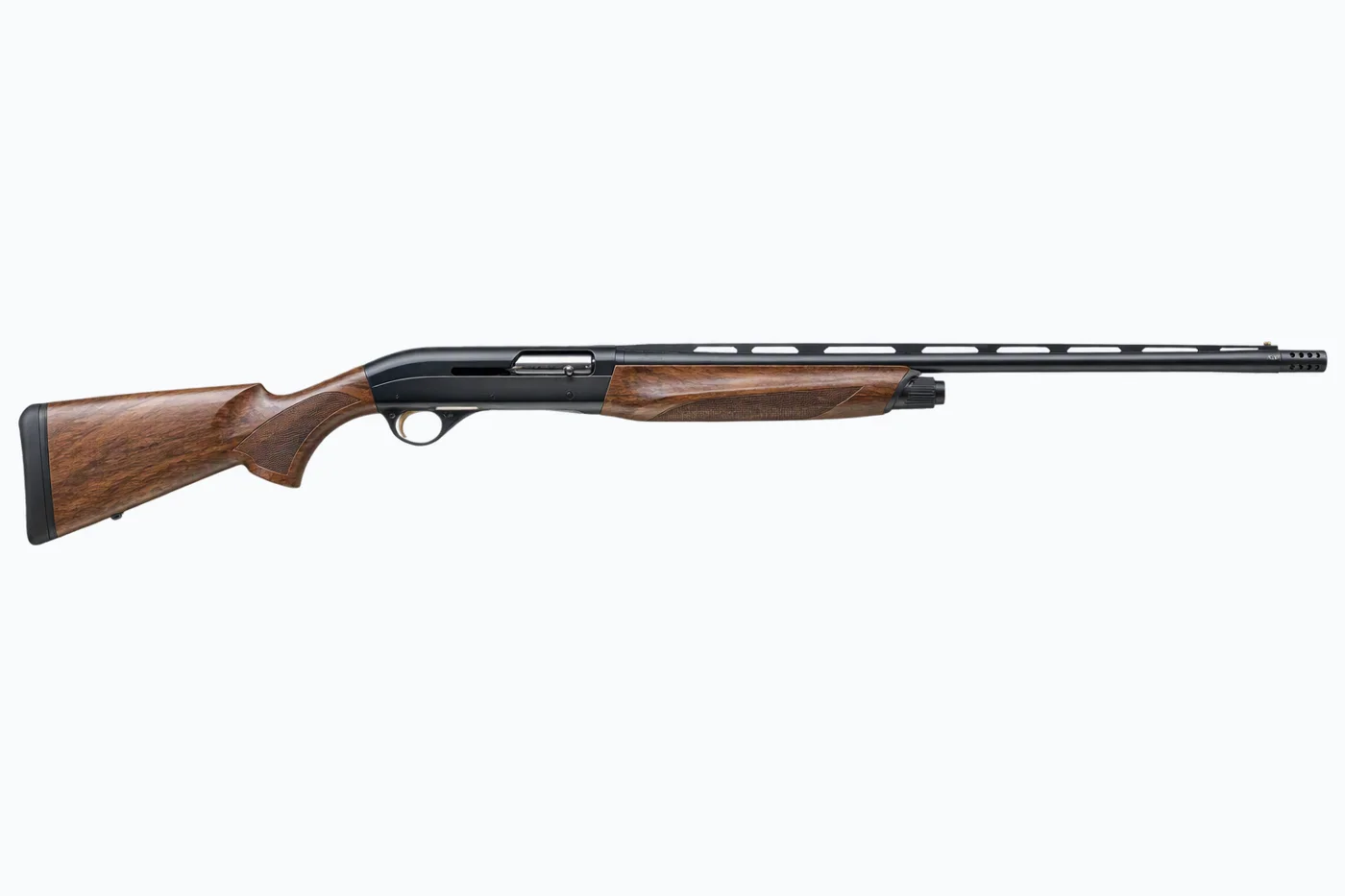
Benelli ETHOS Sport
Inertia operated · 12 Gauge
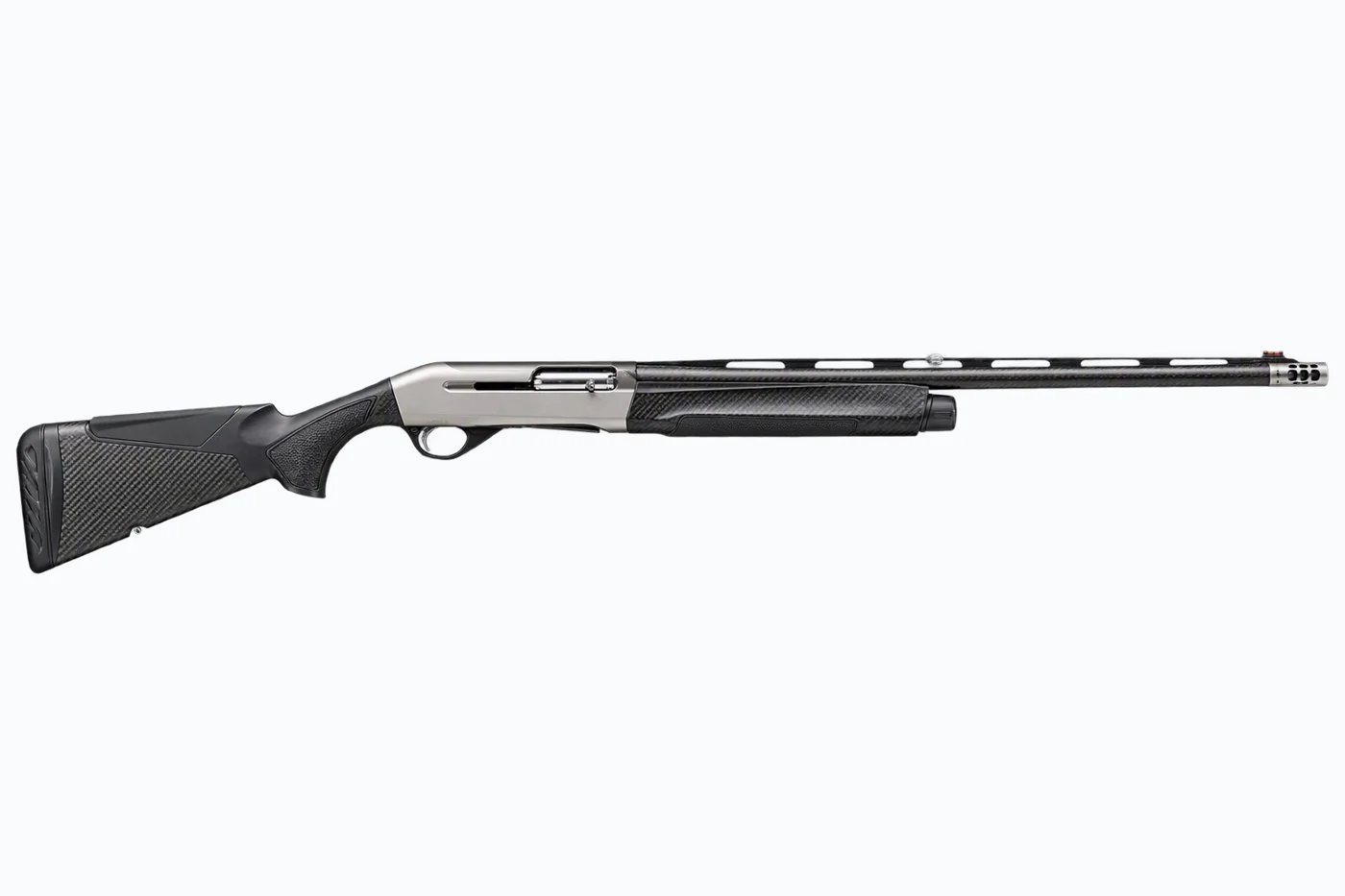
Benelli ETHOS SuperSport
Inertia operated · 12 Gauge
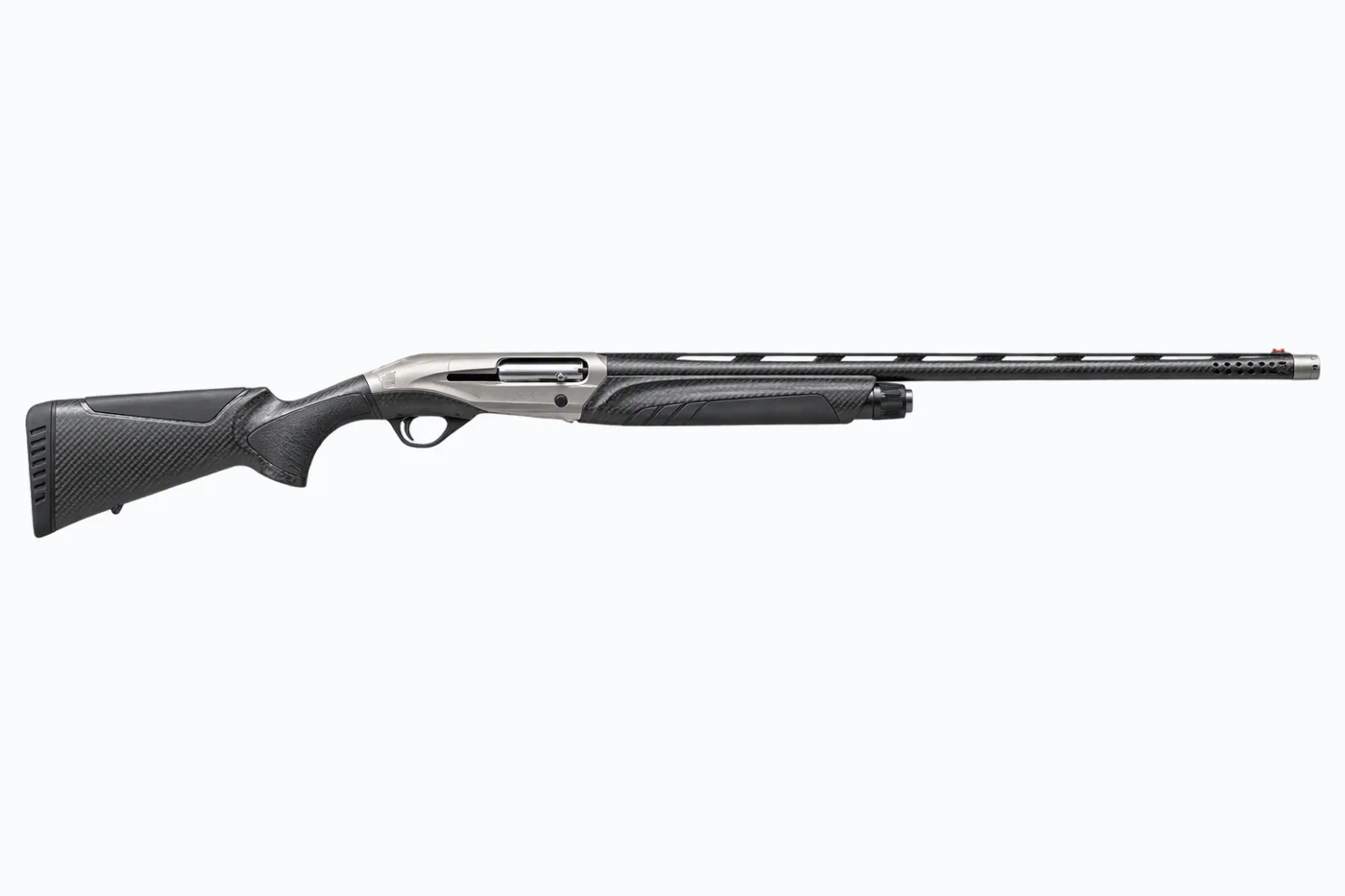
Benelli ETHOS SuperSport A.I.
Inertia operated · 12 Gauge
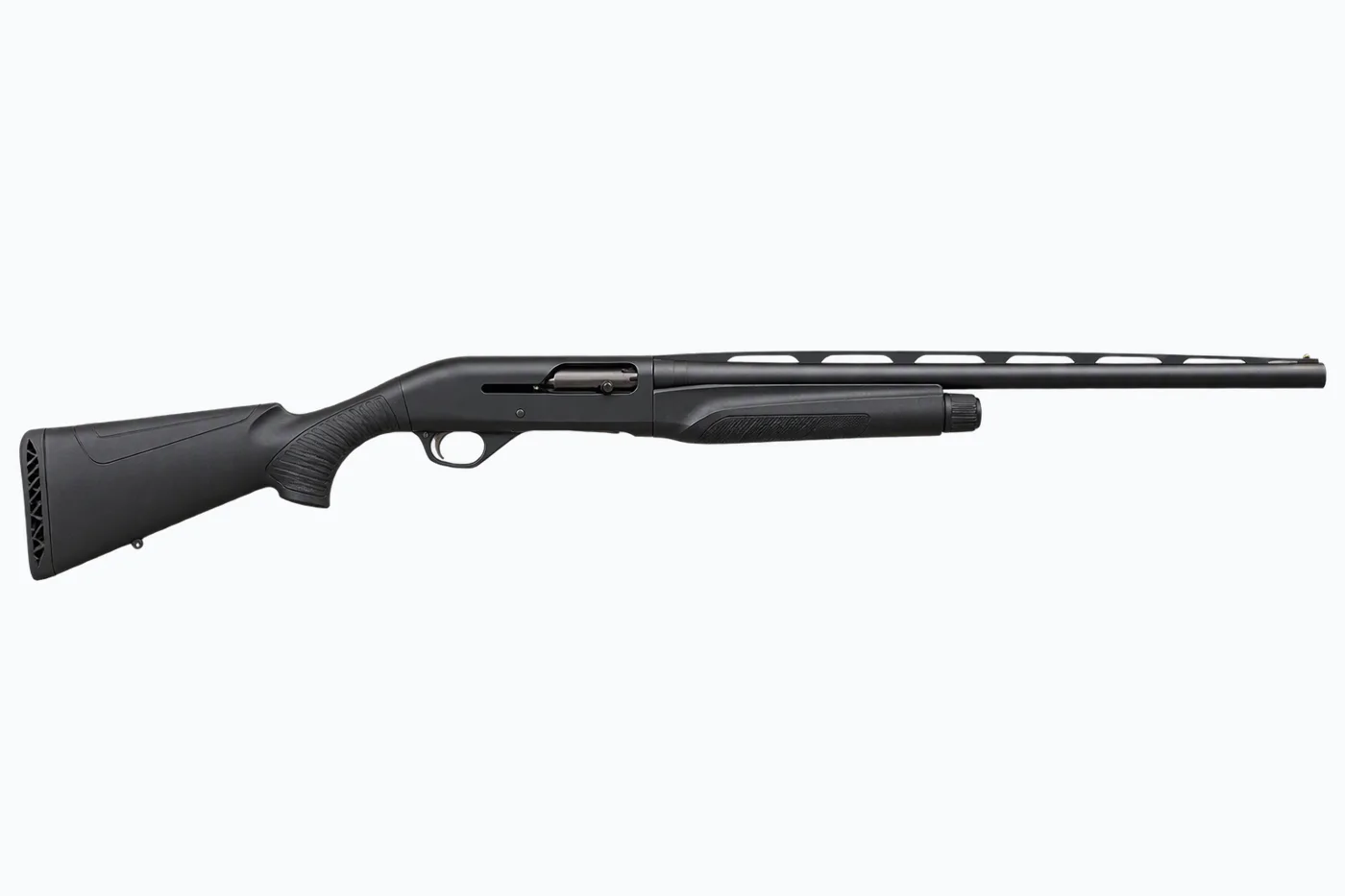
Benelli M2 Field
Inertia operated · 12 Gauge
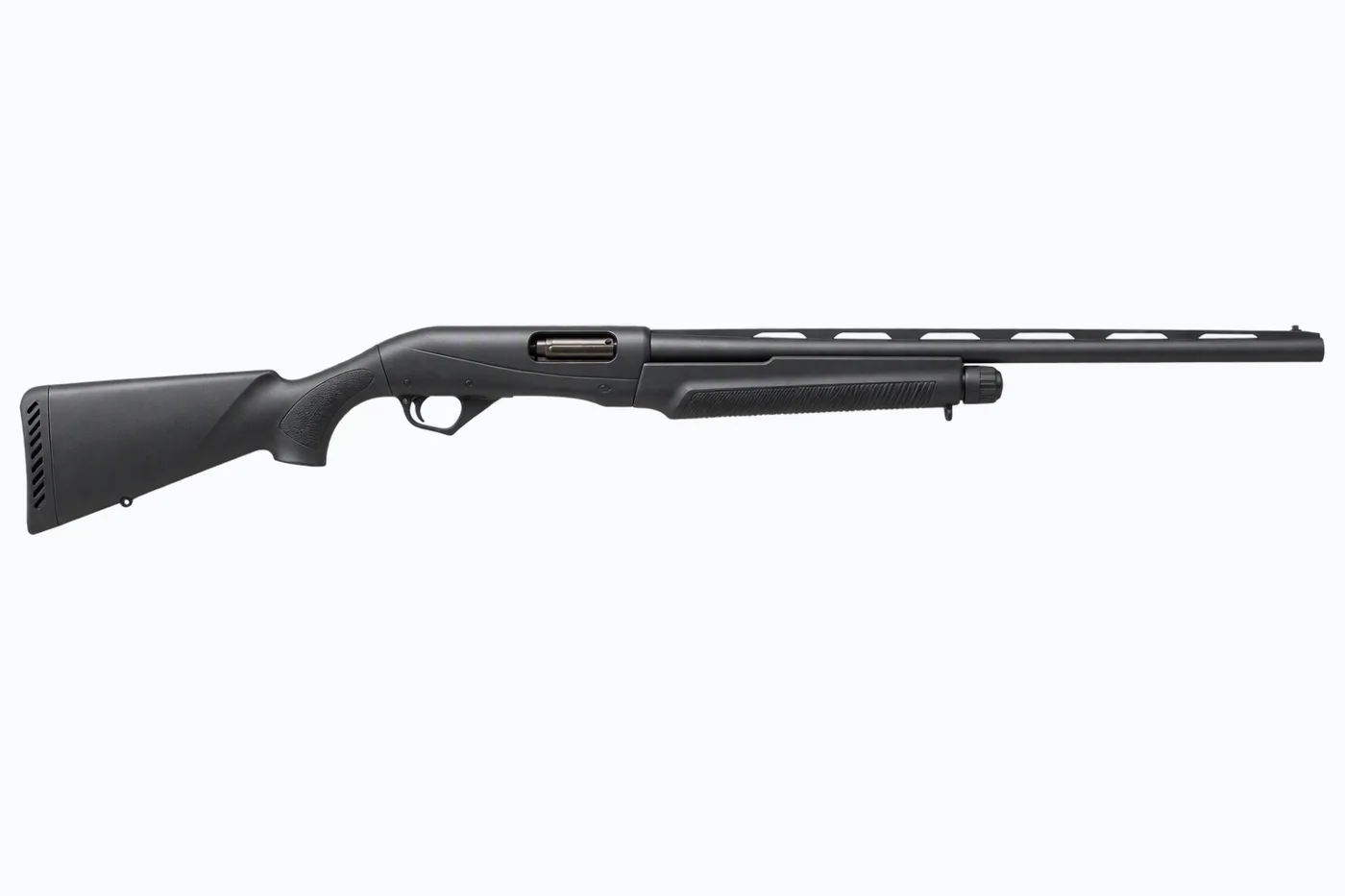
Benelli Nova
Pump action · 12 Gauge
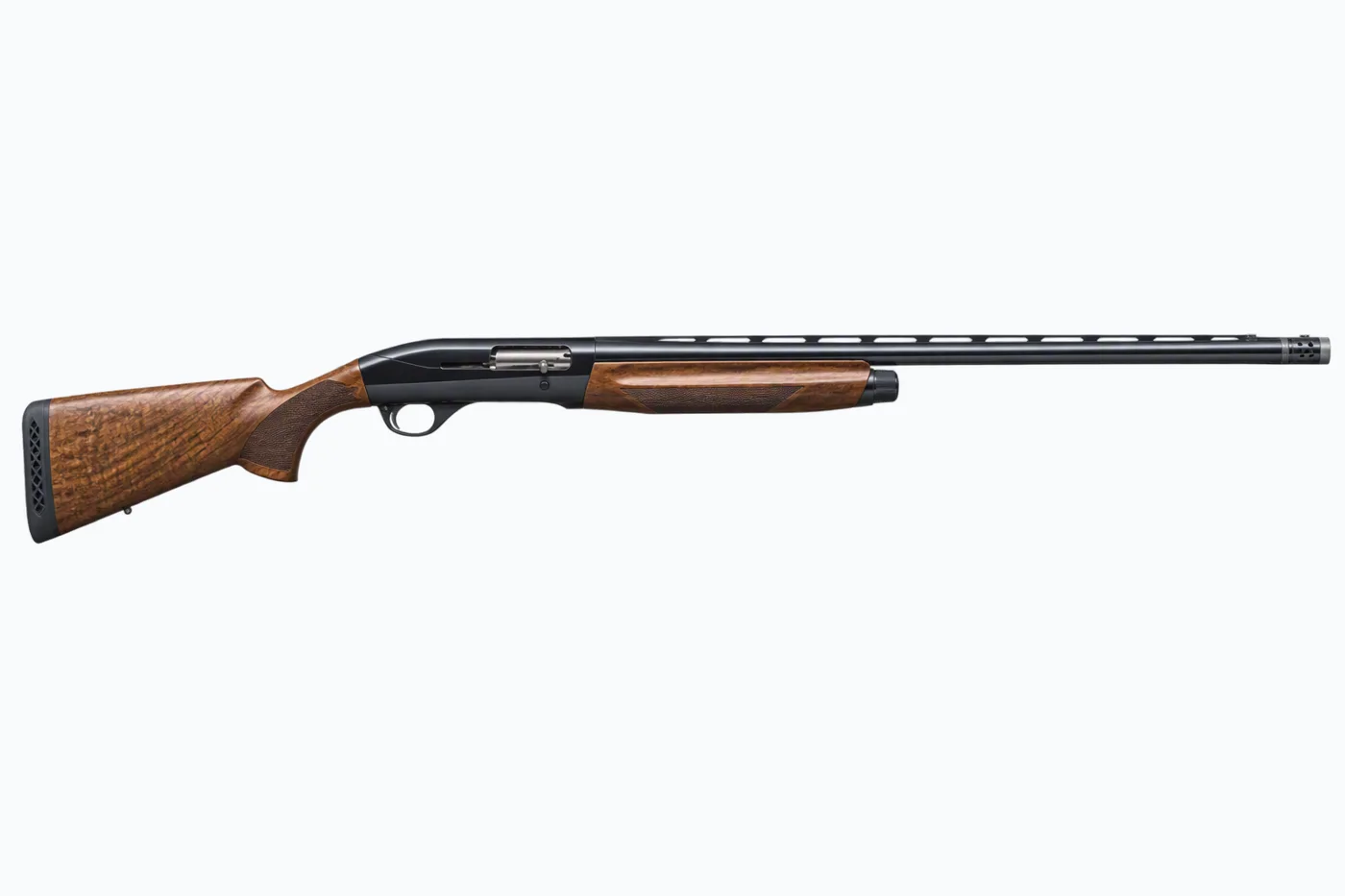
Benelli Sport II
Inertia operated · 12 Gauge