
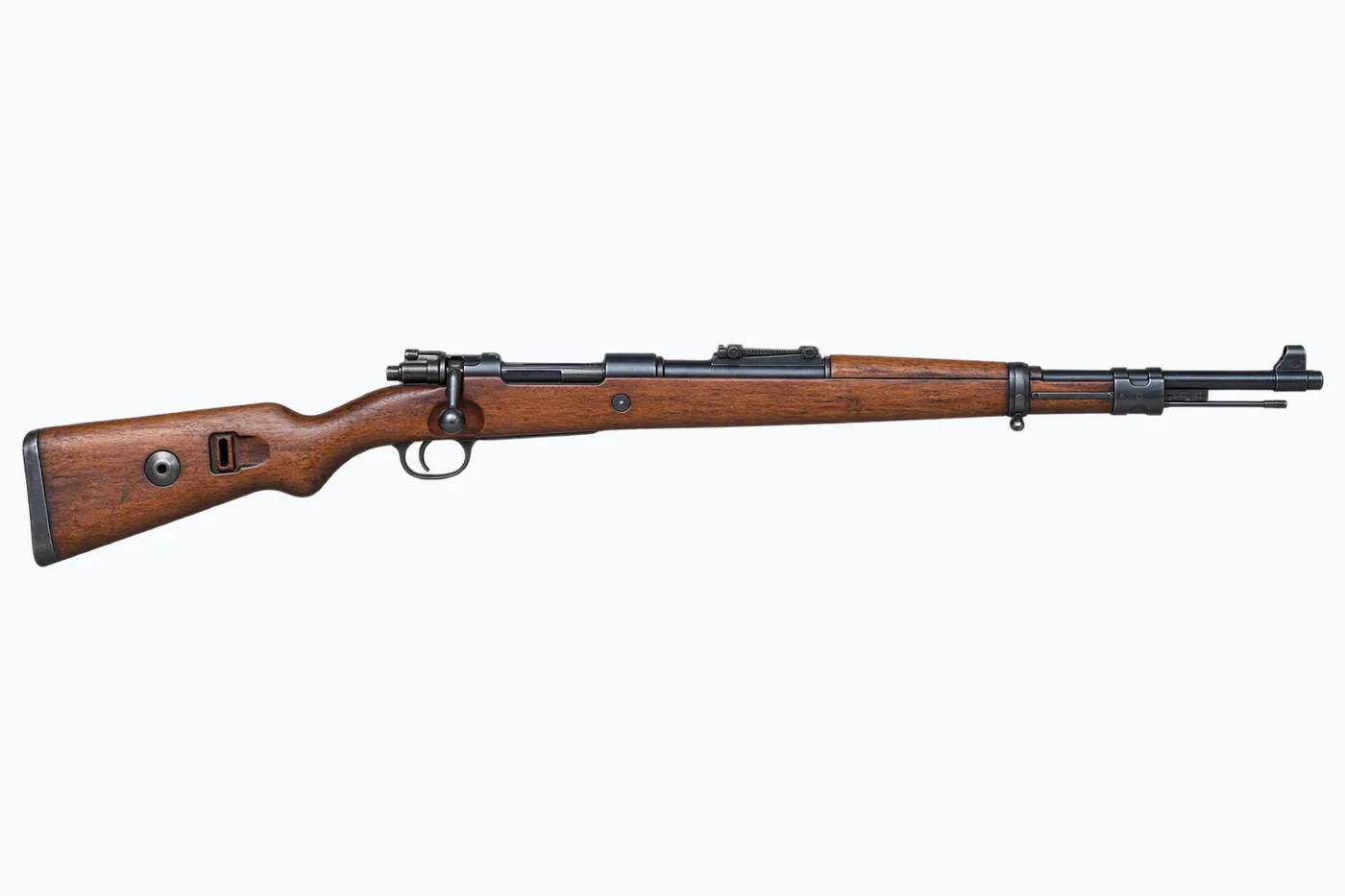
Mauser-Werke · Rifle
Karabiner 98k
Bolt action · 7.92x57mm Mauser · introduced 1935
Also known as K98k, Kar98k, Karabiner 98 kurz
About the Karabiner 98k
The Karabiner 98k is a bolt-action rifle chambered in 7.92x57mm Mauser, produced by Mauser since 1935. This German-manufactured firearm reflects the engineering traditions and quality standards of its country of origin, designed to meet the demands of both civilian and professional users in a competitive global marketplace. Featuring a 5-round magazine capacity, this rifle offers compact firepower. The striker-fired action provides a consistent trigger pull for every shot, simplifying training and reducing the manual of arms - a design philosophy that has become the dominant paradigm in modern defensive handguns. The 23.6-inch barrel maximizes accuracy potential and ballistic performance, making this an excellent choice for target shooting, competition, or field use. At 3900g (137.6 oz), this is a substantial firearm whose weight contributes to reduced felt recoil and enhanced stability during precision shooting. The steel frame provides a solid, premium feel with the durability to withstand decades of regular use and thousands of rounds. This firearm represents its manufacturer's commitment to delivering a well-engineered, reliable product that serves the needs of discerning shooters seeking quality, accuracy, and dependable performance from a proven platform.
The Kar98k's Mauser M98 bolt action was so reliable and influential that it became the basis for virtually every bolt-action sporting rifle made in the 20th century. After WWII, millions of captured Kar98ks were redistributed globally by the Soviet Union, seeing continued combat service well into the 1970s. Israel famously converted many captured examples to 7.62 NATO for its own defense forces.
Karabiner 98k specifications
General
- Type
- Rifle
- Action
- Bolt action
- Firing mechanism
- Striker-fired
- Trigger
- Single stage
- Trigger pull
- 2.8 kg (6.1 lb)
- Calibres
- 7.92x57mm Mauser
- Magazine capacity
- 5 rounds
- Magazine
- Internal
Dimensions
- Barrel length
- 600 mm (23.6 in)
- Overall length
- 1110 mm (43.7 in)
- Weight (empty)
- 3.90 kg (8.60 lb)
- Weight (loaded)
- 4.00 kg (8.82 lb)
- Sight radius
- 500 mm (19.7 in)
Barrel
- Rifling twist
- 1:9 in (240 mm)
- Rifling
- Right hand
- Grooves
- 4
Materials
- Barrel
- Steel
- Receiver / frame
- Steel
- Stock
- Wood
- Finish
- blued
Performance
- Muzzle velocity (typical)
- 760 m/s (2493 fps)
- Muzzle energy (typical)
- 3700 J (2729 ft·lb)
- Effective range
- 500 m
History
- Introduced
- 1935
- Discontinued
- 1945
- Production status
- Discontinued
- Country of origin
- DE
- Designer
- Paul Mauser
Features
- Turned down bolt handle
- Stripper clip loading
- Bayonet lug
- Iron sights
- Optics capable
- Rifle grenade capable
Safety
- Manual safety
- Cocking piece lock
In late 1944, the Kriegsmodell variant was introduced with simplified manufacturing to increase wartime production, omitting features like the bayonet lug, cleaning rod, and stock disk. The rifle could mount the Zielfernrohr 41 (ZF41) 1.5x scope or more powerful 4x scopes for sniper use. The standardized Schiessbecher grenade launcher attachment allowed firing of rifle grenades. Post-war, millions of captured Kar98k rifles were redistributed by the Soviet Union as military aid and saw service in numerous conflicts through the 1970s. Israel notably converted many to 7.62x51mm NATO. The Kar98k remains highly regarded by collectors and is still used in ceremonial roles by some militaries today. Production costs during WWII averaged 67-70 Reichsmarks per rifle.
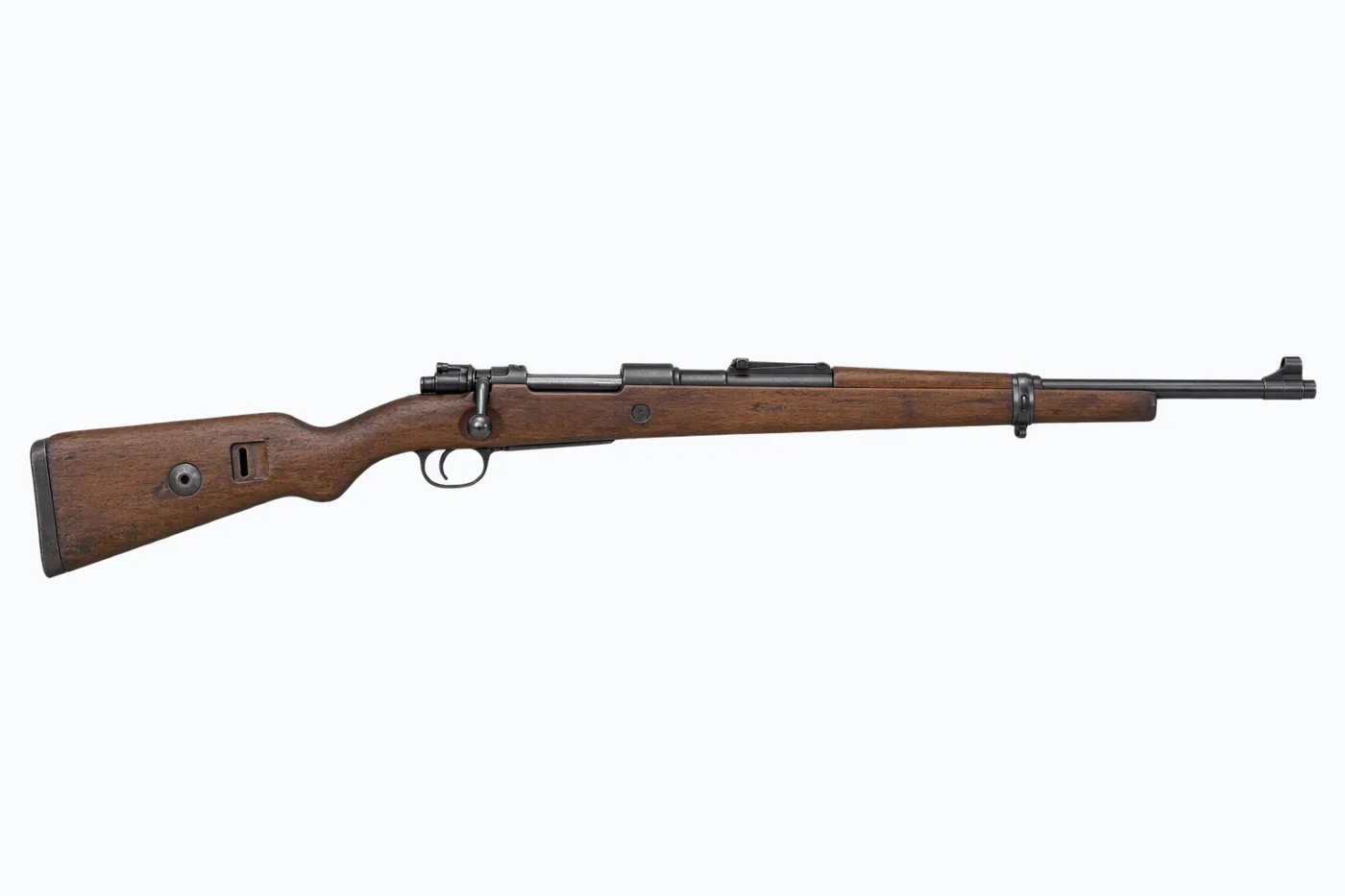
Karabiner 98k variants
Similar models
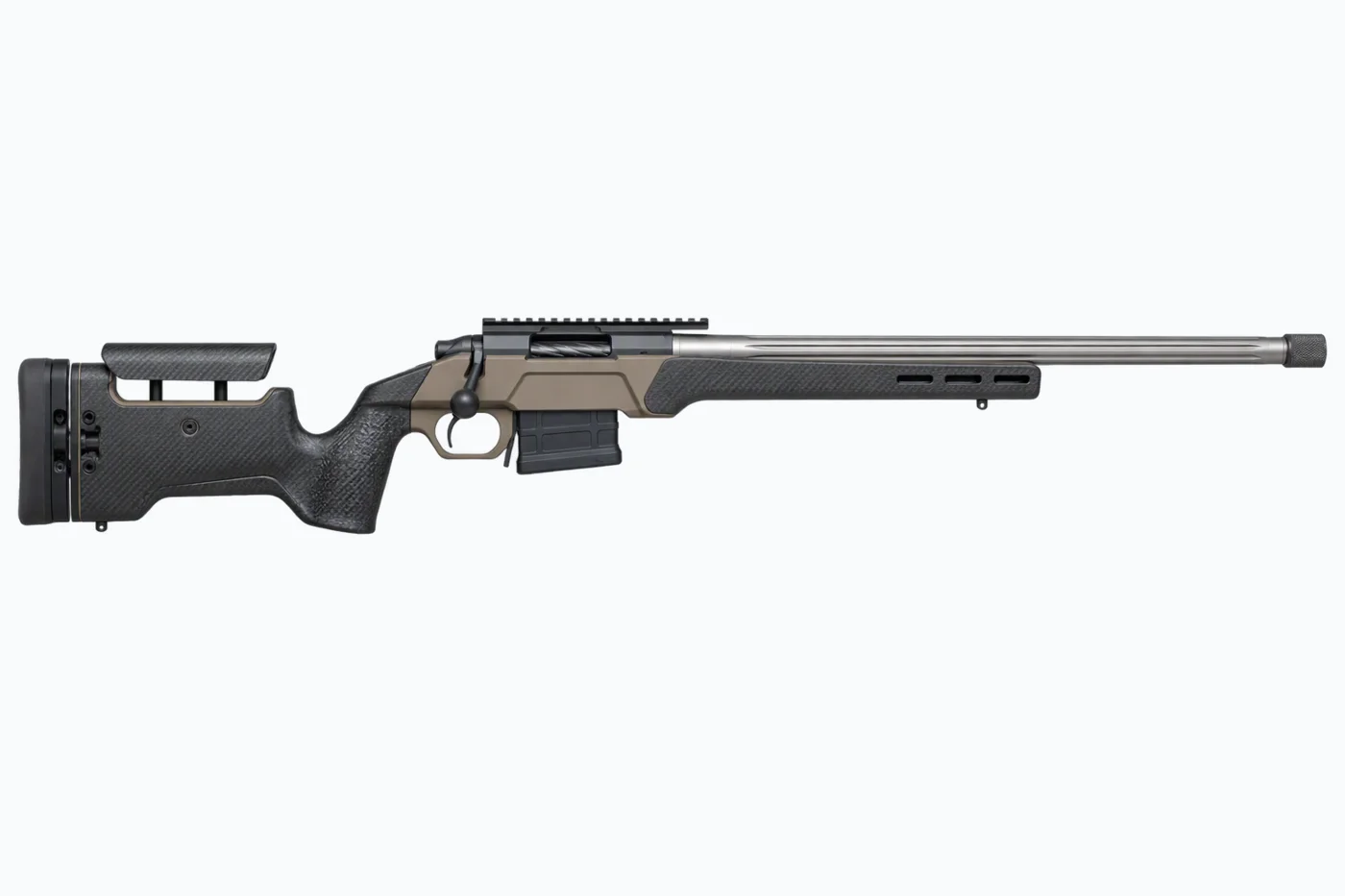
Aero Precision SOLUS Hunter
Bolt action · 6.5mm Creedmoor
Anschütz 1727 F
Bolt action · .22 Long Rifle
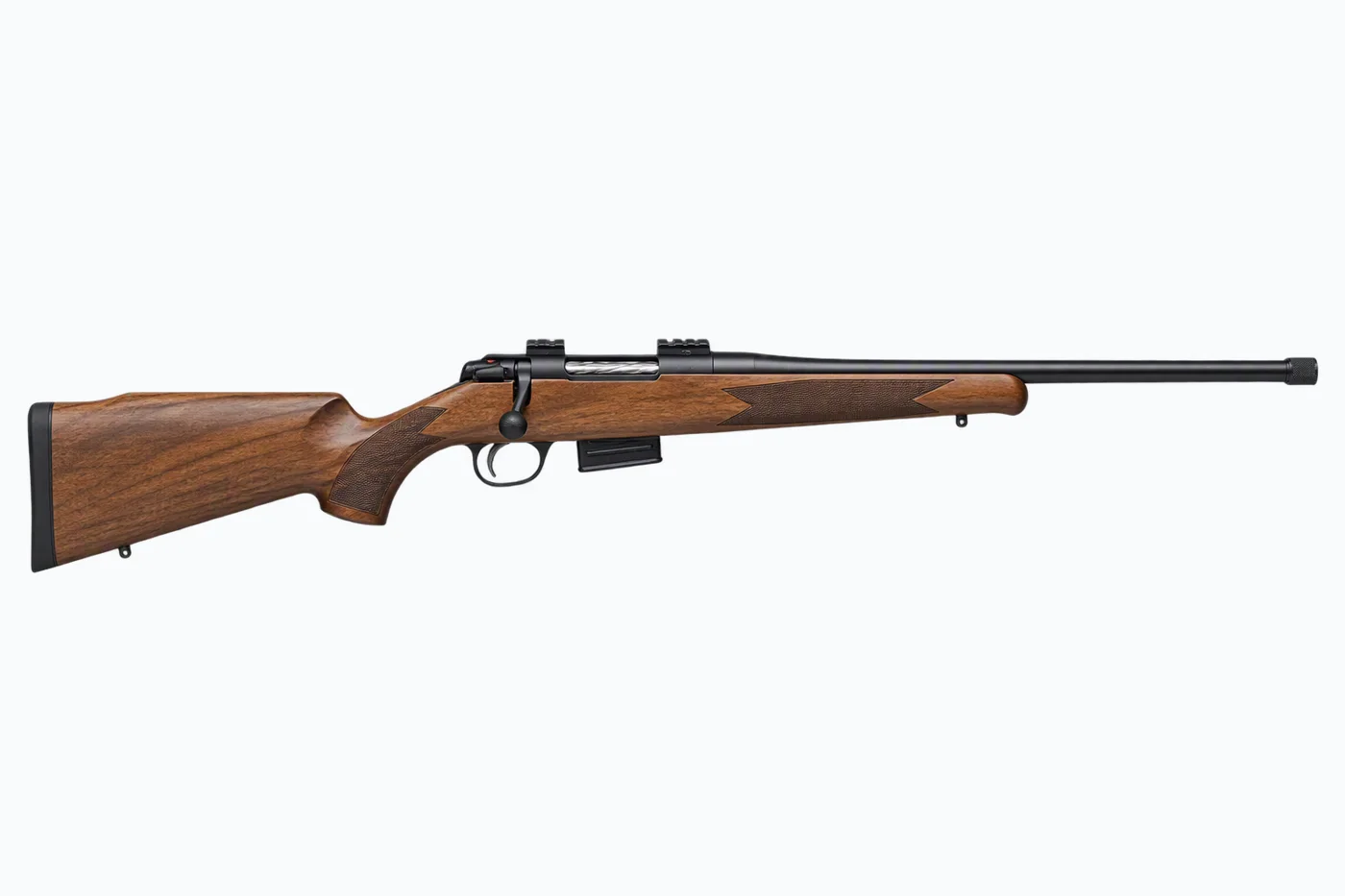
Anschütz 1771
Bolt action · .222 Remington
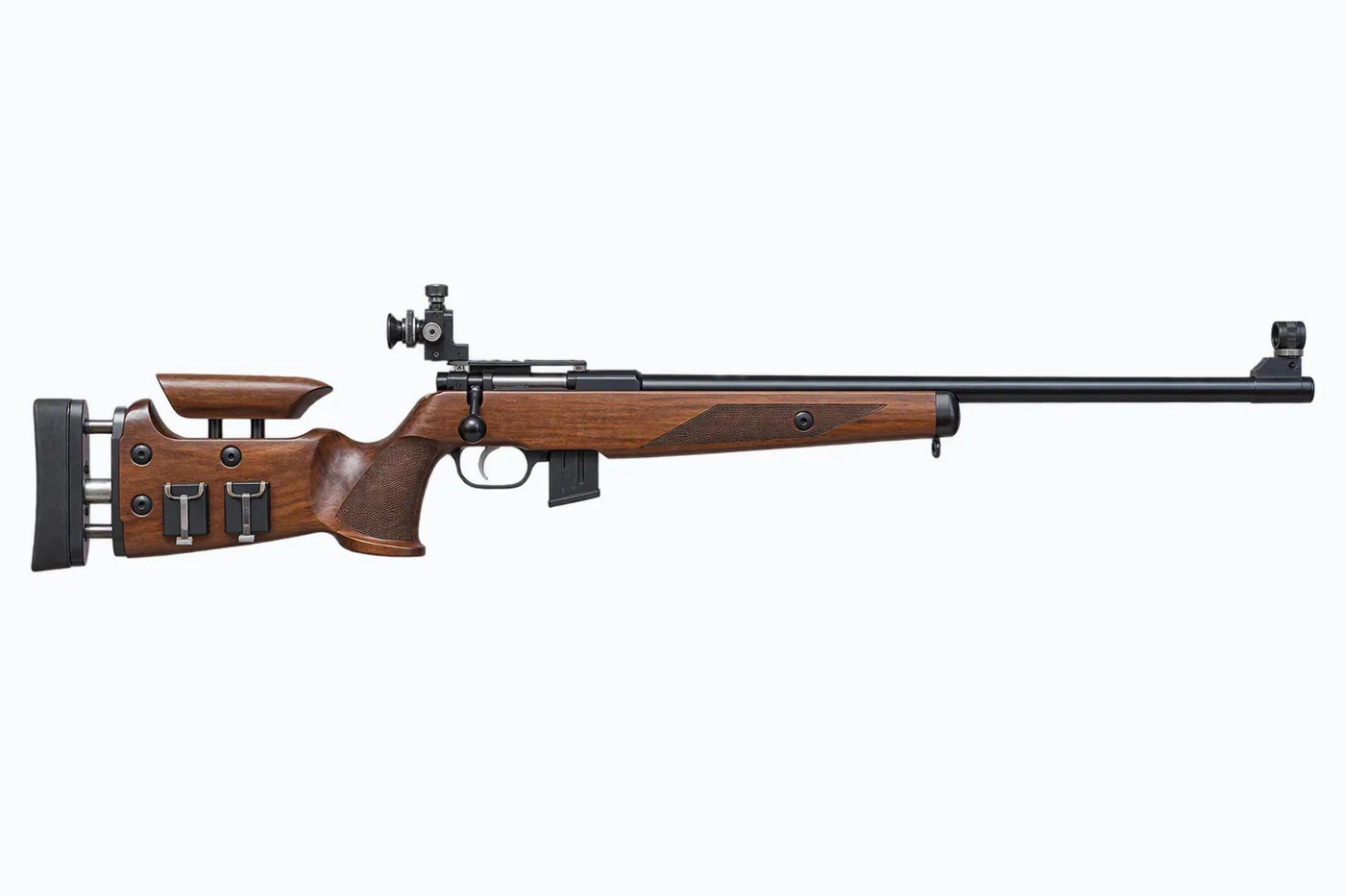
Anschütz 1827 Fortner
Bolt action · .22 Long Rifle
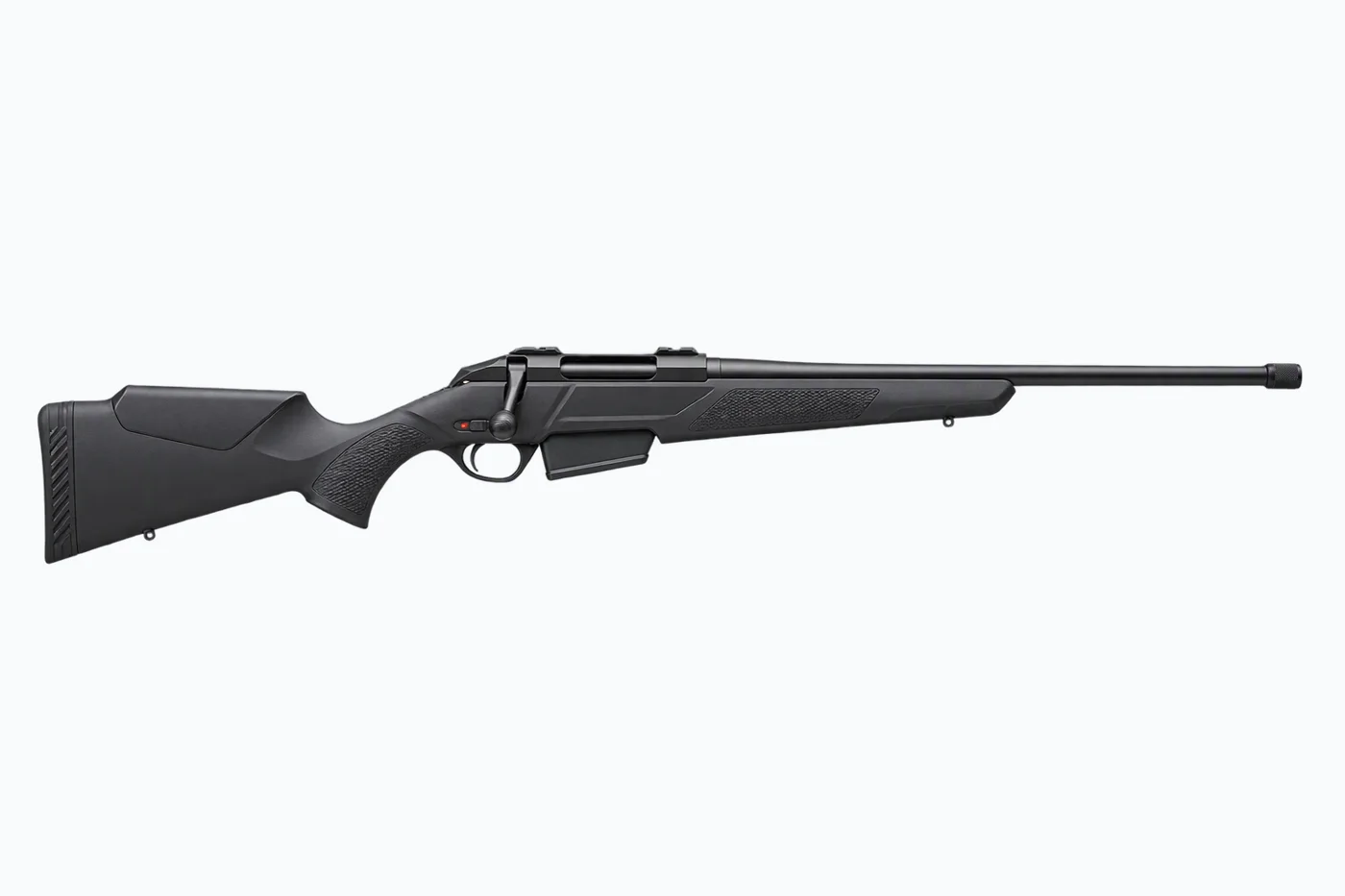
Benelli Lupo
Bolt action · .308 Winchester