
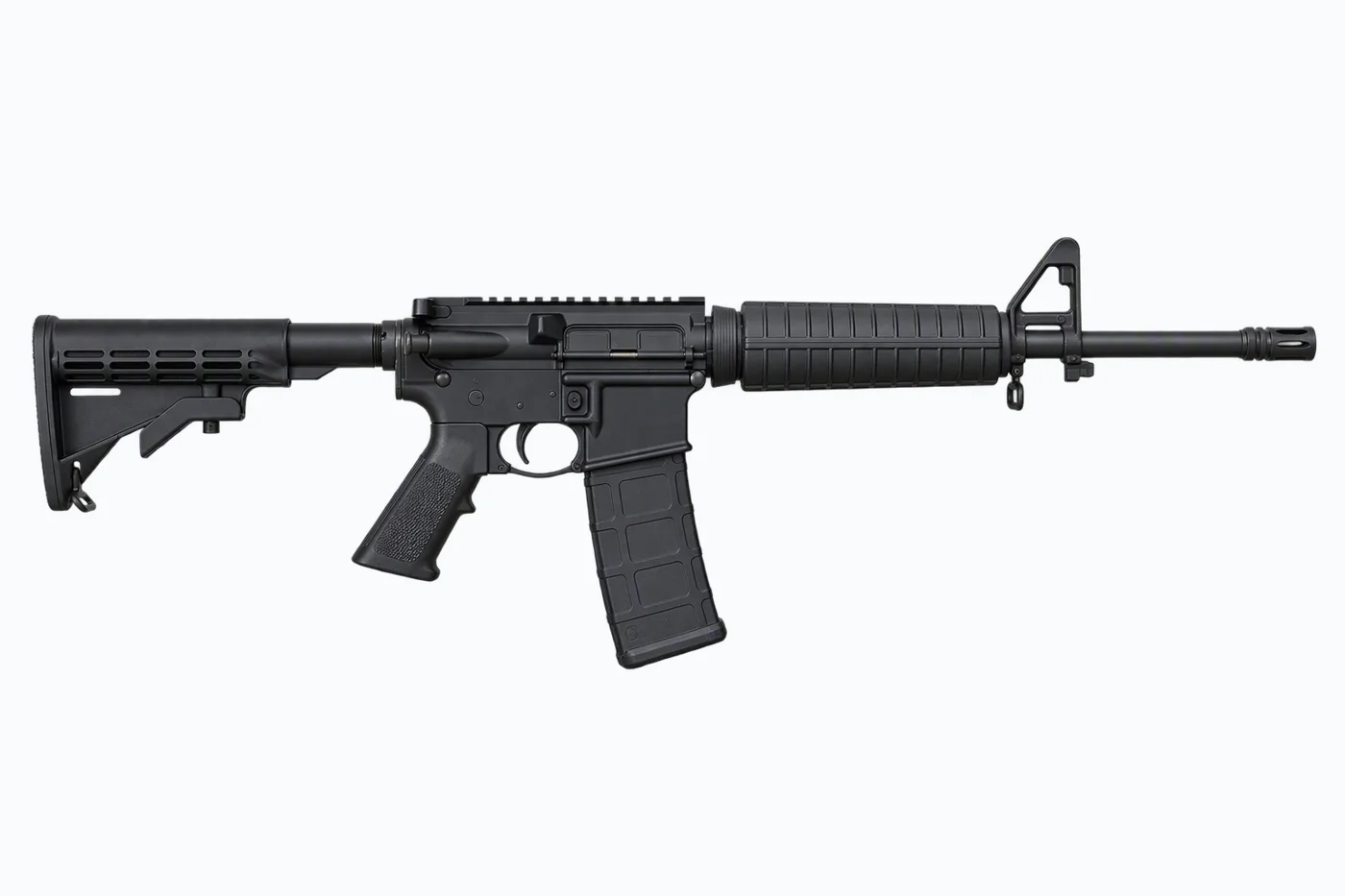
Ruger · Carbine
Ruger AR-556
Gas-operated (direct impingement) · 5.56x45mm NATO · introduced 2014
Also known as Ruger AR556, Ruger Modern Sporting Rifle, AR-556 Model 8500
About the Ruger AR-556
The Ruger AR-556 is an entry-level AR-15 carbine introduced in 2014 as Ruger's first foray into the modern sporting rifle market. Designed to provide reliable performance at an accessible price point, the AR-556 features a 16.1-inch medium-contour cold-hammer-forged barrel constructed from 4140 chrome-moly steel with a 1:8 twist rate that stabilizes bullets from 35 to 77 grains. The barrel includes M4 feed ramp cuts and is threaded 1/2-28 with a Ruger flash suppressor. Weighing 6.5 pounds empty, the carbine utilizes traditional direct impingement gas operation with a carbine-length (7-inch) gas system. The forged 7075-T6 aluminum upper and lower receivers feature matte-black hard-coat anodized finish, with the flat-top upper providing a full-length Picatinny rail for optics mounting. The rifle comes equipped with a milled F-height gas block with fixed front sight post and Ruger's Rapid Deploy folding rear sight. The bolt is machined from 9310 alloy steel for enhanced durability. Standard furniture includes a six-position telescoping stock, improved trigger-reach grip, and enlarged trigger guard. The carbine ships with one 30-round Magpul PMAG, front sight adjustment tool, owner's manual, and cable lock.
When Ruger announced the AR-556 in 2014, many industry observers were surprised it took the company so long to enter the AR-15 market given their success with other rifle platforms like the Mini-14 and 10/22. The AR-556's introduction came at an opportune time when AR-15 demand remained high following 2013's political climate. Ruger's reputation for reliable firearms at fair prices translated well to the AR platform. The AR-556 quickly became one of the best-selling AR-15s in America, regularly appearing on 'best budget AR-15' lists and recommended by firearms instructors as a solid entry-level option. The rifle's success demonstrated that shooters valued reliability and manufacturer reputation over feature lists and brand cachet. Many AR-556 owners report excellent reliability and accuracy, with the rifle often outperforming its budget price point. The cold-hammer-forged barrel technology Ruger employed - common in their manufacturing but less so among AR-15 makers - became a selling point. Gun shop employees often recommend the AR-556 to first-time AR buyers, and many ranges keep them as rental guns due to their durability and low maintenance requirements. The AR-556 proved that Ruger's engineering philosophy of simple, reliable, affordable firearms translated perfectly to the AR-15 platform.
Ruger AR-556 specifications
General
- Type
- Carbine
- Action
- Gas-operated (direct impingement)
- Firing mechanism
- Hammer-fired
- Trigger
- Single stage
- Trigger pull
- 3.2 kg (7.0 lb)
- Calibres
- 5.56x45mm NATO
- Magazine capacity
- 30 rounds
- Magazine
- Detachable box magazine
Dimensions
- Barrel length
- 409 mm (16.1 in)
- Overall length
- 914 mm (36.0 in)
- Weight (empty)
- 2.95 kg (6.50 lb)
- Weight (loaded)
- 3.52 kg (7.76 lb)
Barrel
- Rifling twist
- 1:8 in (203 mm)
- Rifling
- Right hand
- Grooves
- 6
Materials
- Barrel
- Steel
- Receiver / frame
- Aluminum alloy
- Stock
- Polymer
- Finish
- hard_anodized
Performance
- Muzzle velocity (typical)
- 905 m/s (2969 fps)
- Muzzle energy (typical)
- 1640 J (1210 ft·lb)
- Effective range
- 500 m
History
- Introduced
- 2014
- Production status
- In production
- Country of origin
- US
Features
- Carbine length gas system
- Rotating bolt
- Flat top receiver
- Picatinny rail
- M4 feed ramps
- Forward assist
- Dust cover
- Cold hammer forged barrel
- Medium contour barrel
- Ruger flash suppressor
- Fixed front sight
- Flip up rear sight
- Six position stock
Safety
- Manual safety selector
The AR-556's introduction marked Ruger's recognition of the AR-15 market's growth and demonstrated their ability to produce a quality carbine at a competitive price point. Ruger leveraged their decades of manufacturing expertise and cold-hammer forging technology (used on their successful Mini-14 rifle line) to produce AR-556 barrels with excellent bore concentricity and surface finish. The 1:8 twist rate was a smart choice, providing excellent versatility for the wide range of 5.56mm ammunition available. Unlike some budget AR-15s, the AR-556 uses proper 9310 steel for the bolt rather than Carpenter 158, though 9310 actually provides superior strength and toughness. The medium-contour barrel profile balances weight and heat dissipation better than pencil-profile barrels. Some critics note the carbine-length gas system on a 16-inch barrel generates slightly more felt recoil than mid-length systems, and the fixed front sight base limits handguard options. However, these are minor tradeoffs for the rifle's street price, which frequently falls below $600. The AR-556 has earned a reputation as an excellent first AR-15 or budget truck gun. Ruger backs it with their standard lifetime service policy and typically fast customer service. Success of the original AR-556 led to numerous variants including the MPR (Multi-Purpose Rifle) with free-float handguard and 18-inch barrel, and pistol versions.
Similar models
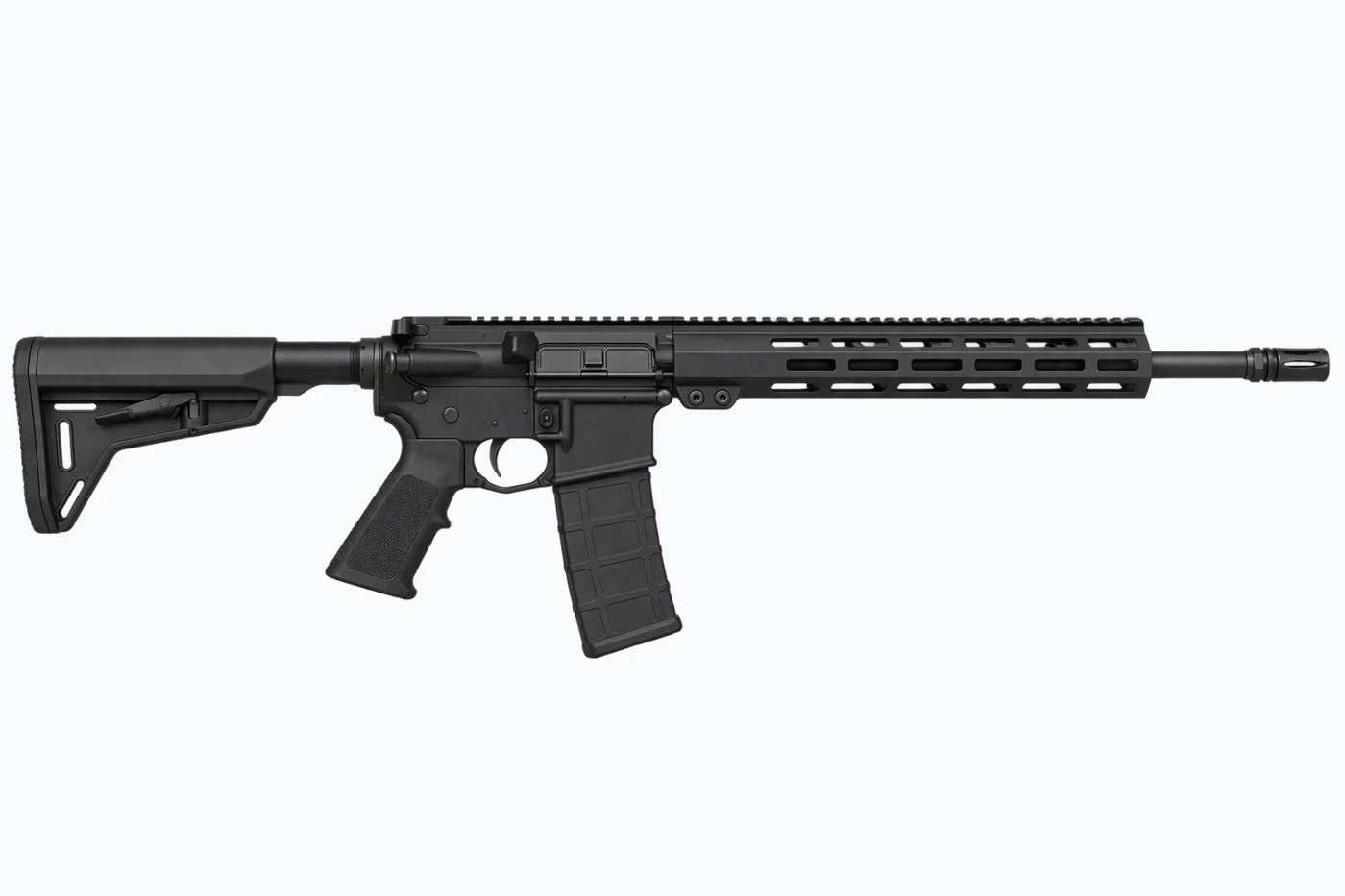
Aero Precision M4E1 Complete
Gas-operated (direct impingement) · 5.56x45mm NATO
Aero Precision M4E1 Spartan
Gas-operated (direct impingement) · 5.56x45mm NATO
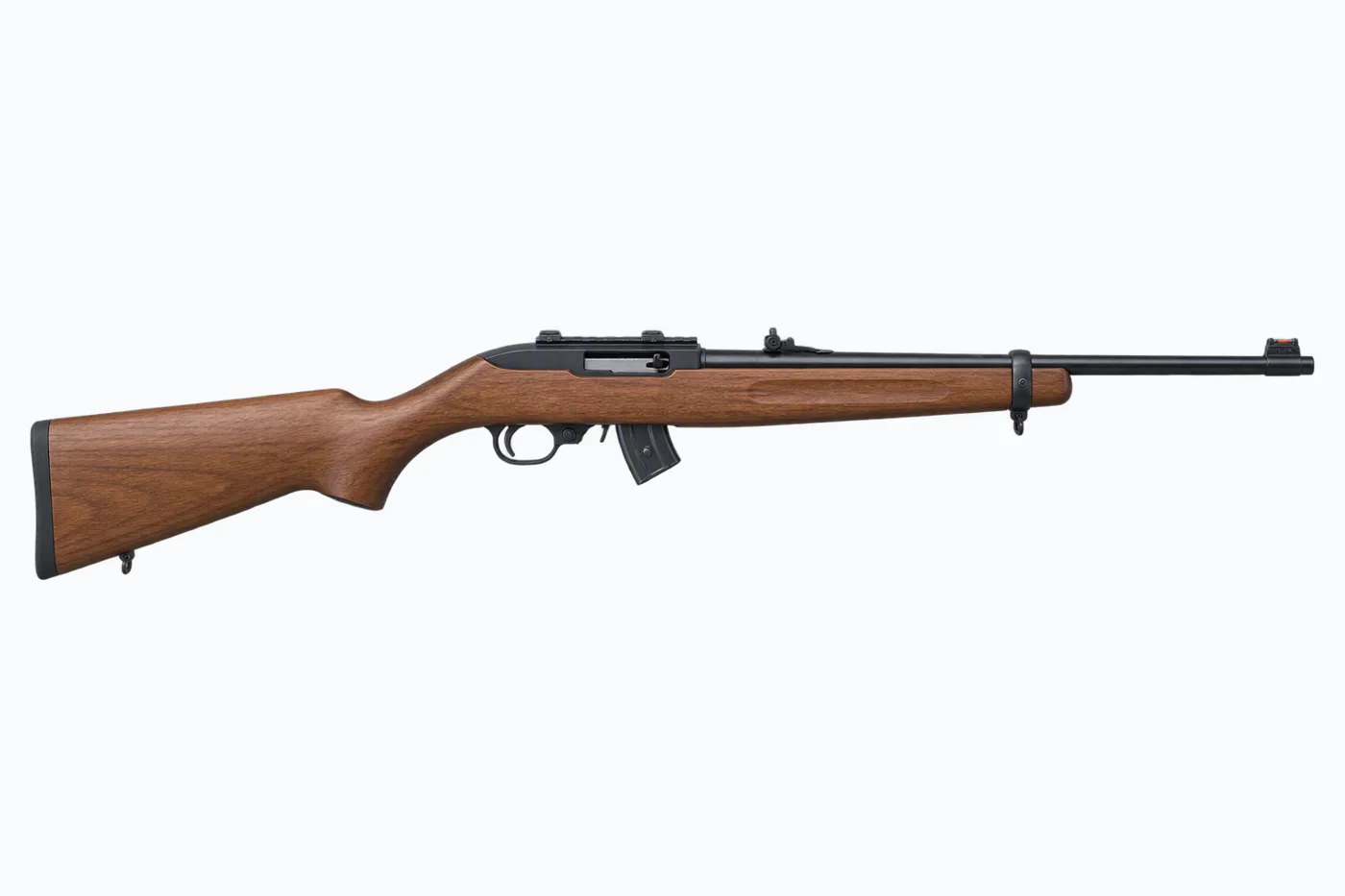
Ruger 10/22
Blowback (semi-automatic) · .22 Long Rifle
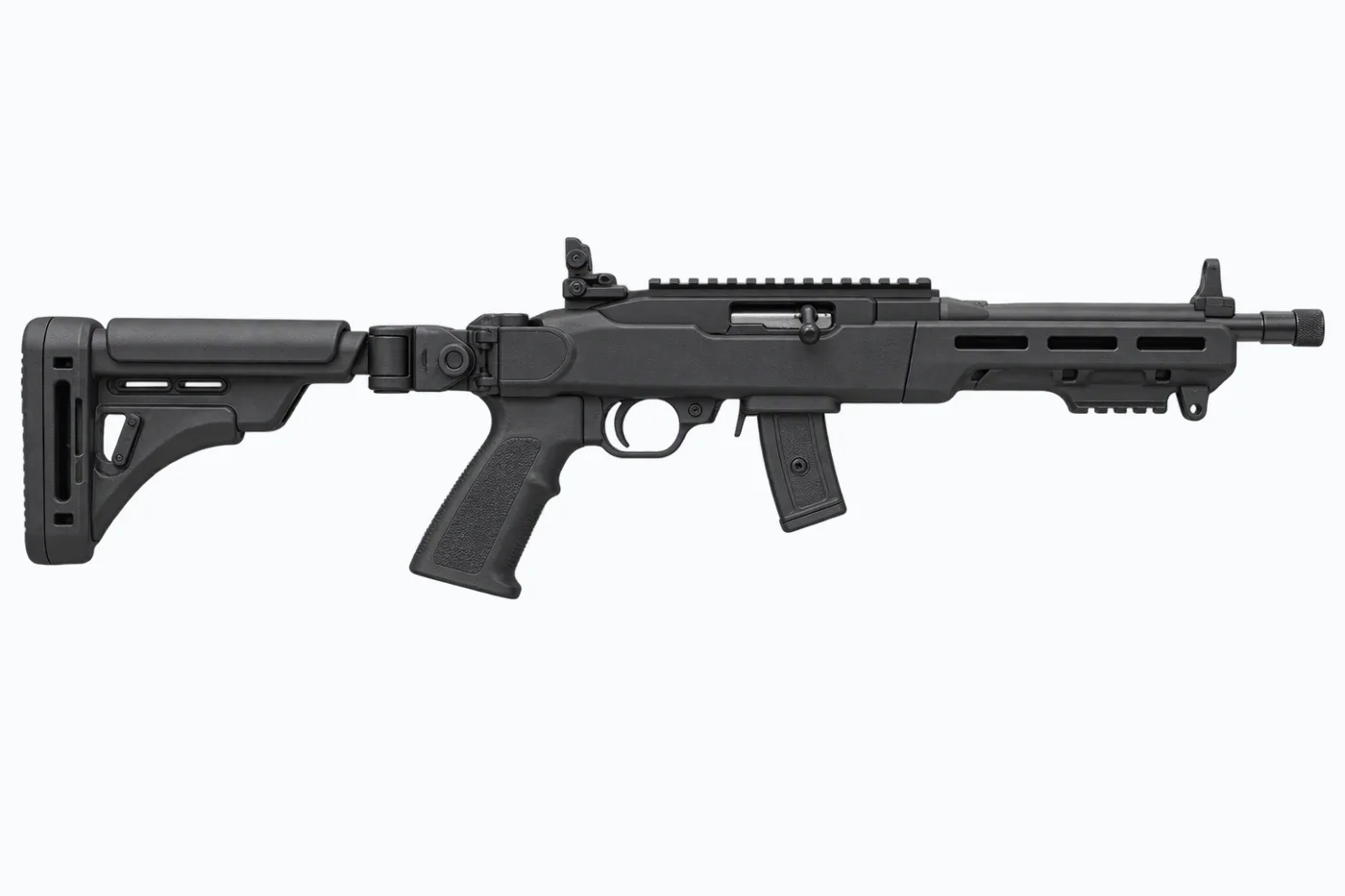
Ruger 10/22 SBR
Blowback (semi-automatic) · .22 Long Rifle
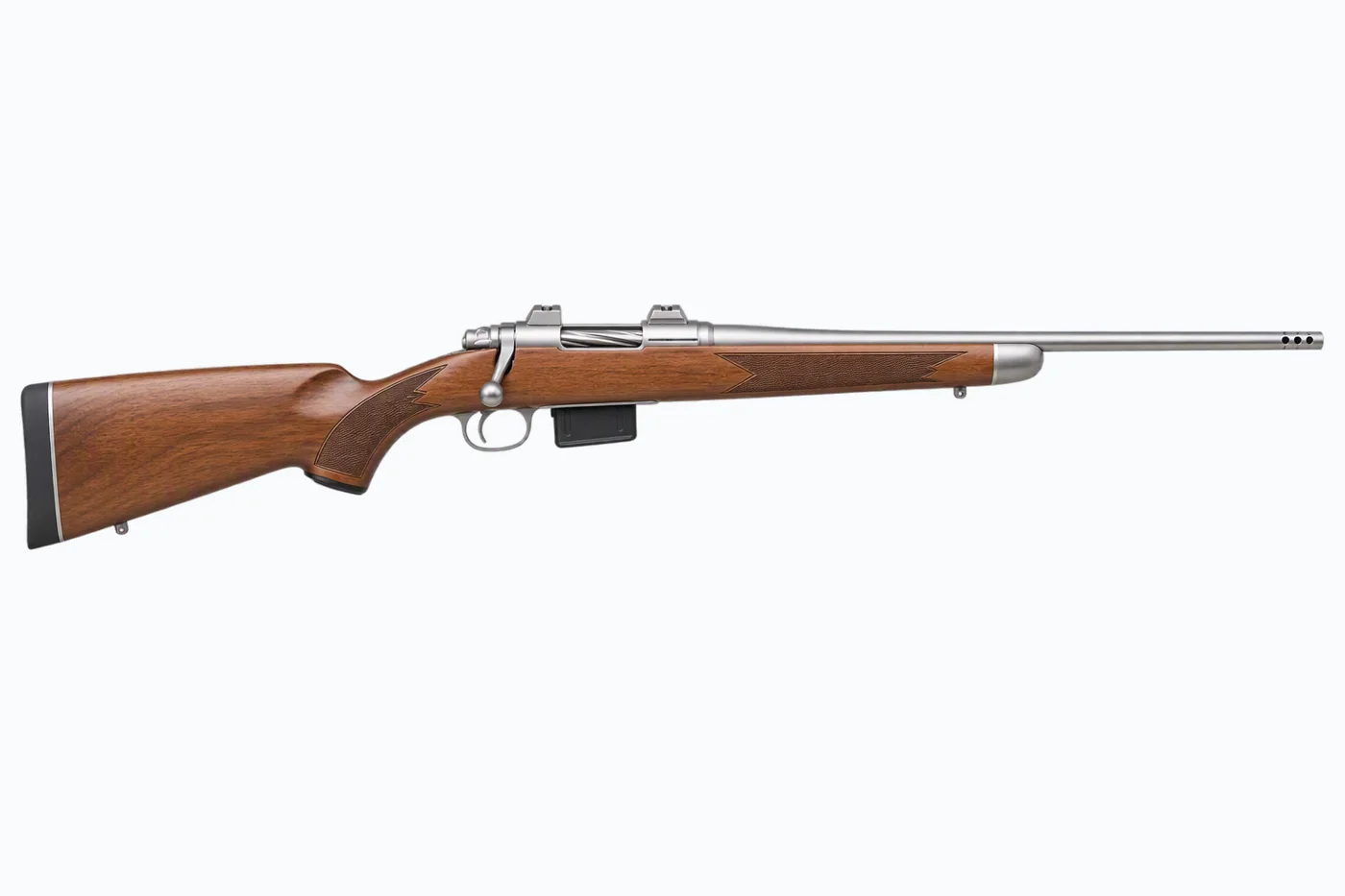
Ruger 77/17
Bolt action · .17 Winchester Super Magnum
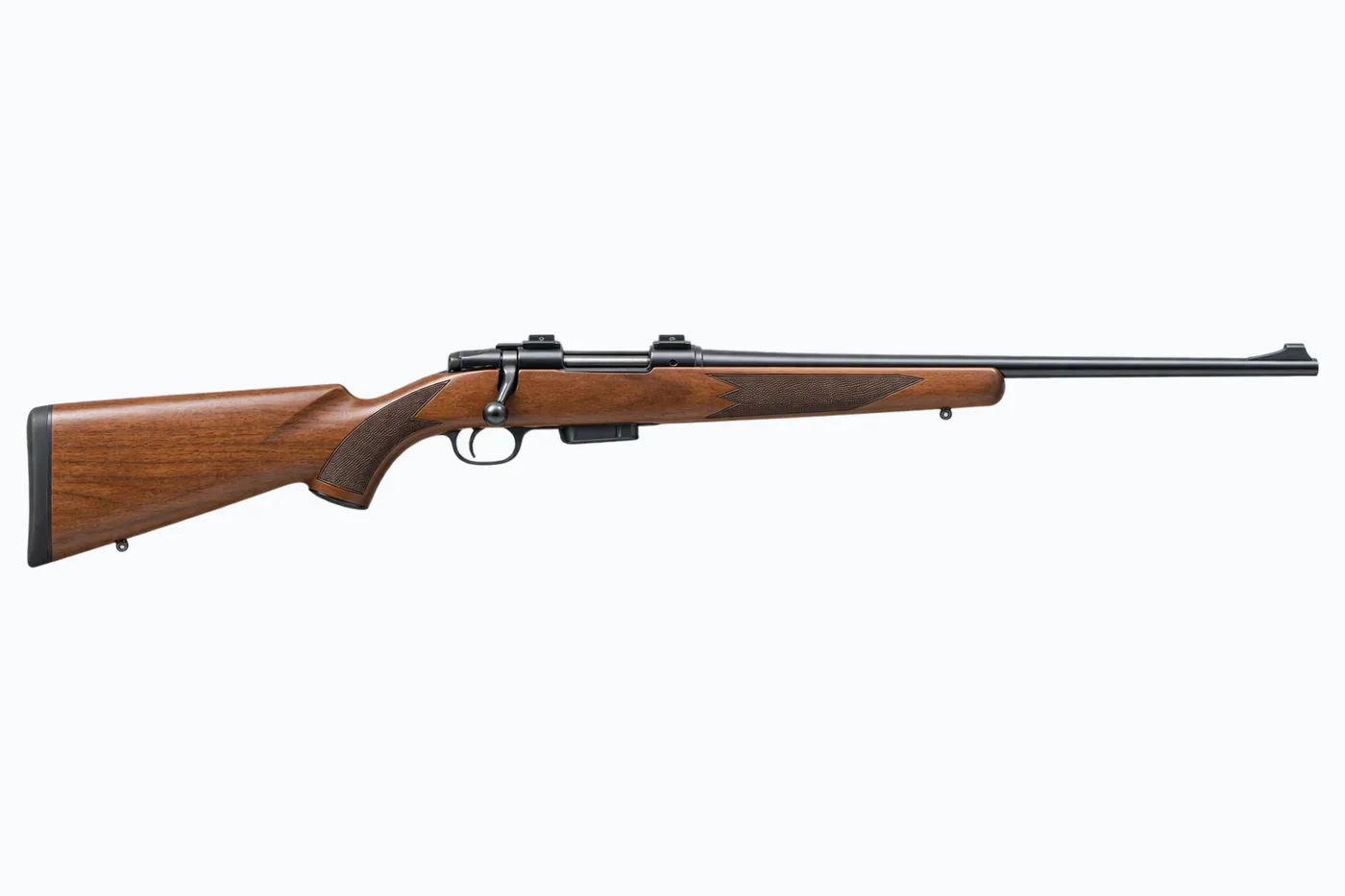
Ruger 77/22
Bolt action · .22 Hornet
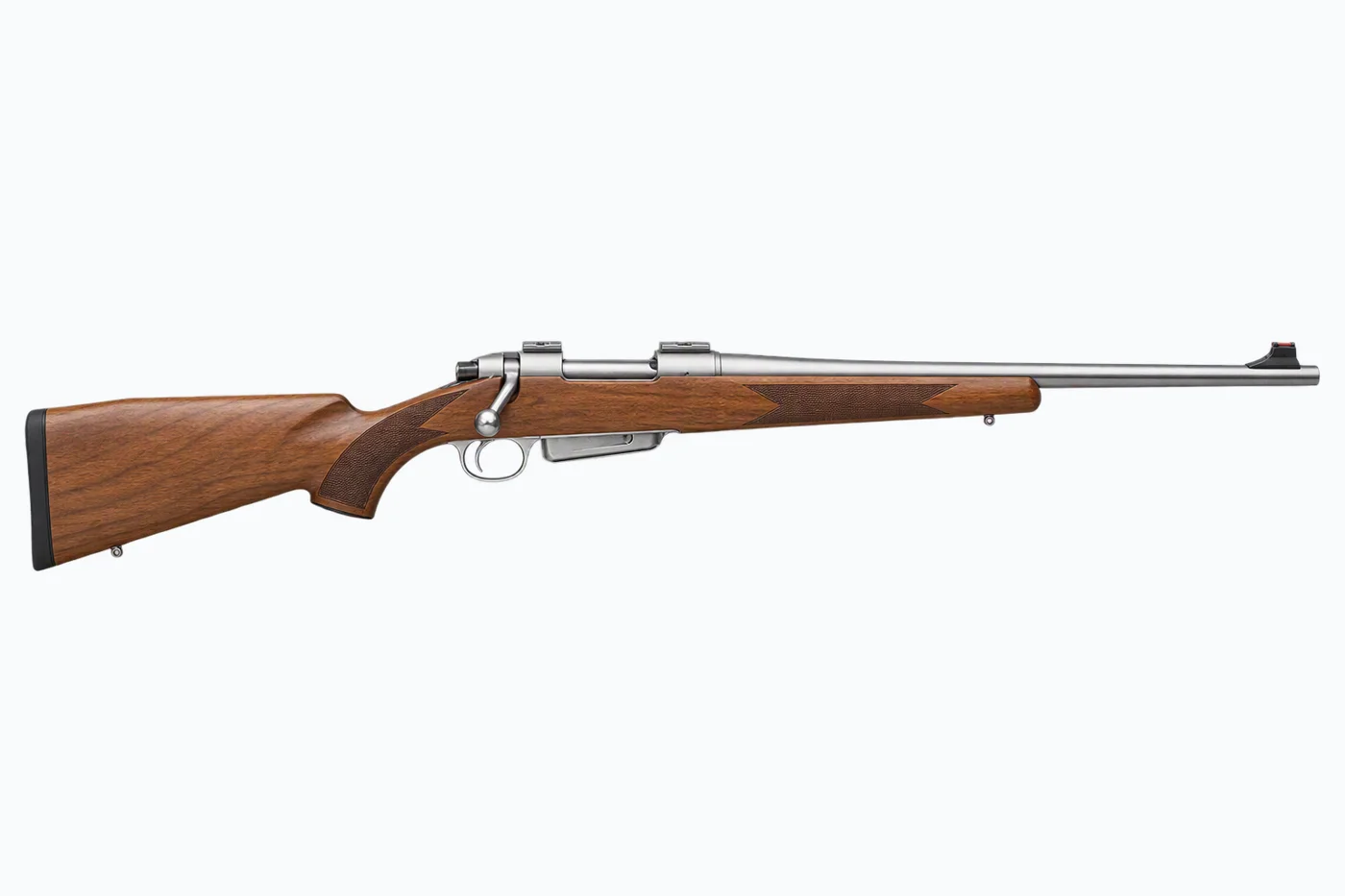
Ruger 77/357
Bolt action · .357 Magnum
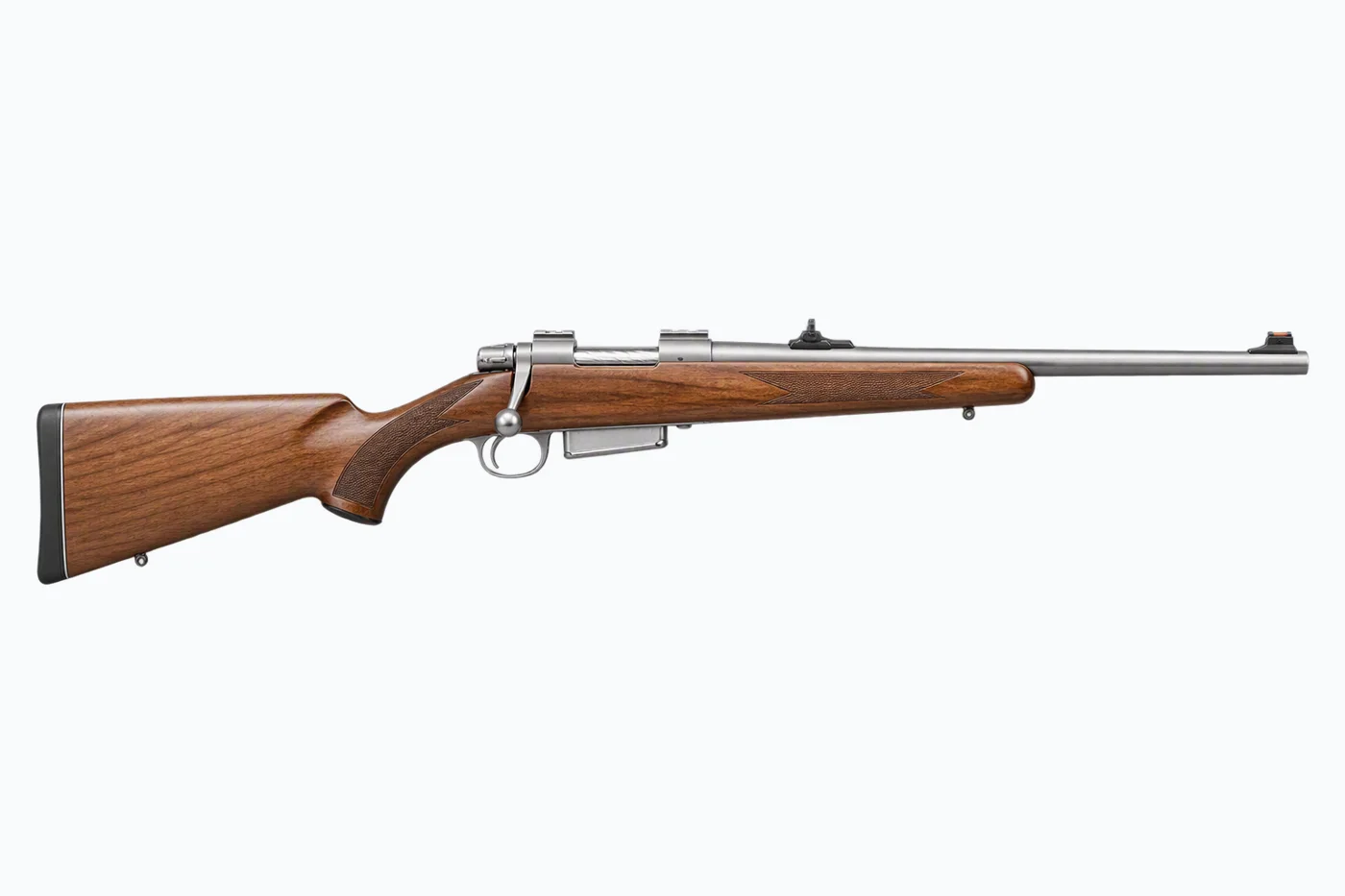
Ruger 77/44
Bolt action · .44 Remington Magnum