
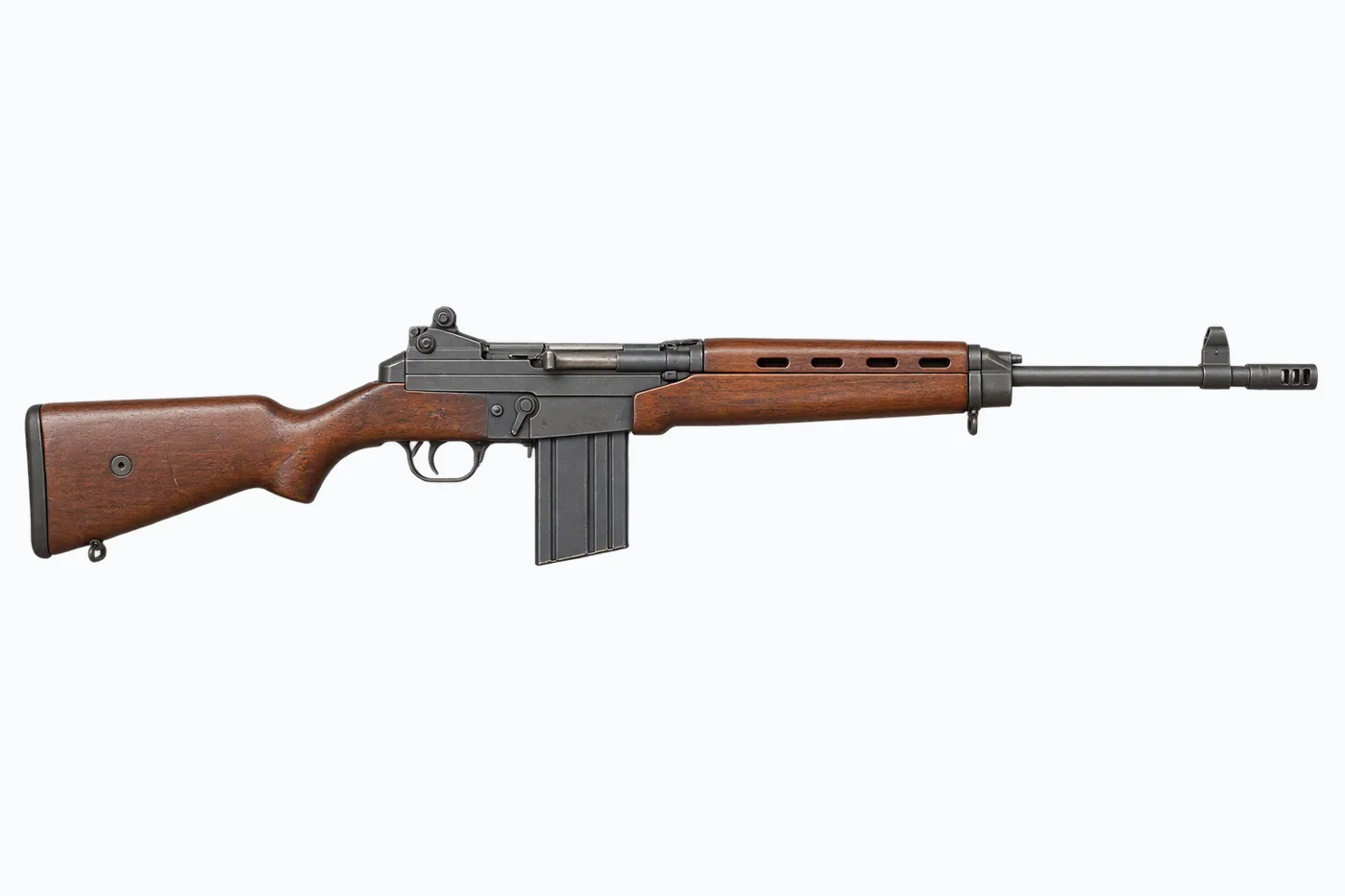
Springfield Armory · Rifle
T25
Gas-operated · 7.62x51mm NATO · introduced 1948
Also known as Rifle T25, Lightweight Rifle T25
About the T25
The T25 is an American experimental select-fire battle rifle designed at Springfield Armory by Earle Harvey, beginning in 1945 at the direction of Colonel Rene Studler. It was the first rifle built around the new 7.62mm T65 light-rifle cartridge that later matured into the 7.62x51mm NATO round. Gas-operated with a tilting bolt that locked into the top of the receiver (reminiscent of the Bren), the T25 used an in-line stock and muzzle brake to tame recoil from its remarkably light 7-pound weight, achieved partly through aluminum and lightened components. It fired from a closed bolt in semi-automatic and an open bolt in full-automatic. After Fort Benning trials in 1950 exposed shortcomings, the design was reworked into the T47 and ultimately lost to the T44, which was adopted as the M14.
The T25 was Springfield Armory's bid in the post-WWII light-rifle race to replace the M1 Garand. Earle Harvey, only 37 when assigned the project, chased a 7-pound full-power rifle with aggressive weight-saving that ultimately cost durability. Its loss to the T44 helped seal the M14's adoption in 1957.
T25 specifications
General
- Type
- Rifle
- Action
- Gas-operated
- Firing mechanism
- Hammer-fired
- Trigger
- Single action
- Calibres
- 7.62x51mm NATO
- Magazine capacity
- 20 rounds
- Magazine
- Detachable box magazine
Dimensions
- Barrel length
- 559 mm (22.0 in)
- Overall length
- 1118 mm (44.0 in)
- Weight (empty)
- 3.17 kg (7.00 lb)
Barrel
- Rifling
- Right hand
Materials
- Barrel
- Steel
- Receiver / frame
- Steel
- Stock
- Wood
- Finish
- parkerized
Performance
- Muzzle velocity (typical)
- 838 m/s (2749 fps)
- Effective range
- 500 m
History
- Introduced
- 1948
- Discontinued
- 1951
- Production status
- Prototype
- Country of origin
- US
- Designer
- Earle Harvey
Features
- In line stock
- Muzzle brake
- Tilting bolt
- Select fire
- Aluminum lightweight parts
Safety
- Manual safety
First prototype test-fired in January 1948; initial prototypes built by the Bennel Machine Company of Brooklyn, with later examples from Remington and Springfield Armory. The pressure-tested action withstood 125,000 psi without headspace increase and 150,000 psi without part breakage.
Similar models
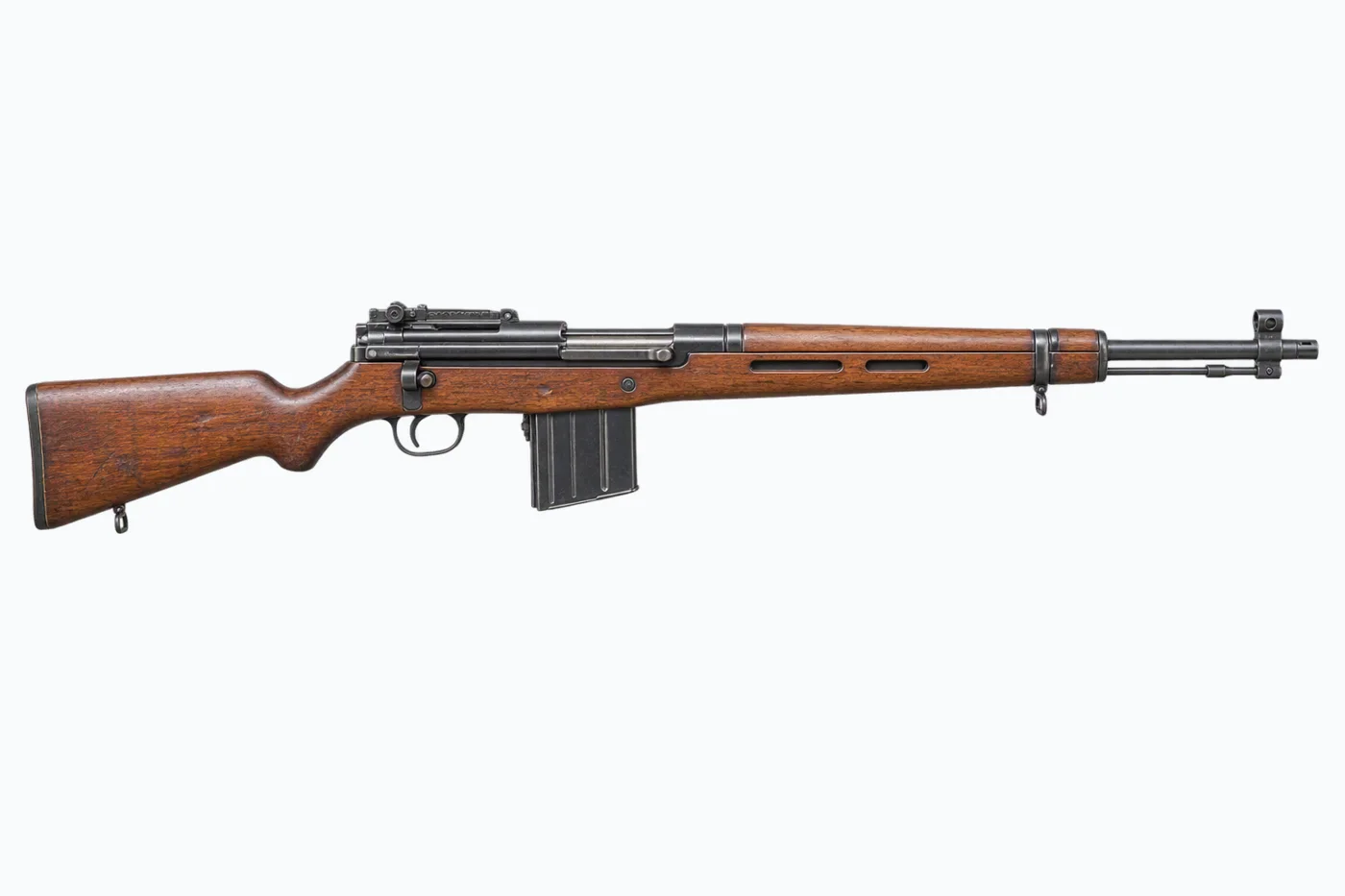
Automatgevär m/42 (Ljungman)
Gas-operated (direct impingement) · 6.5x55mm Swedish
Air Arms Galahad
Gas-operated · .22 Air (5.5mm)
Air Arms Ultimate Sporter
Gas-operated · .22 Air (5.5mm)
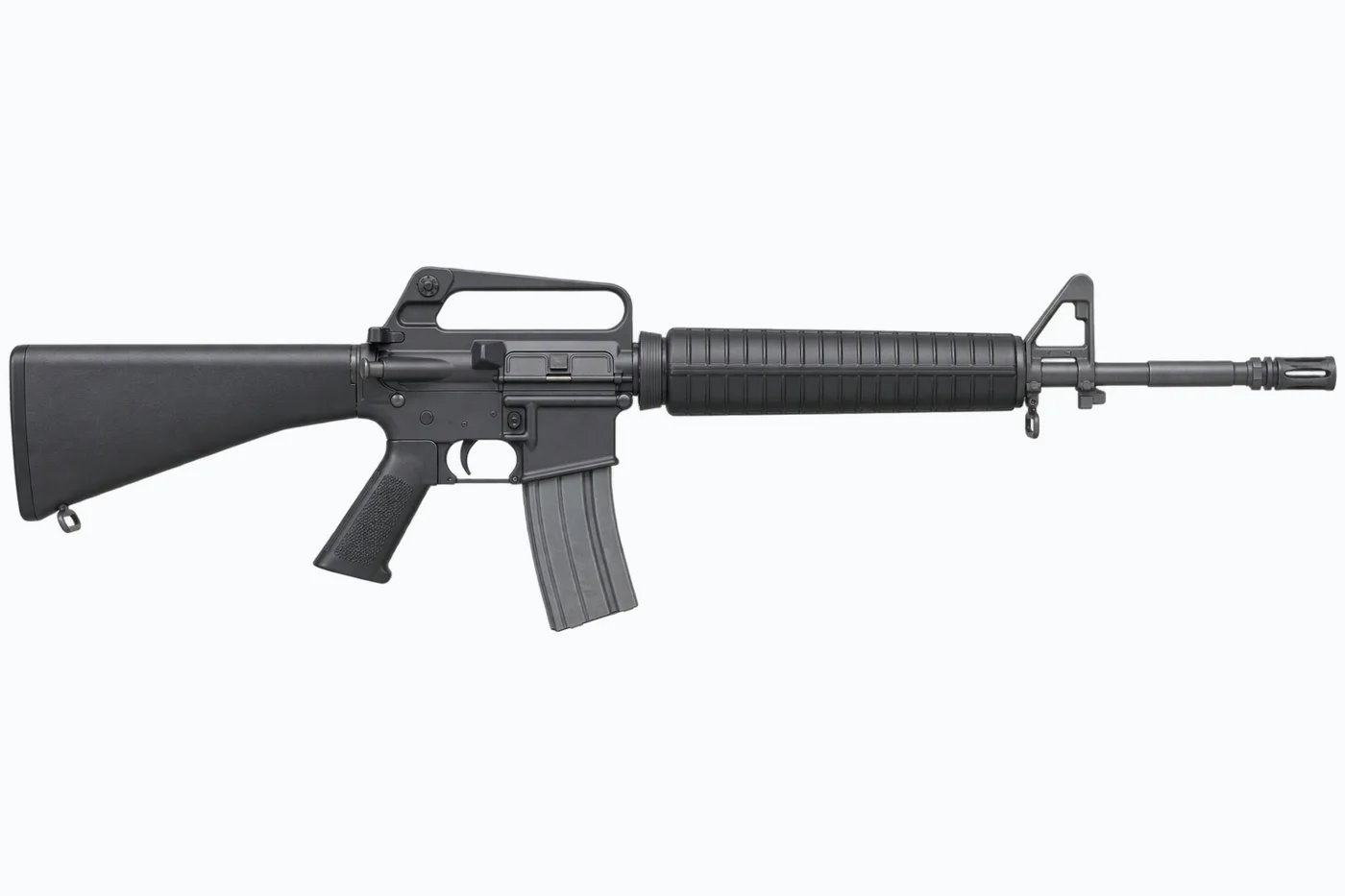
AR-15
Gas operated short stroke · 5.56x45mm NATO
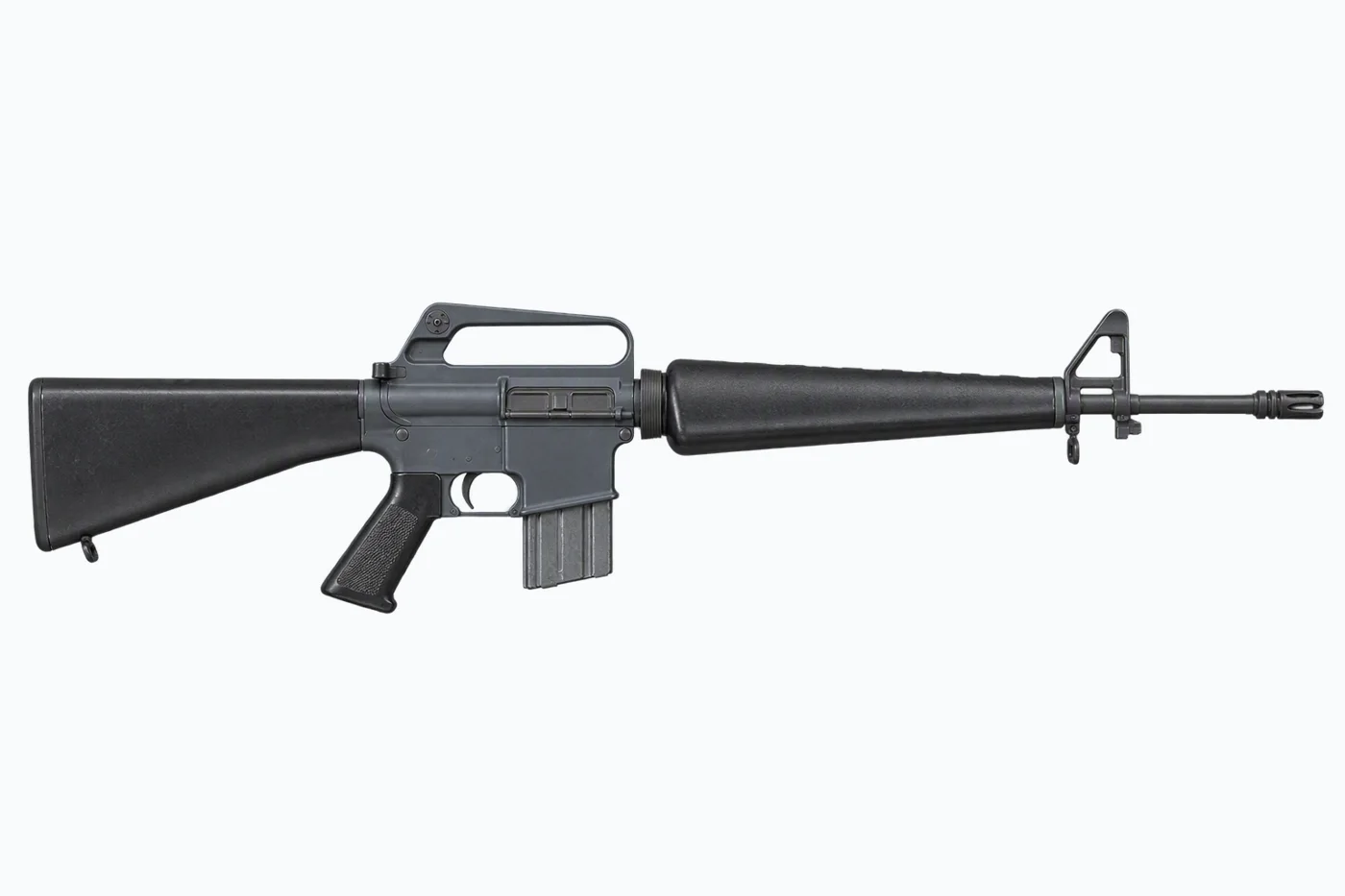
Colt AR-15 Sporter (SP1)
Gas-operated (direct impingement) · .223 Remington