
Carl · Pistol
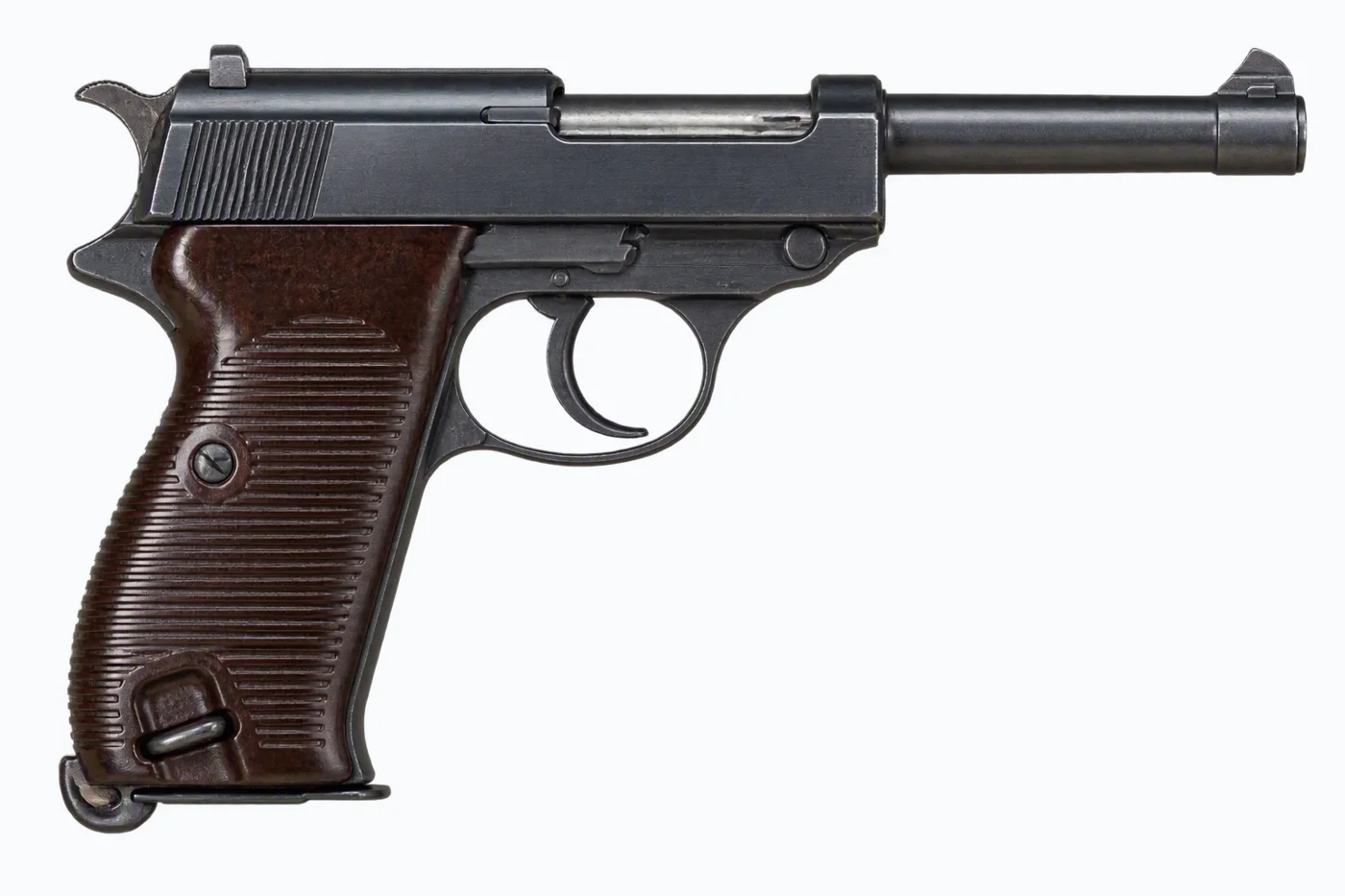
Walther P38
Short recoil (semi-automatic) · 9x19mm Parabellum · introduced 1938
Also known as Pistole 38, P1, P4
About the Walther P38
The Walther P38 is a 9x19mm Parabellum semi-automatic pistol developed by Carl Walther GmbH as the replacement for the costly and complex Luger P08 as the standard service pistol of the German Wehrmacht. Adopted in 1938 and entering mass production in 1940, it was the first locked-breech pistol to feature a double-action/single-action trigger mechanism, a pivoting locking block short-recoil operating system, an external hammer decocking lever, and a loaded chamber indicator -- innovations that fundamentally influenced post-war pistol design worldwide. The P38's distinctive open-top slide, exposed barrel, and wedge-shaped locking block became hallmarks of the design. Approximately 1.2 million P38s were manufactured during World War II by Walther (Zella-Mehlis), Mauser (Oberndorf), and Spreewerk (Grottau). After the war, production resumed at the new Walther factory in Ulm for the West German Bundeswehr, where the aluminum-framed P1 variant served as the standard sidearm from 1957 until replacement by the Heckler & Koch P8 (USP) beginning in the 1990s, with final retirement in 2004.
The P38 was the world's first locked-breech military pistol with a double-action/single-action trigger, a decocking lever, and a loaded chamber indicator -- innovations that defined service pistol design for the next 80 years. The Beretta 92 series, which became the US military's M9, directly borrowed the P38's locking block mechanism and DA/SA concept. Portugal's army used the P38 until 2019, making it one of the longest-serving military sidearms in history.
Walther P38 specifications
General
- Type
- Pistol
- Action
- Short recoil (semi-automatic)
- Firing mechanism
- Hammer-fired
- Trigger
- Da sa
- Calibres
- 9x19mm Parabellum
- Magazine capacity
- 8 rounds
- Magazine
- Detachable box magazine
Dimensions
- Barrel length
- 125 mm (4.9 in)
- Overall length
- 216 mm (8.5 in)
- Height
- 136 mm (5.4 in)
- Width
- 36 mm (1.4 in)
- Weight (empty)
- 0.84 kg (1.85 lb)
- Weight (loaded)
- 1.03 kg (2.27 lb)
- Sight radius
- 181 mm (7.1 in)
Barrel
- Rifling twist
- 1:10 in (254 mm)
- Rifling
- Right hand
- Grooves
- 6
Materials
- Barrel
- Steel
- Receiver / frame
- Steel
- Slide
- Steel
- Finish
- blued
Performance
- Muzzle velocity (typical)
- 350 m/s (1148 fps)
- Muzzle energy (typical)
- 456 J (336 ft·lb)
- Effective range
- 50 m
History
- Introduced
- 1938
- Discontinued
- 2000
- Production status
- Discontinued
- Country of origin
- DE
- Designer
- Fritz Walther
Features
- Open top slide
- Locking block mechanism
- External hammer
- Exposed barrel
- Blade front sight
- U notch rear sight
- Bakelite grips
- Lanyard loop
Safety
- Decocking lever
- Loaded chamber indicator
- Firing pin block
The P38 replaced the Luger P08, which was accurate and iconic but expensive and time-consuming to manufacture. Germany began seeking a replacement as early as 1927. The initial development produced the Walther HP (Heeres-Pistole) commercial model from 1939, with about 25,000 produced. WWII production totaled 1,277,680 pistols: 617,585 by Walther (factory code 'ac'), 372,875 by Mauser ('byf'/'svw'), and 287,220 by Spreewerk ('cyq'). The P38's locking block system, DA/SA trigger, and decocking mechanism directly influenced the Beretta 92 series and many other modern service pistols. The post-war P1 variant adopted an aluminum alloy frame to reduce weight from 840g to 770g. The P4 police variant featured a shortened barrel (104mm) and decock-only lever. Swedish military adopted the HP variant as 'Pistol m/39' in 1939. The Portuguese Army used the P38 until 2019, making it one of the longest-serving P38 operators.
Similar models
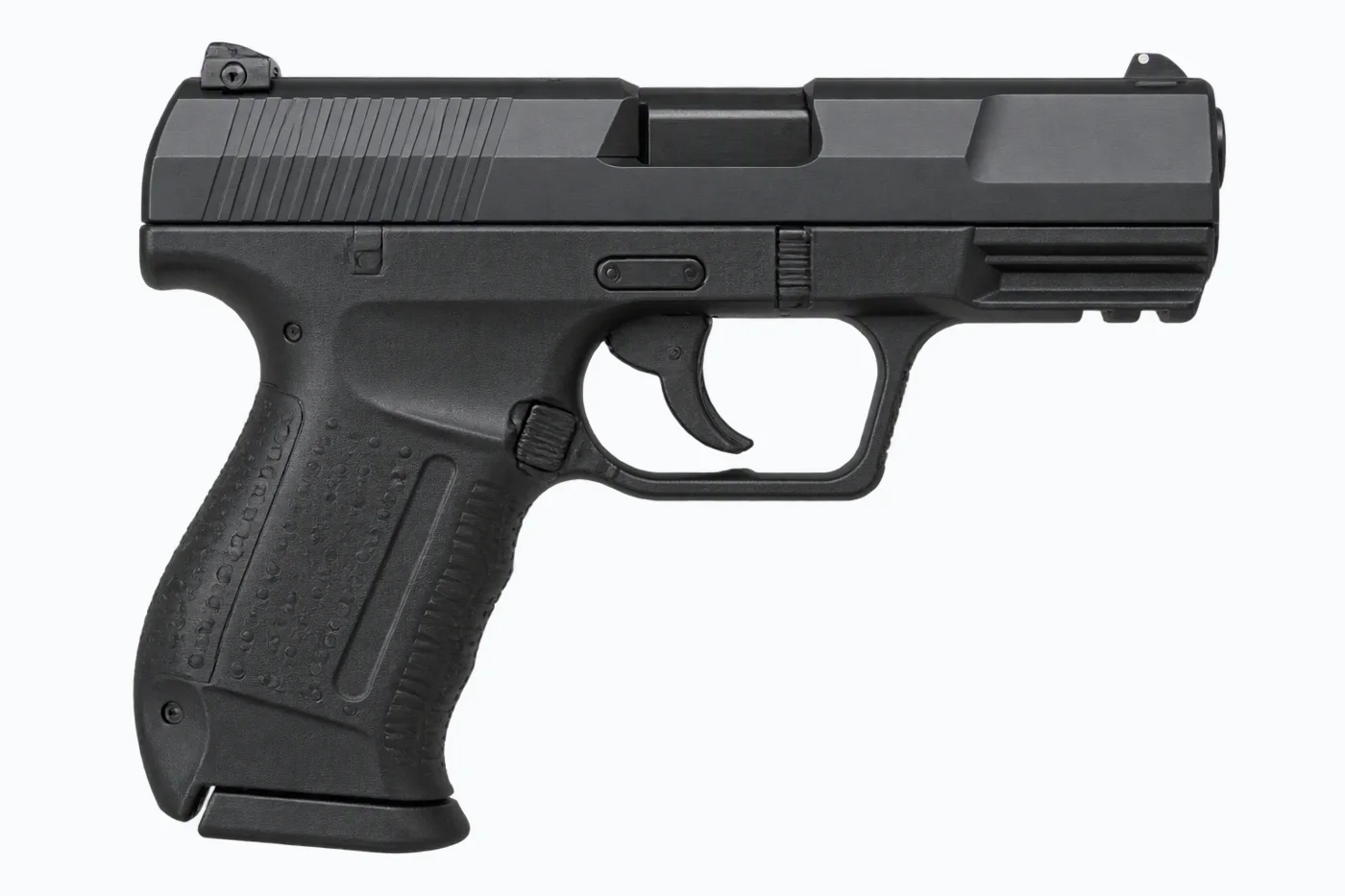
Walther P99
Short recoil (semi-automatic) · 9x19mm Parabellum
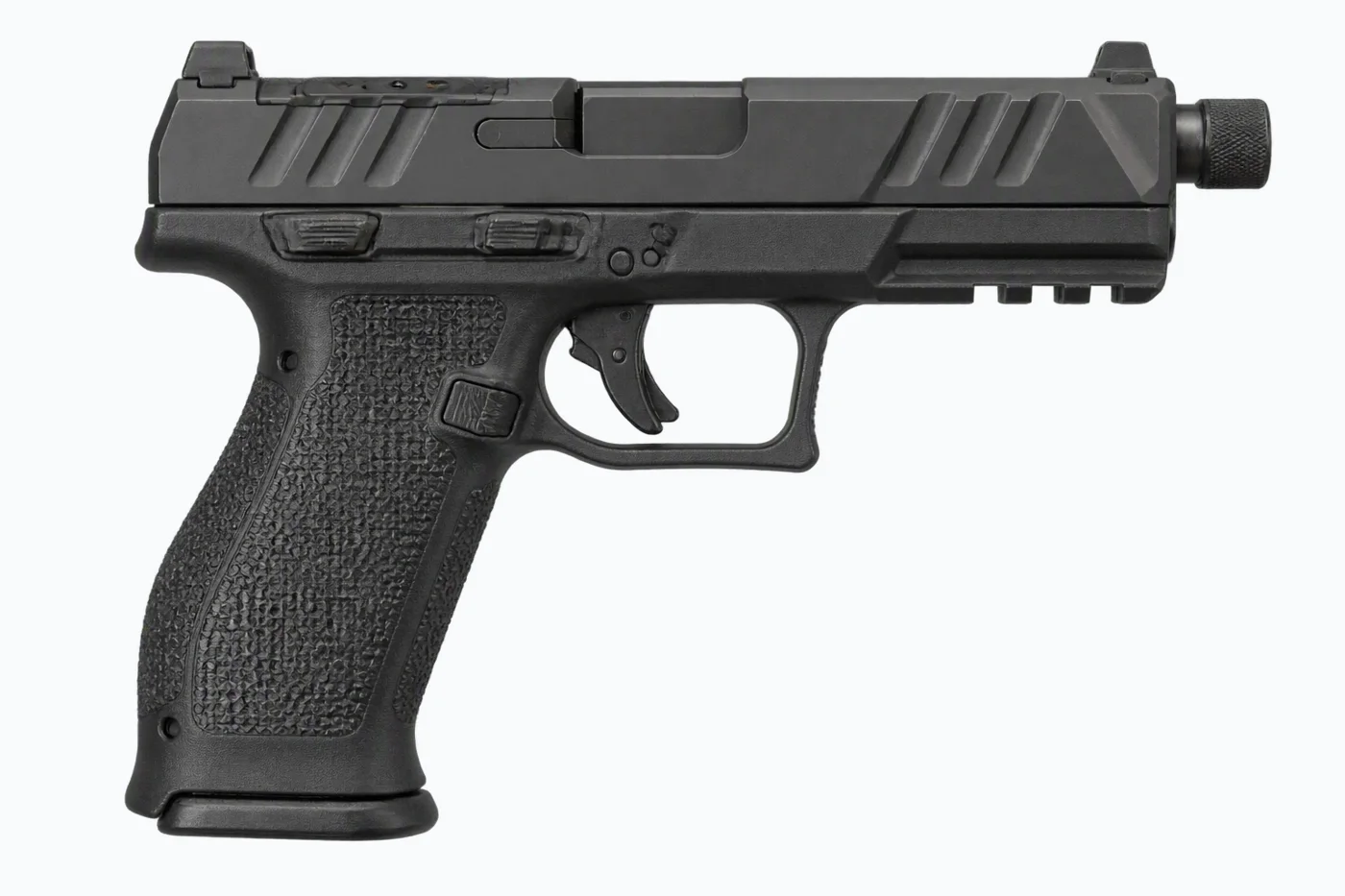
Walther PDP
Short recoil (semi-automatic) · 9x19mm Parabellum
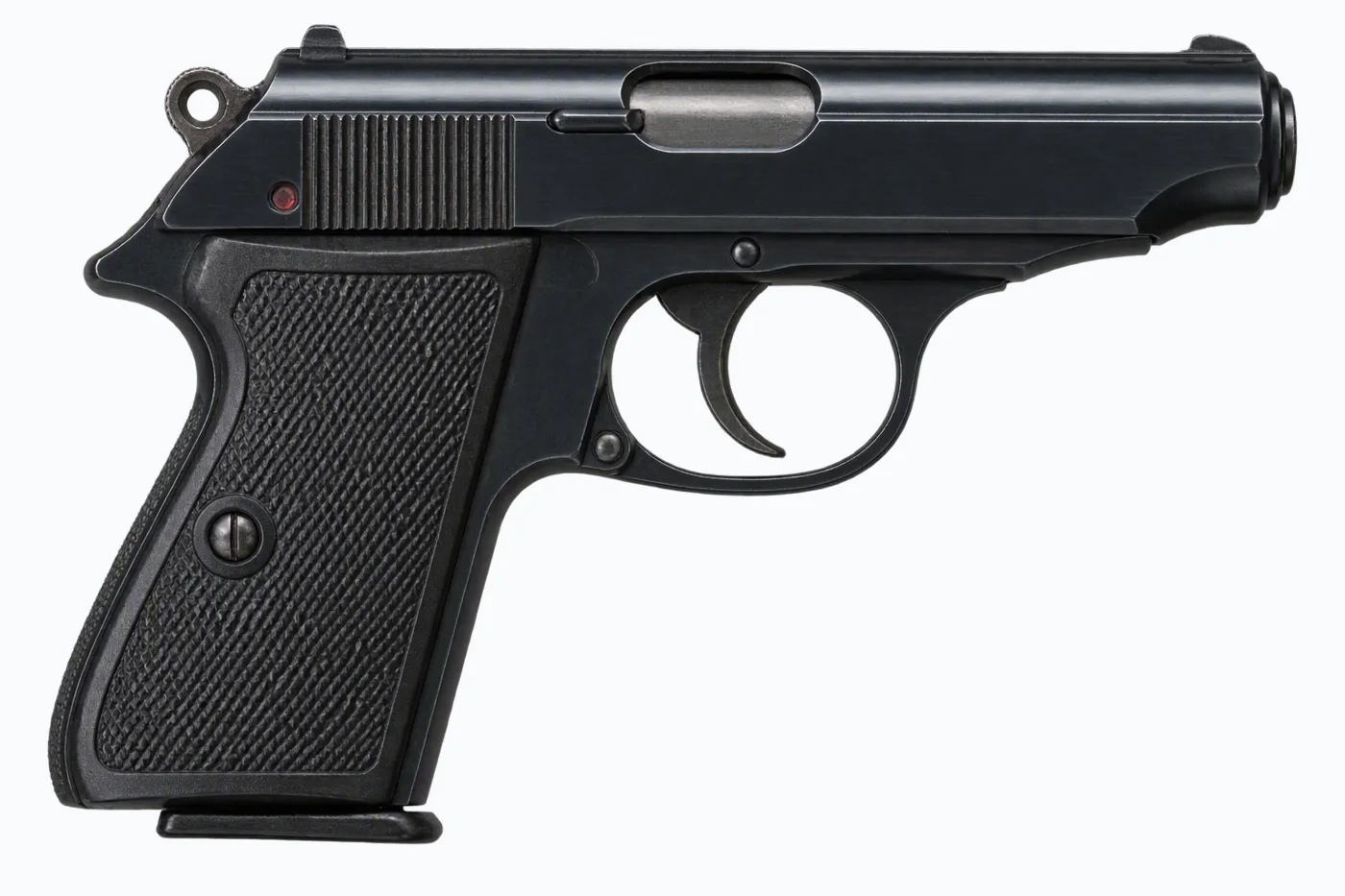
Walther PPK
Blowback (semi-automatic) · .380 ACP
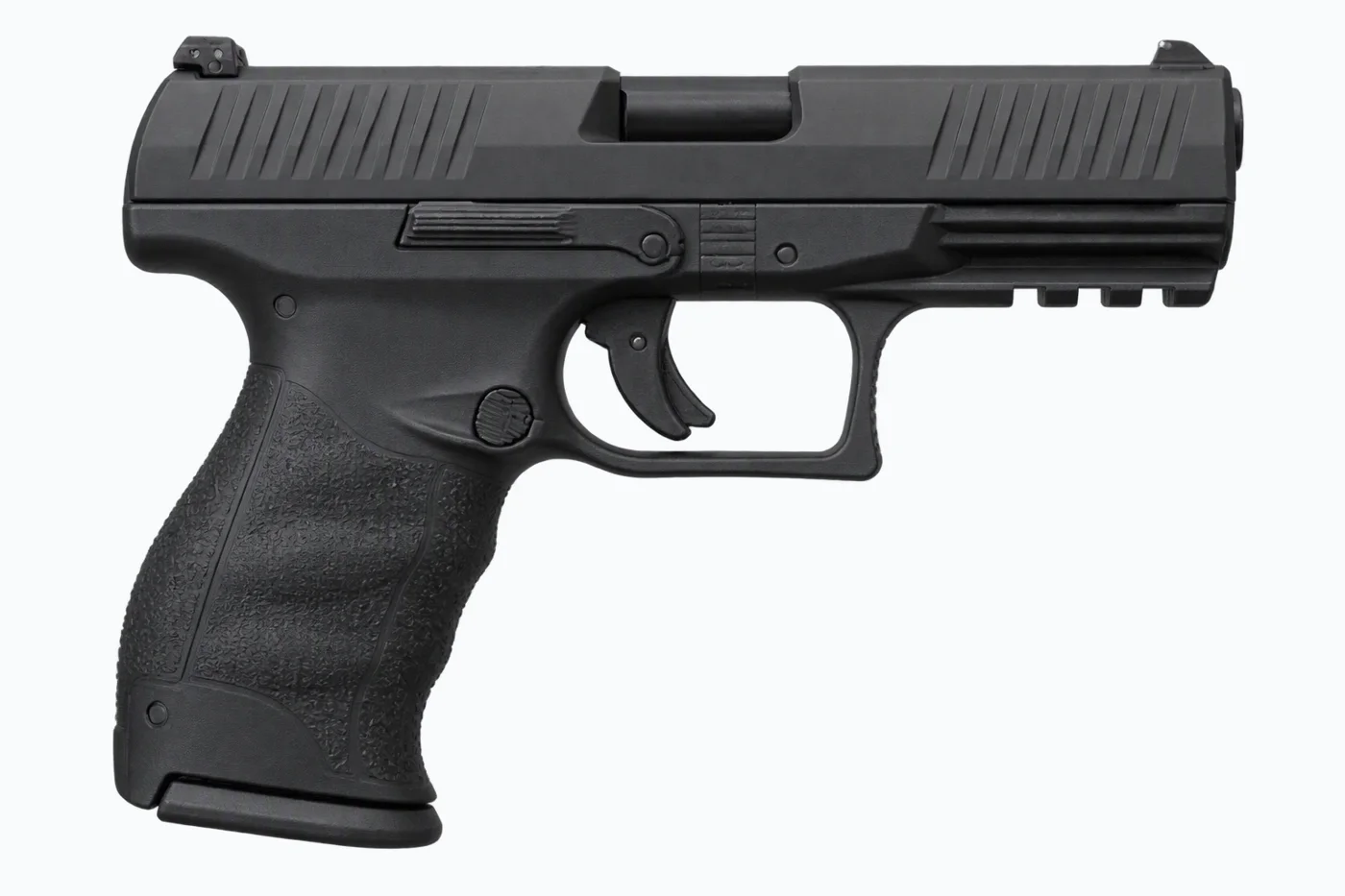
Walther PPQ M2
Short recoil (semi-automatic) · 9x19mm Parabellum
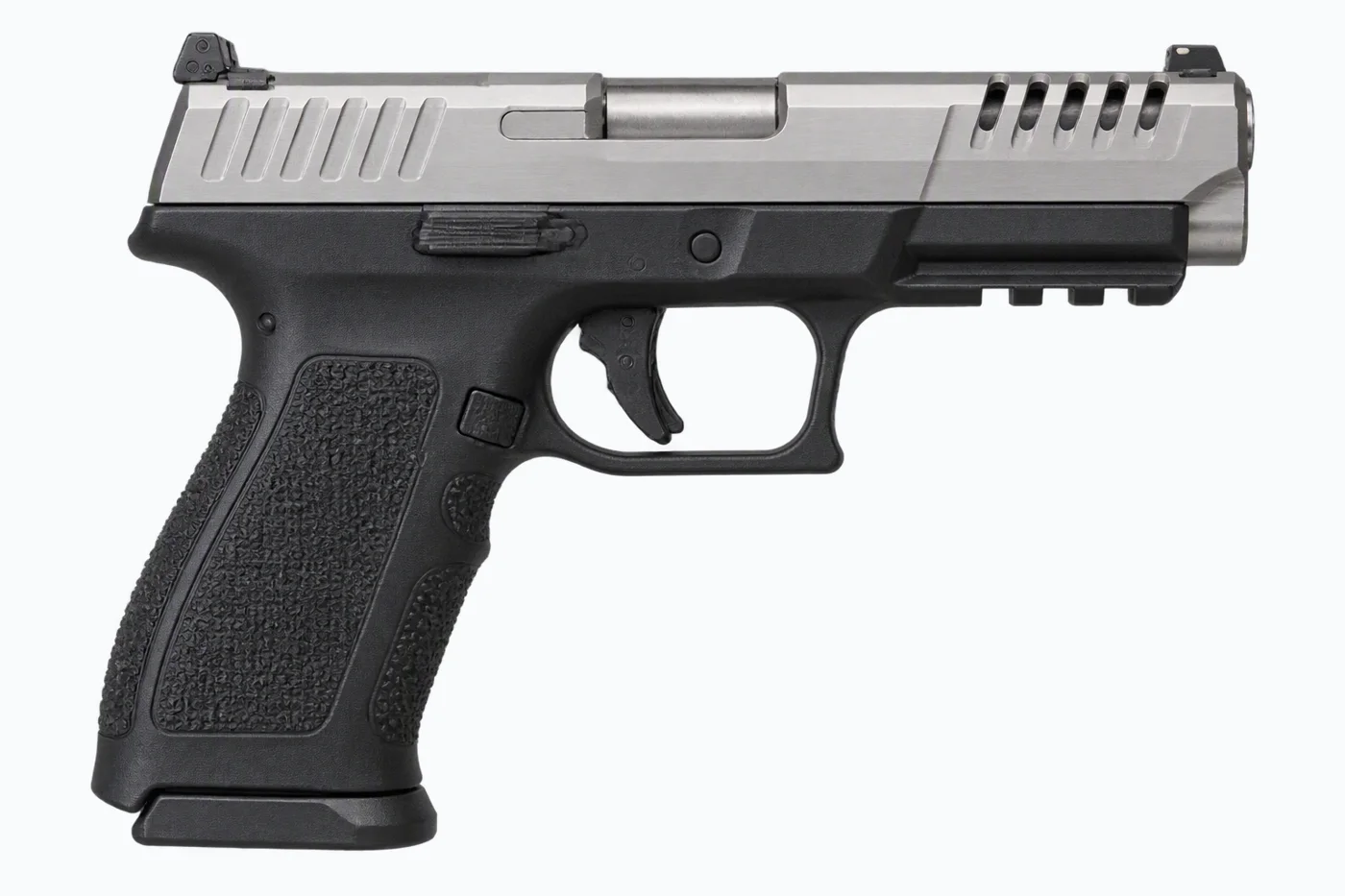
Walther Q4 Steel Frame
Short recoil (semi-automatic) · 9x19mm Parabellum