
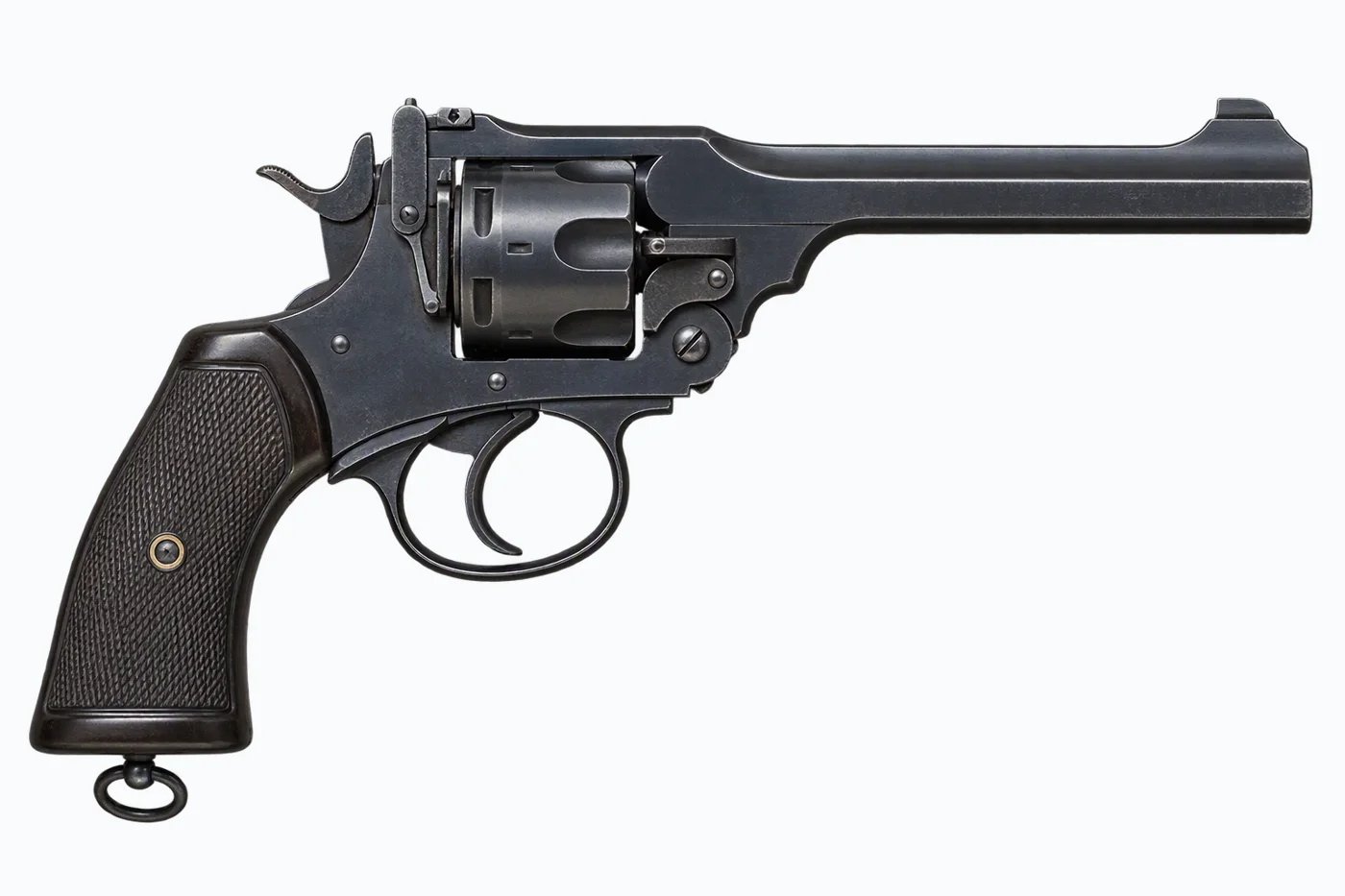
Webley & Scott · Revolver
Webley Mk VI
Double action · .455 Webley · introduced 1915
Also known as Pistol, Revolver, Webley, No 1 Mk VI, Webley Mark VI, Webley .455
About the Webley Mk VI
The Webley Mk VI is a British-designed top-break, double-action/single-action service revolver chambered in .455 Webley, adopted by the British Army in May 1915 as the standard-issue sidearm for officers, NCOs, airmen, cavalry troopers, and tank crews during the First World War. The final iteration in a family of Webley service revolvers stretching back to the Mk I of 1887, the Mk VI represents the peak development of the British military top-break revolver. Operation is via a stirrup-type barrel latch on the upper rear of the frame: pressing the thumb lever forward releases the barrel assembly, allowing it to pivot downward around a hinge at the front of the frame. This break-top action drives a star-shaped extractor upward, ejecting all six spent cases simultaneously - a significant advantage in reload speed over the swing-out cylinder revolvers favored by American manufacturers. With a Prideaux-pattern speed loader, a trained officer could empty and fully reload the weapon in under eight seconds, a feat that remained unmatched by American swing-out designs of the era. The hammer-fired action can be fired double-action by a long trigger pull or single-action by manually cocking the exposed spur hammer. The Mk VI differs visually from earlier marks in its square-profile grip (replacing the earlier bird's-head shape) and its longer 6-inch barrel. The heavy .455 Webley Mk II cartridge, firing a 265-grain lead bullet at approximately 620 feet per second, produces relatively modest velocity but excellent stopping power at close combat range. Though slow-moving compared to contemporary smokeless pistol cartridges, the .455 round earned a fearsome reputation in the close-quarters trench warfare of the Western Front. The Mk VI was manufactured at Webley's Birmingham factory between 1915 and 1921, and subsequently by the Royal Small Arms Factory at Enfield through 1923. It remained in official British service until 1932 (when officially replaced by the Enfield No. 2 Mk I .38/200 revolver) and continued to see service through the Second World War and beyond.
T.E. Lawrence - Lawrence of Arabia - carried a Webley revolver on his famed desert campaigns and reportedly used one to kill a Turkish soldier at Deraa. The Mk VI's break-top action was so much faster than contemporary swing-out cylinder revolvers that a trained officer could empty and reload all six chambers in under eight seconds using a Prideaux speed loader - a reload speed that American Colt and Smith & Wesson revolvers would not match until the advent of modern speed loaders decades later. In 1916, a Pritchard-Greener bayonet attachment was briefly issued for trench-warfare close combat, making the Mk VI arguably the only service revolver ever fielded with a factory bayonet.
Webley Mk VI specifications
General
- Type
- Revolver
- Action
- Double action
- Firing mechanism
- Double action single action
- Trigger
- Double action single action
- Trigger pull
- 4.1 kg (9.0 lb)
- Calibres
- .455 Webley
- Magazine capacity
- 6 rounds
- Magazine
- Revolving cylinder
Dimensions
- Barrel length
- 152 mm (6.0 in)
- Overall length
- 286 mm (11.3 in)
- Height
- 140 mm (5.5 in)
- Width
- 40 mm (1.6 in)
- Weight (empty)
- 1.09 kg (2.40 lb)
- Weight (loaded)
- 1.20 kg (2.65 lb)
- Sight radius
- 180 mm (7.1 in)
Barrel
- Rifling twist
- 1:20 in (508 mm)
- Rifling
- Right hand
- Grooves
- 7
Materials
- Barrel
- Steel
- Receiver / frame
- Steel
- Stock
- Checkered vulcanite
- Finish
- blued
Performance
- Muzzle velocity (typical)
- 190 m/s (623 fps)
- Muzzle energy (typical)
- 307 J (226 ft·lb)
- Effective range
- 46 m
History
- Introduced
- 1915
- Discontinued
- 1923
- Production status
- Out of production
- Country of origin
- GB
- Designer
- Philip Webley
Features
- Break top action
- Simultaneous extraction
- Automatic ejection
- Six shot cylinder
- Fixed square front sight
- V notch rear sight
- Lanyard ring
- Stirrup barrel latch
- Speed loader compatible prideaux
Safety
- Hammer rebound safety
- Rebounding hammer
- Stirrup latch
The Mk VI was the first Webley service revolver with a 6-inch barrel as standard - earlier Marks had shipped with 4-inch barrels. Approximately 125,000 Mk VI revolvers were produced between 1915 and 1923, with the bulk of wartime production taking place at the Webley factory in Birmingham. Enfield-produced examples (1921-1923) are marked 'ENFIELD' on the left side of the frame rather than 'WEBLEY & SCOTT'. The Mk VI saw service in numerous exotic accessory configurations: a Pritchard-Greener bayonet (a rare 1916 trench-warfare attachment), a detachable shoulder stock for target and cavalry use, and even a cylinder conversion that allowed the revolver to fire .455 Mk VI 'Man-Stopper' rounds or blank cartridges for grenade-launching cup attachments. After the .38/200 cartridge replaced the .455 Webley in British service in 1932, large quantities of surplus Mk VI revolvers were shipped to Commonwealth forces, sold on the civilian market, or placed in colonial police service. In the United States, many surplus Mk VI revolvers imported after both World Wars had their cylinders shaved/face-milled at the rear to accept the shorter .45 ACP cartridge in half-moon clips - a conversion that technically works but subjects the revolver to significantly higher pressures than the .455 was designed for and is generally considered unsafe with modern ammunition. Original unaltered .455 Mk VI revolvers command significant collector premiums. T.E. Lawrence famously carried a Webley revolver during his Arabian campaigns. The weapon also saw extensive use in the Irish War of Independence and the later Troubles on both sides of the conflict.
Similar models
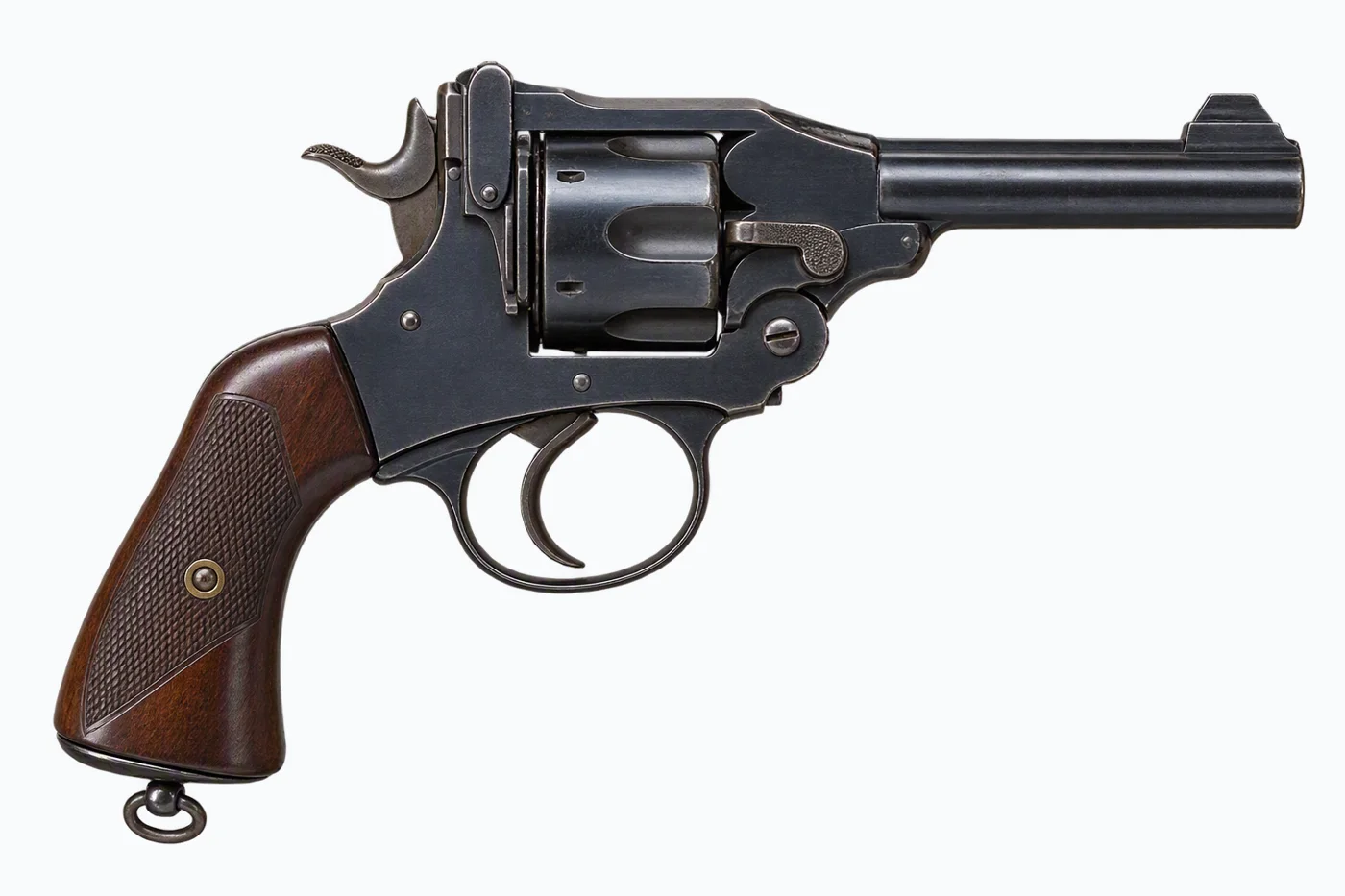
Webley Mk I
Recoil operated · .455 Webley
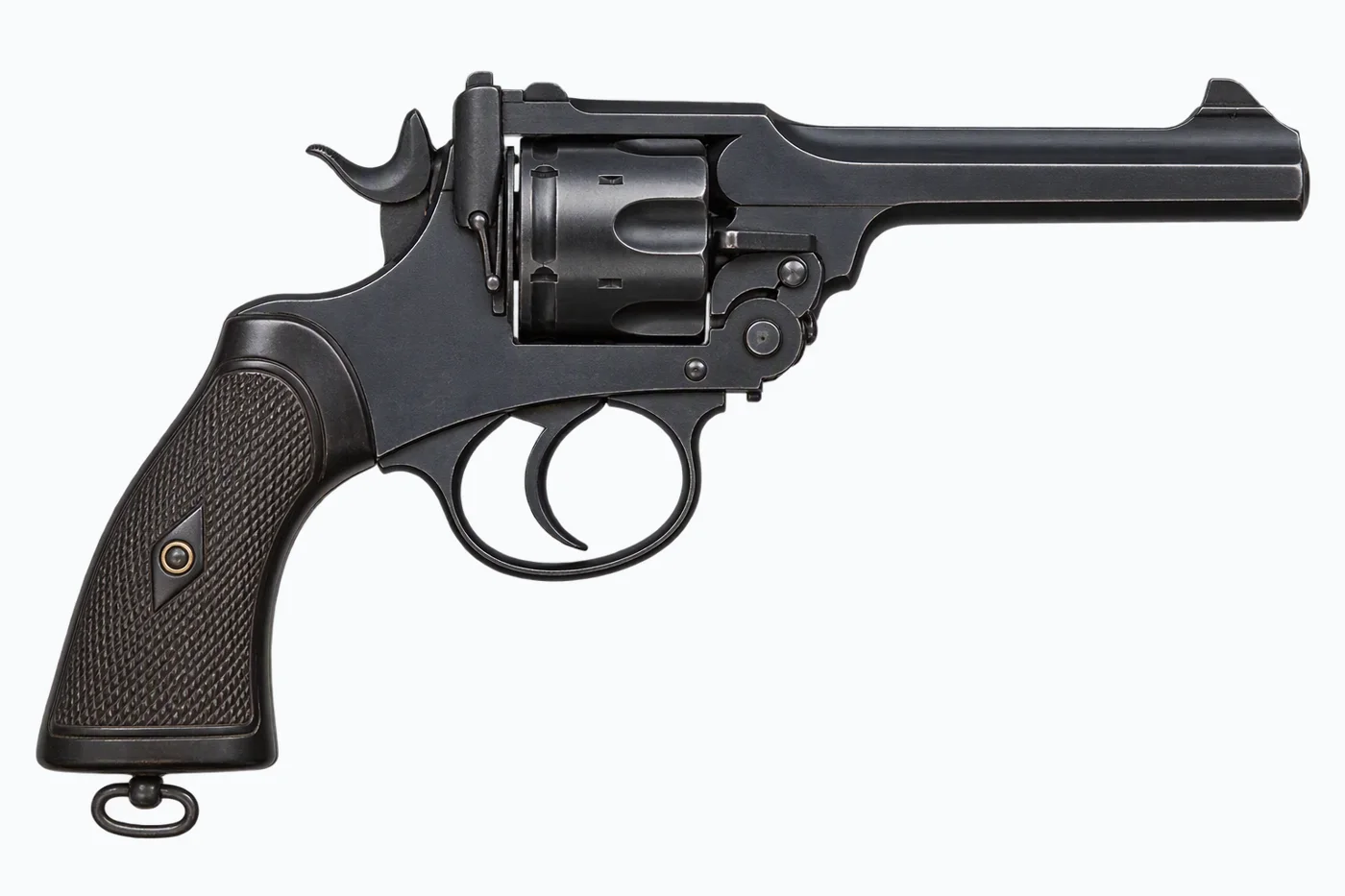
Webley Mk III
Double action · .455 Webley
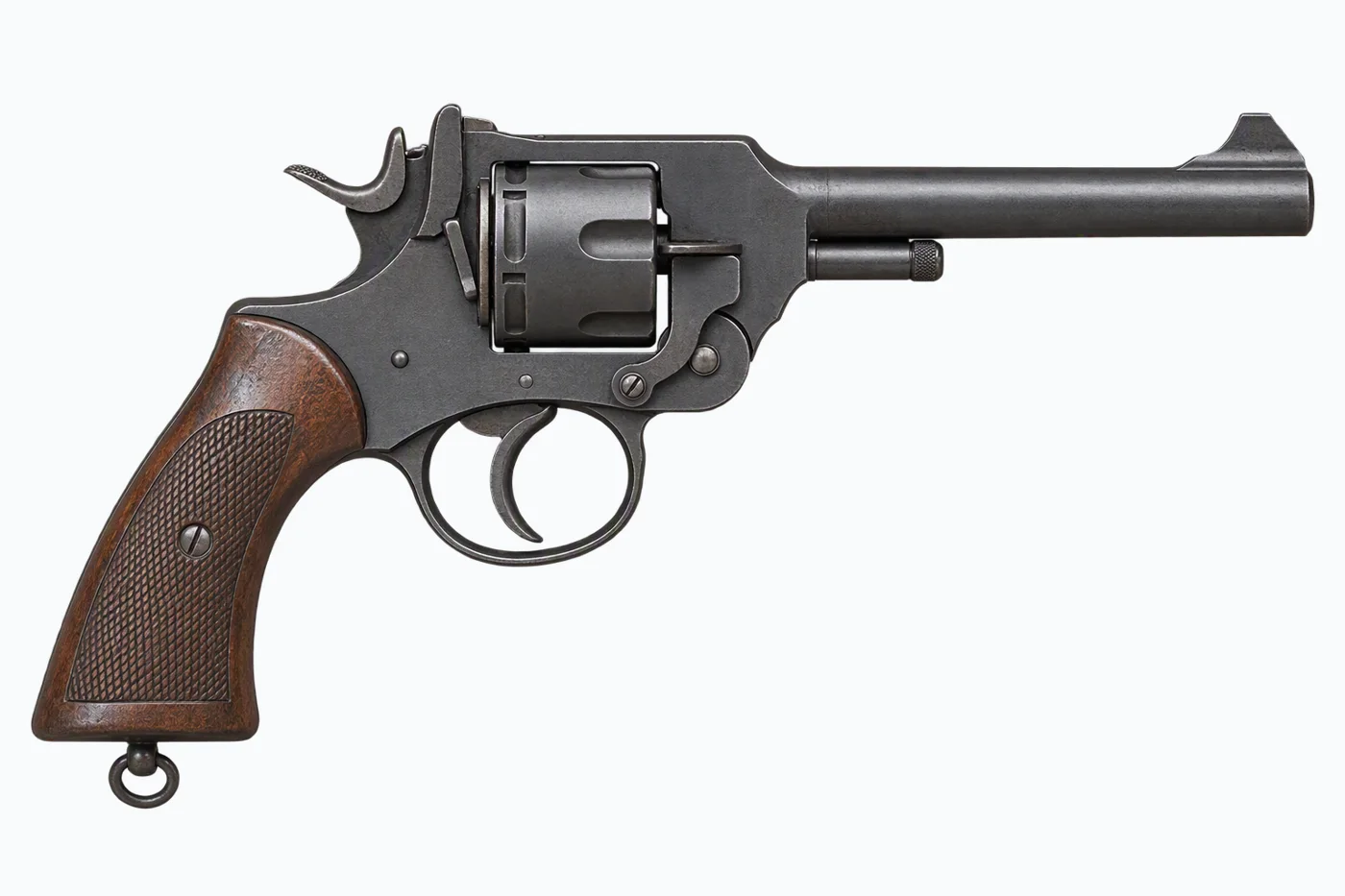
Webley Mk IV .38
Break action · .38/200 (.38 S&W)
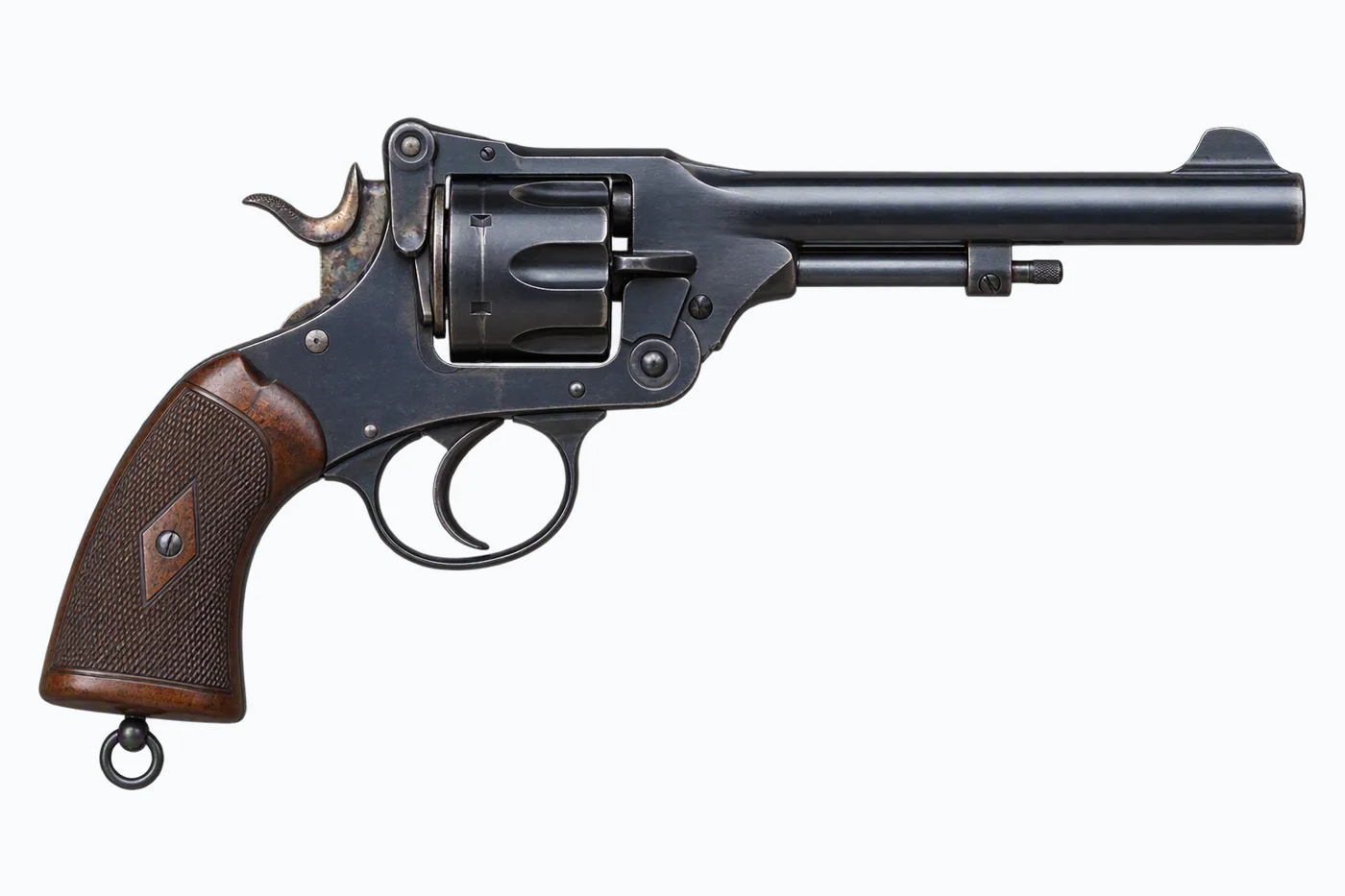
Webley WG Army
Double action · .455 Webley
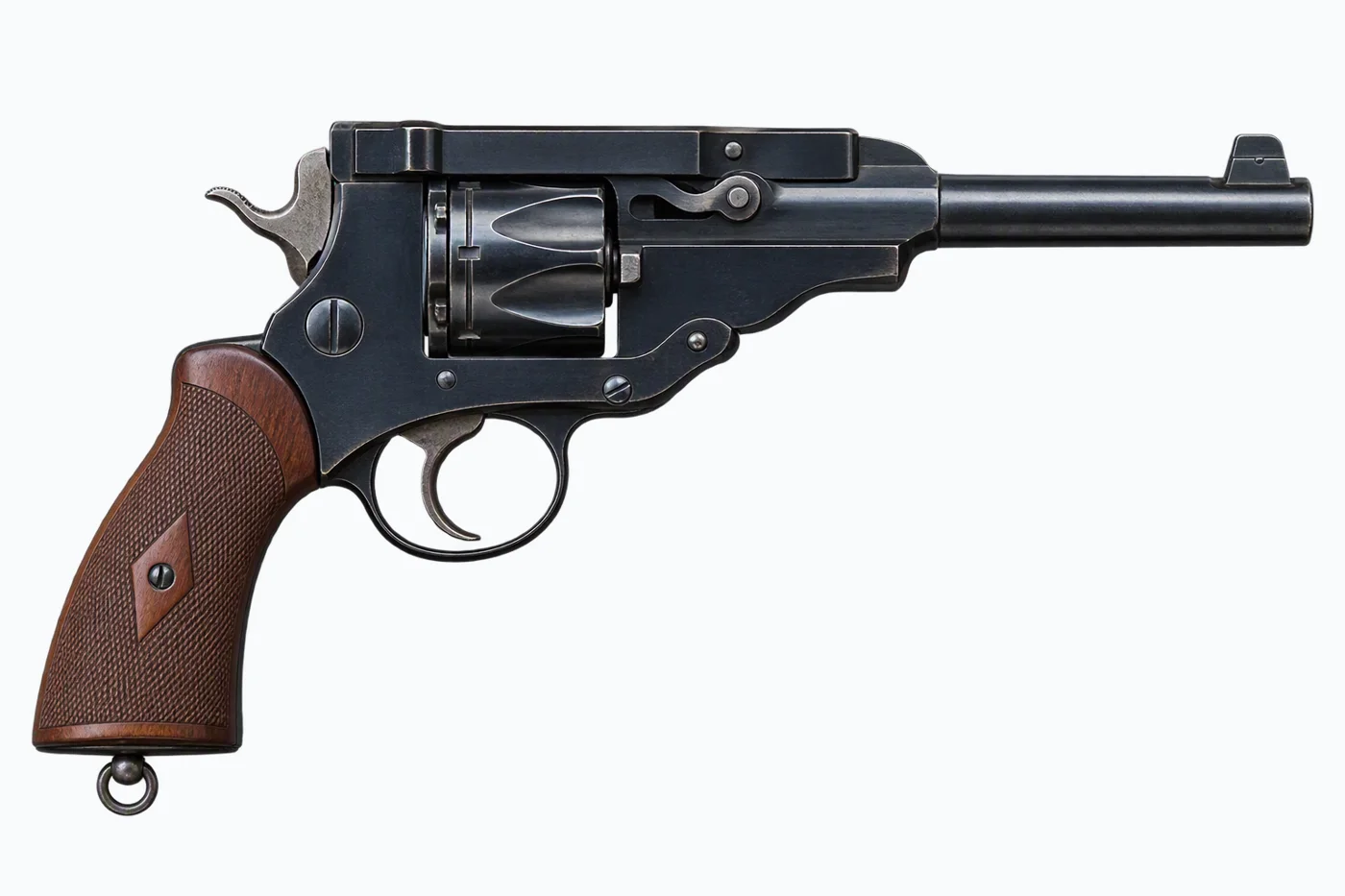
Webley-Fosbery Automatic Revolver
Recoil operated · .455 Webley
Webley-Pryse Revolver
Double action revolver · .455 Webley