
Webley & Scott · Revolver
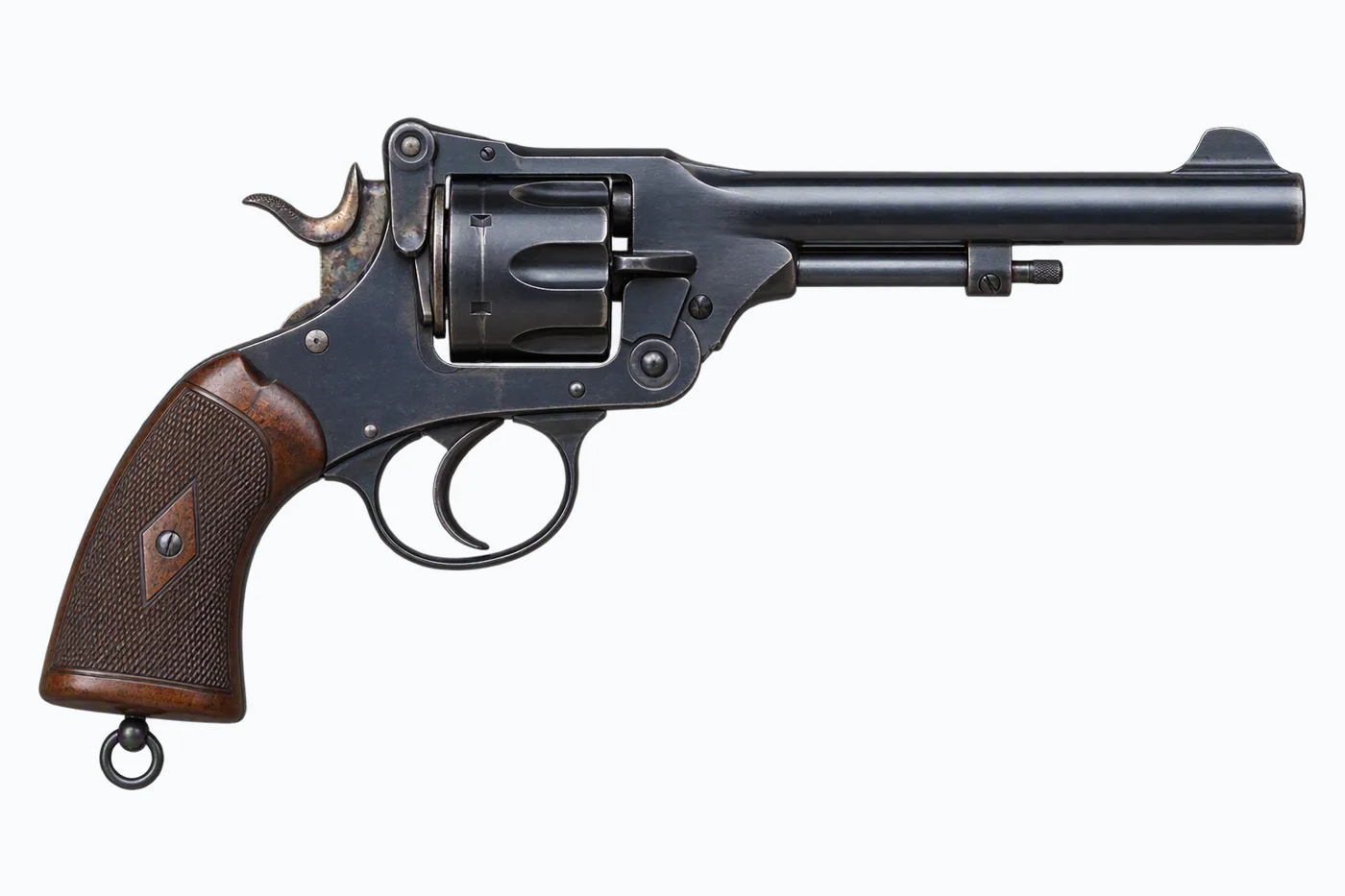
Webley WG Army
Double action · .455 Webley · introduced 1889
Also known as Webley-Green, Webley Government Model, WG Army Model
About the Webley WG Army
The Webley WG Army (the initials standing for 'Webley-Green', after design collaborator Edwinson Green, though Webley also marketed the line as the 'Webley Government' model) is a commercial and target-grade British top-break revolver introduced in 1889 and produced until 1902. It is the direct commercial ancestor of the WWI-era military Webley service marks. Like the later service revolvers it uses a stirrup barrel latch and break-top action with star extraction for simultaneous ejection of all six cases, and fires in double or single action from an exposed-spur hammer. The WG was chambered for a range of large-bore British rounds - principally .455 Webley and the older .476 Enfield (whose '.476' designation refers to the case rather than the bullet, which is the same .455-inch diameter), with some examples in .45 Colt. The Army Model carried a 6-inch barrel and a bird's-head grip; a Target Model offered a longer 7.5-inch barrel and a flared square butt. Because British officers supplied their own sidearms until 1915, the WG Army was a hugely popular private-purchase service revolver, retailed by firms such as Wilkinson Sword and the Army & Navy Co-operative Society, and carried privately into the Second Boer War and the opening of the First World War.
The 'WG' stamped on the frame preserves the name of Edwinson Green, the gunsmith whose collaboration shaped the design - though Webley simultaneously marketed it as the 'Webley Government' model, leaving the initials happily ambiguous. The WG Target Model was a genuine competition star, taking honours at the Dublin, Glasgow, and Wimbledon shooting matches, and is widely regarded as the finest Victorian top-break target revolver - the direct commercial parent of the service Webleys that armed British officers through both World Wars.
Webley WG Army specifications
General
- Type
- Revolver
- Action
- Double action
- Firing mechanism
- Double action single action
- Trigger
- Double action single action
- Calibres
- .455 Webley, .476 Enfield
- Magazine capacity
- 6 rounds
- Magazine
- Revolving cylinder
Dimensions
- Barrel length
- 152 mm (6.0 in)
- Overall length
- 311 mm (12.2 in)
- Weight (empty)
- 1.00 kg (2.20 lb)
Barrel
- Rifling
- Left hand
- Grooves
- 7
Materials
- Barrel
- Steel
- Receiver / frame
- Steel
- Stock
- Walnut
- Finish
- blued
Performance
- Muzzle velocity (typical)
- 189 m/s (620 fps)
- Muzzle energy (typical)
- 287 J (212 ft·lb)
- Effective range
- 45 m
History
- Introduced
- 1889
- Discontinued
- 1902
- Production status
- Out of production
- Country of origin
- GB
- Designer
- Edwinson Green
Available calibres
Features
- Break top action
- Simultaneous extraction
- Automatic ejection
- Six shot cylinder
- Target grade finish
- Birds head grip army model
- Removable cylinder for cleaning
- Lanyard ring
Safety
- Rebounding hammer
- Stirrup latch
The first revolvers marked 'WG' appeared in 1889; the standardized production pattern settled around 1896 (serial range ~10,000) and the line was discontinued in 1902 when the Webley WS (Webley Service) model replaced it. Roughly 22,000 WG-pattern revolvers were produced in total. Weight and some overall-length figures here are derived from dealer and museum listings rather than a primary factory catalog and should be treated as approximate. The Target Model was a genuine competition success and is regarded as a high-water mark of Victorian top-break target revolvers.
Similar models
Webley Mk I
Recoil operated · .455 Webley
Webley Mk III
Double action · .455 Webley
Webley Mk IV .38
Break action · .38/200 (.38 S&W)
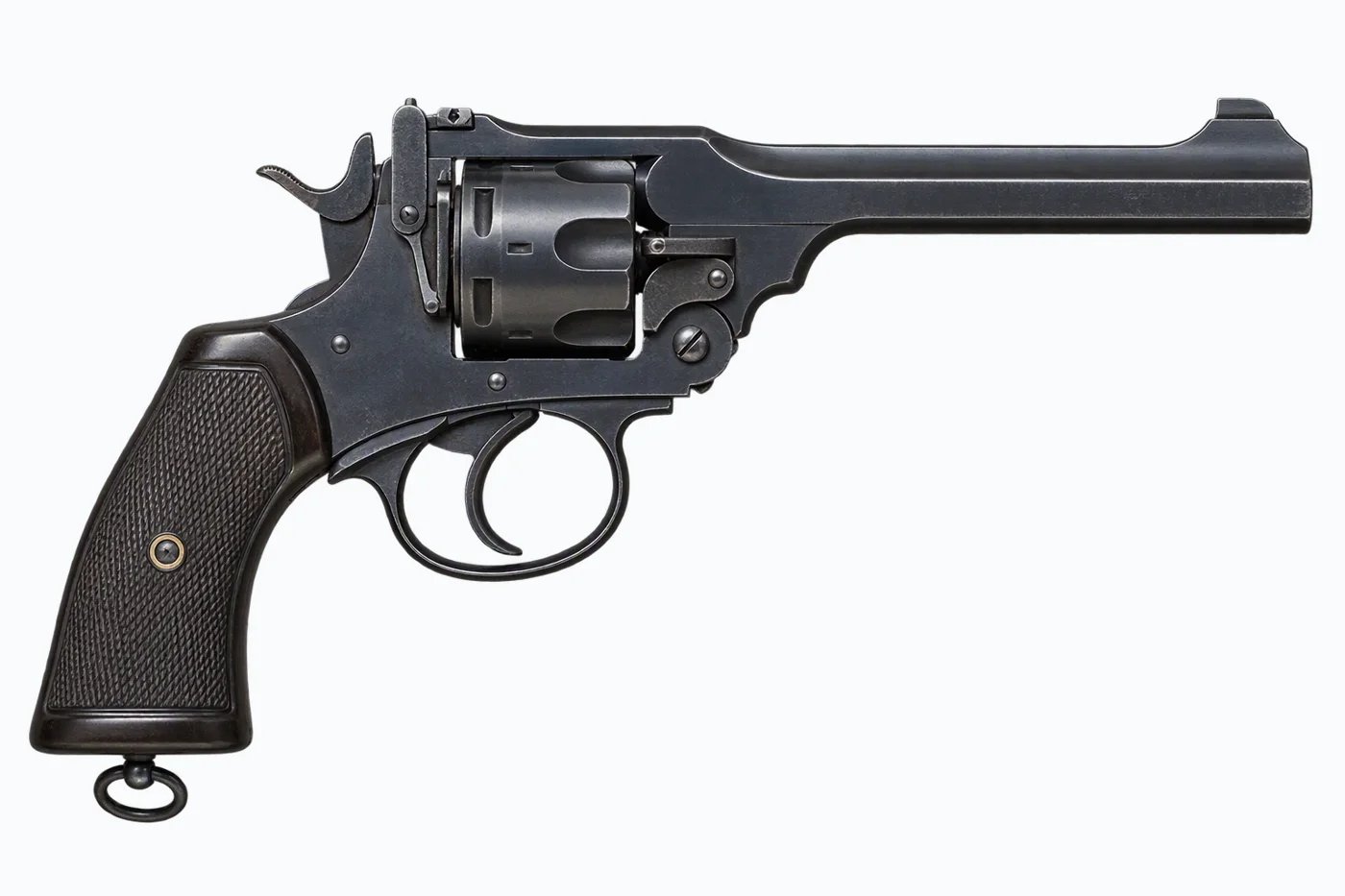
Webley Mk VI
Double action · .455 Webley
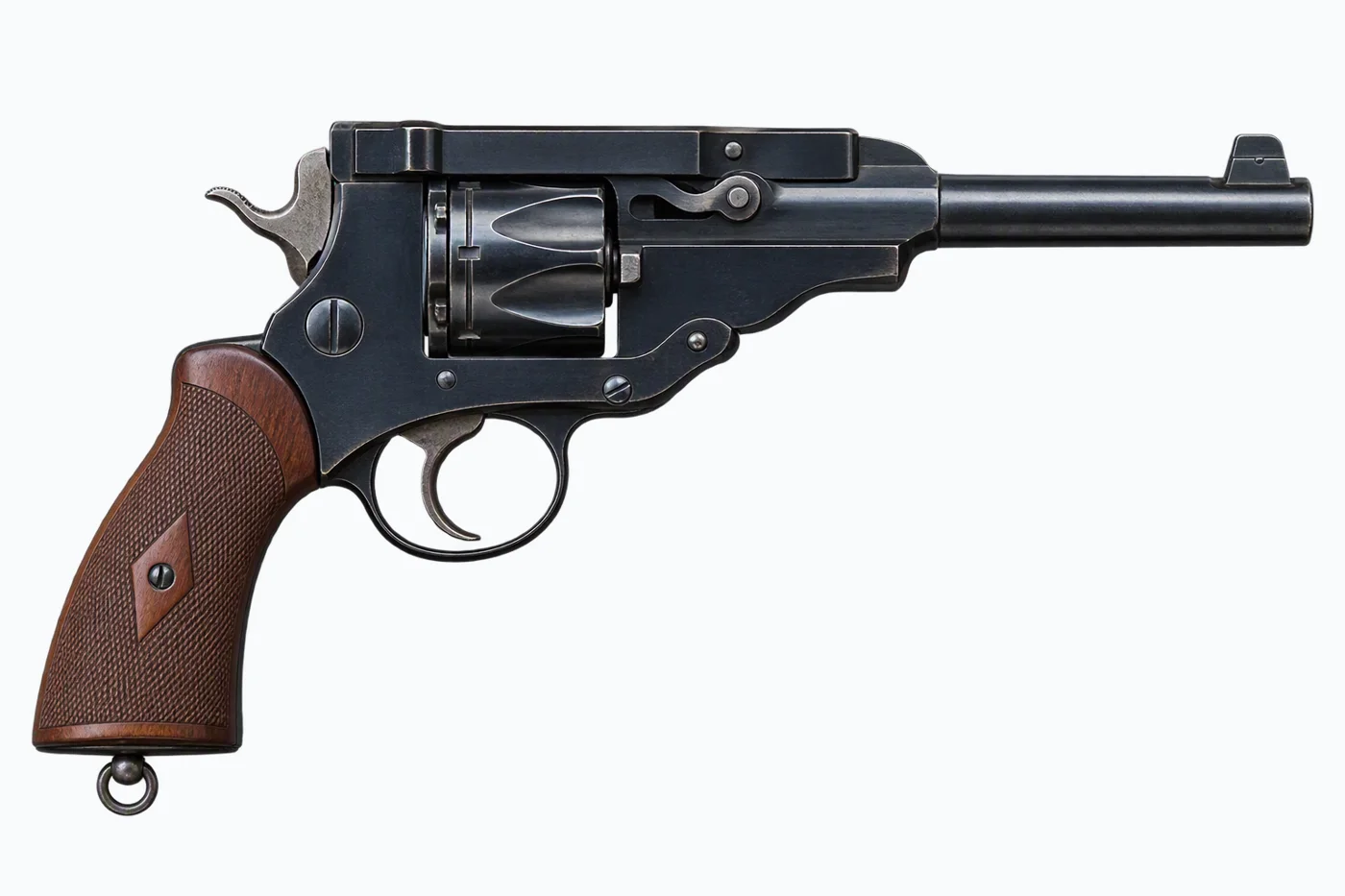
Webley-Fosbery Automatic Revolver
Recoil operated · .455 Webley
Webley-Pryse Revolver
Double action revolver · .455 Webley