
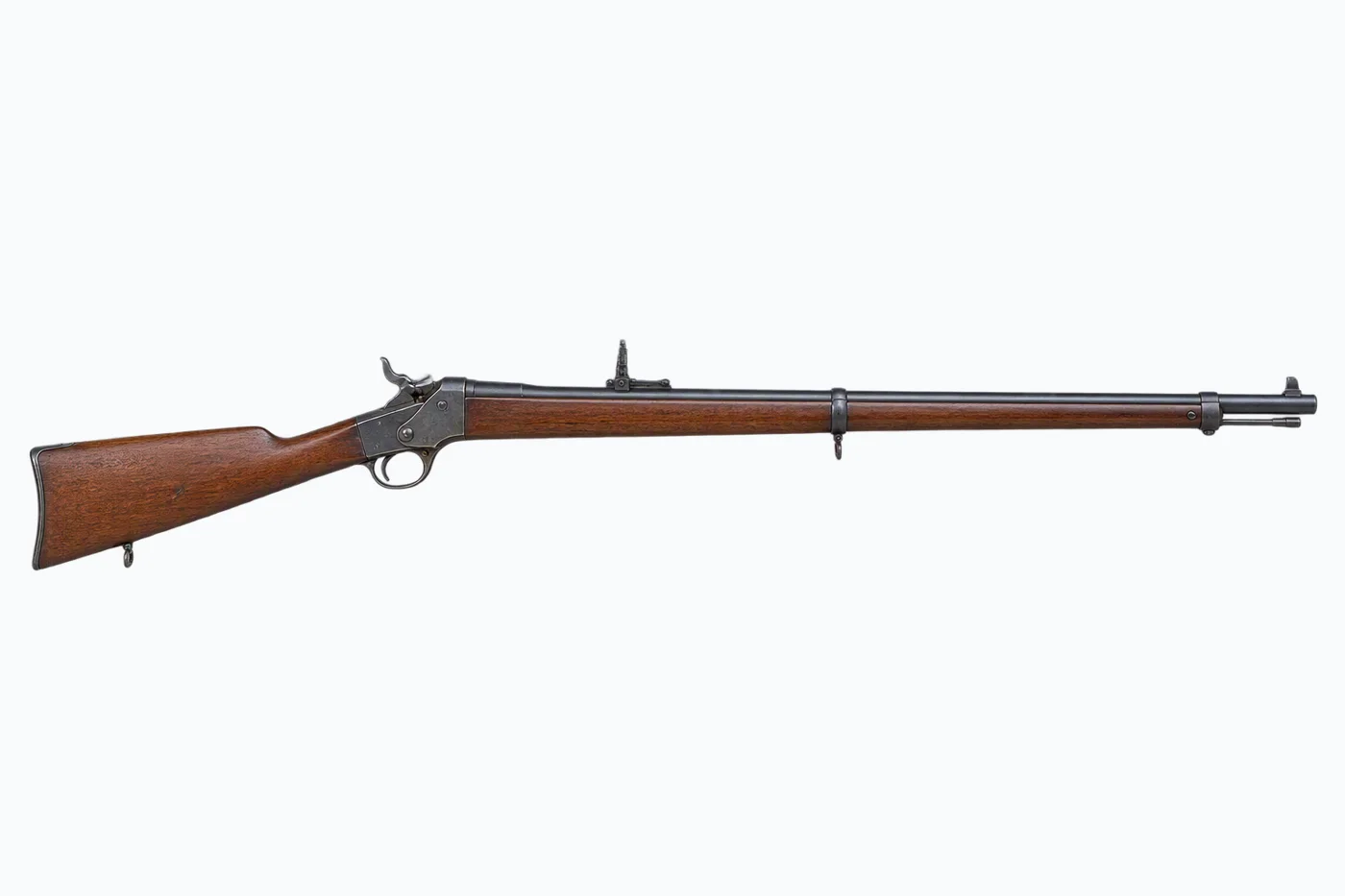
E. · Rifle
Remington Rolling Block Rifle
Bolt action · .43 Spanish · introduced 1867
Also known as Remington-Rider Rolling Block, Remington No. 1, M1867
About the Remington Rolling Block Rifle
The Remington Rolling Block is a single-shot, breech-loading rifle that became one of the most successful and widely adopted military rifles of the late 19th century. Designed by Joseph Rider and refined from a patent by Leonard Geiger, the action uses two pivoting blocks - a rolling breech block and a hammer - that interlock to seal the breech against high cartridge pressures. Its remarkable simplicity, strength, and ability to handle any cartridge of the era made it the rifle of choice for over 40 nations, with production exceeding 1.5 million military variants alone. Available in calibers from .22 rimfire to powerful military rounds like .43 Spanish, .50-70, and .45-70, the design saw service from 1867 well into the 20th century, finally leaving Remington's catalogue in 1934.
Remington was on the brink of bankruptcy in 1865 when Joseph Rider's rolling-block patent saved the company; within a decade it had become a global standard, adopted by over 40 nations and fired in nearly every major war from the Franco-Prussian War through the Mexican Revolution. Spanish troops armed with Rolling Blocks at San Juan Hill in 1898 inflicted heavy casualties on Theodore Roosevelt's Rough Riders, despite being outranged by U.S. Krags - a testament to the action's deadly accuracy in trained hands.
Remington Rolling Block Rifle specifications
General
- Type
- Rifle
- Action
- Bolt action
- Firing mechanism
- Hammer-fired
- Trigger
- Single stage
- Trigger pull
- 2.8 kg (6.1 lb)
- Calibres
- .43 Spanish, .45-70 Government, .50-70 Government
- Magazine capacity
- 1 rounds
- Magazine
- Internal
Dimensions
- Barrel length
- 889 mm (35.0 in)
- Overall length
- 1300 mm (51.2 in)
- Weight (empty)
- 4.08 kg (9.00 lb)
Barrel
- Rifling twist
- 1:22 in (559 mm)
- Rifling
- Right hand
- Grooves
- 6
Materials
- Barrel
- Steel
- Receiver / frame
- Steel
- Stock
- Wood
- Finish
- blued
Performance
- Muzzle velocity (typical)
- 410 m/s (1345 fps)
- Muzzle energy (typical)
- 2068 J (1525 ft·lb)
- Effective range
- 500 m
History
- Introduced
- 1867
- Discontinued
- 1934
- Production status
- Out of production
- Country of origin
- US
- Designer
- Joseph Rider
Available calibres
Features
- Rolling block action
- Exposed hammer
- Pivoting breech block
- Single shot
- Iron sights
- Bayonet lug
Safety
- Half cock hammer
The Rolling Block design gained worldwide credibility after France's emergency wartime purchase during the Franco-Prussian War of 1870-71. Spanish-issued Rolling Blocks were still fighting U.S. troops armed with bolt-action Krag-Jorgensens during the Spanish-American War of 1898. Civilian sporting variants (No. 1, No. 1-1/2, No. 2, etc.) were popular buffalo rifles on the American Plains. Standard military rifle weighed approximately 9 lbs (4.08 kg) with a 30-inch (762mm) or 35-inch barrel; the carbine version weighed 7.25 lbs with a 20.5-inch barrel. Total worldwide production - including license-built copies - exceeded several million units across more than 70 years of manufacturing.
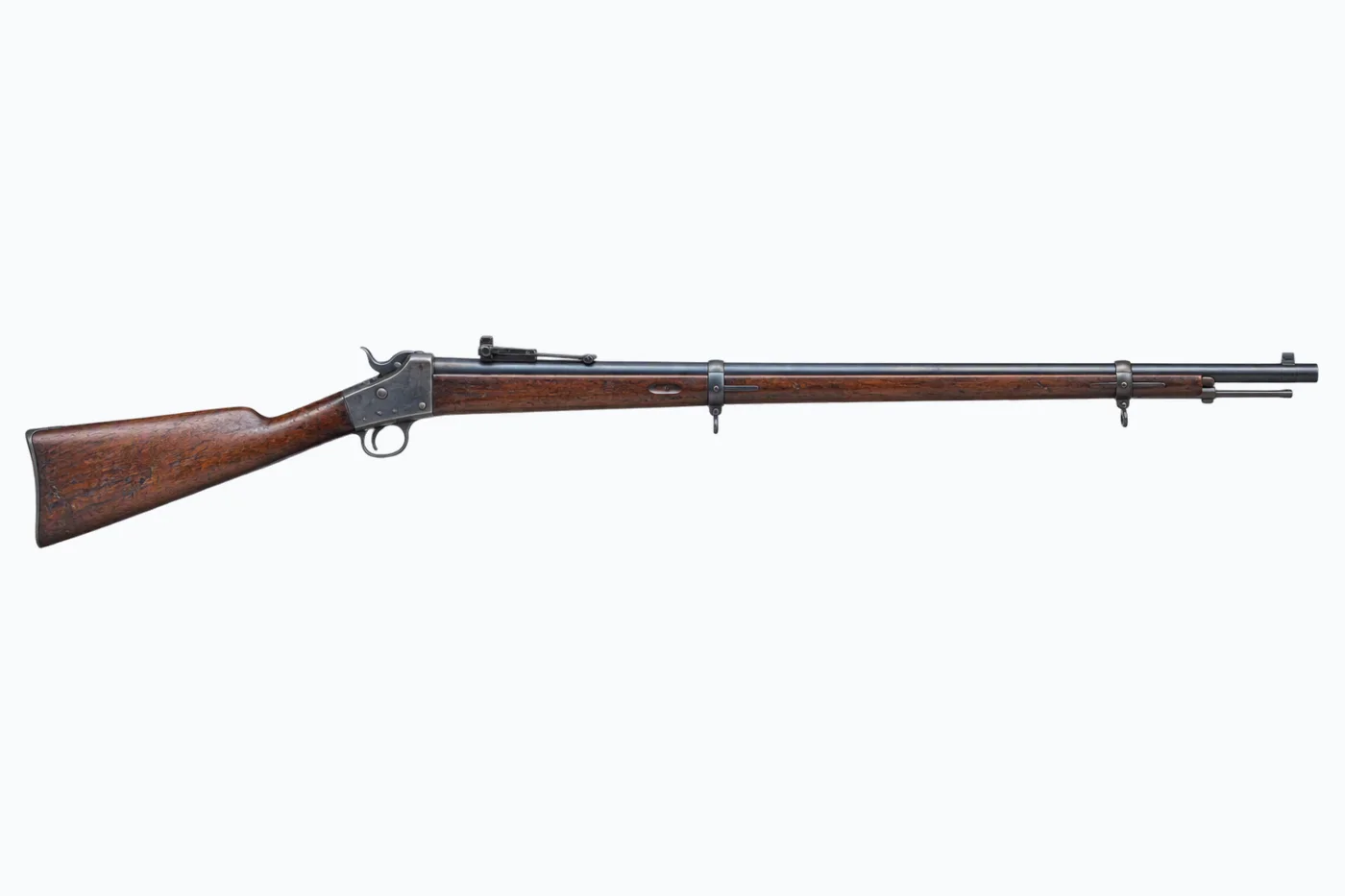
Remington Rolling Block Rifle variants
Similar models
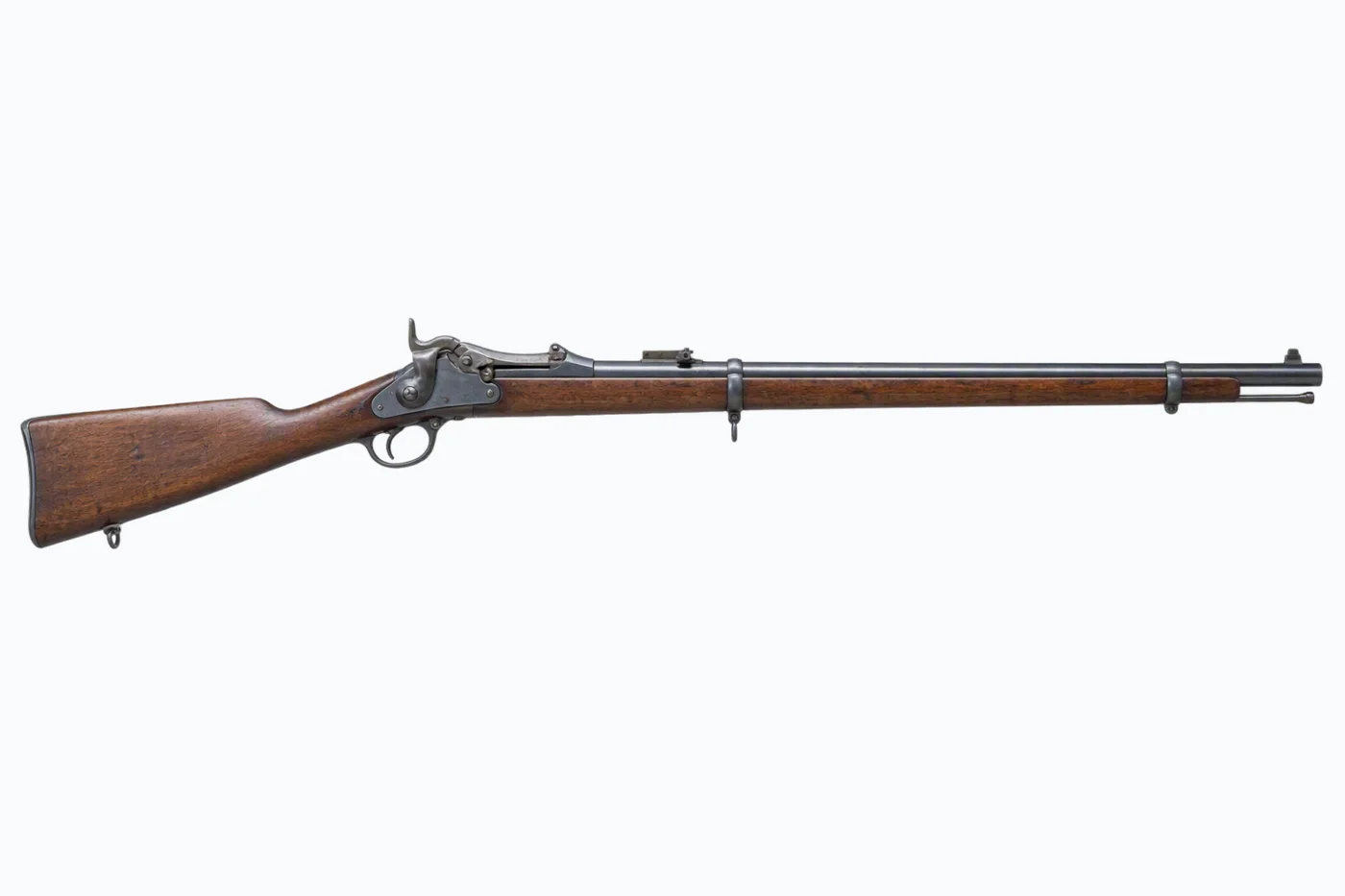
Allin Conversion
Trapdoor · .50-70 Government
Ballard No. 1½ Hunter's Rifle
Falling block · .45-70 Government
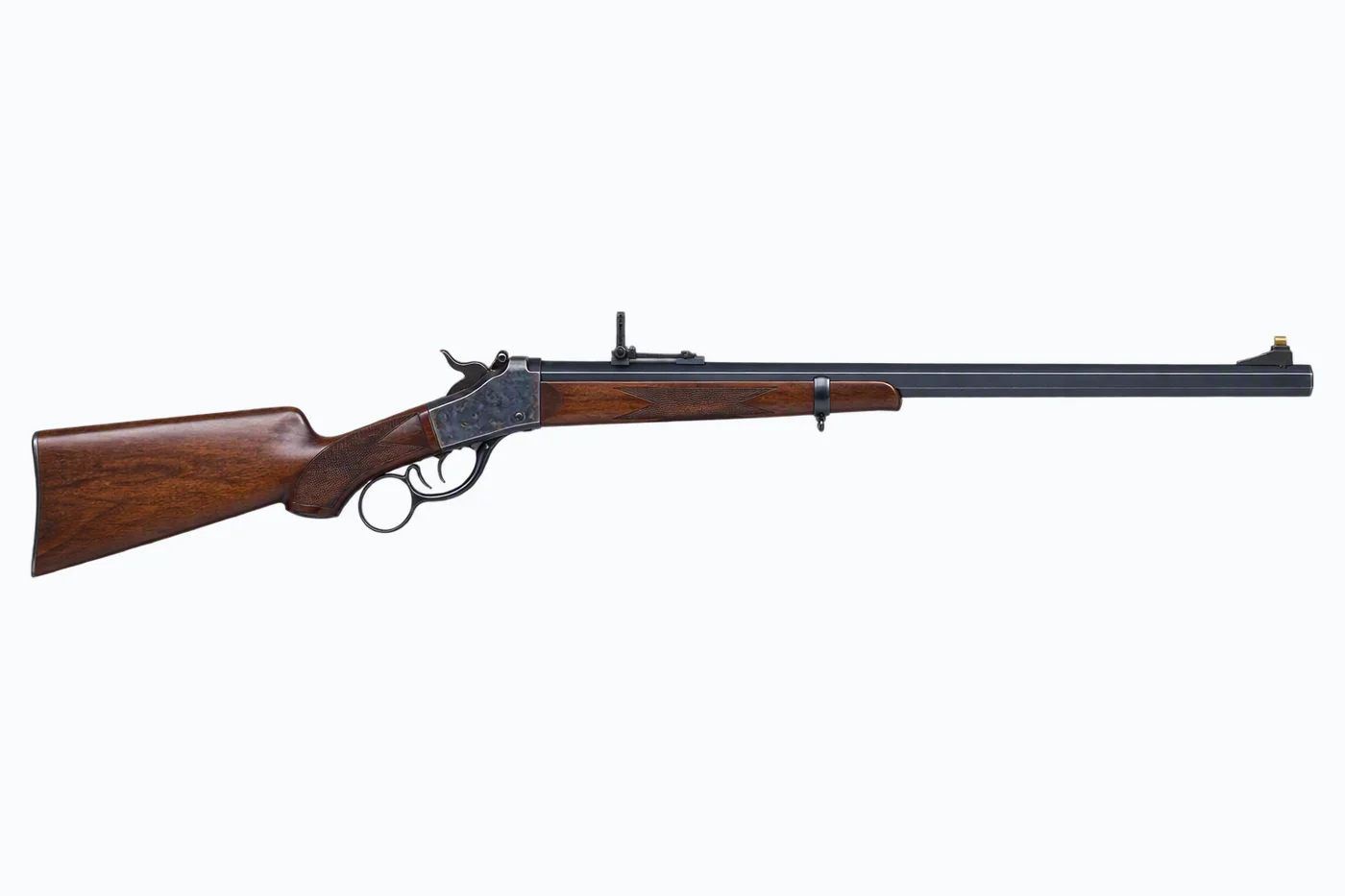
Ballard No. 5 Pacific
Falling block · .45-70 Government
Ballard No. 5 Pacific
Falling block · .45-70 Government