
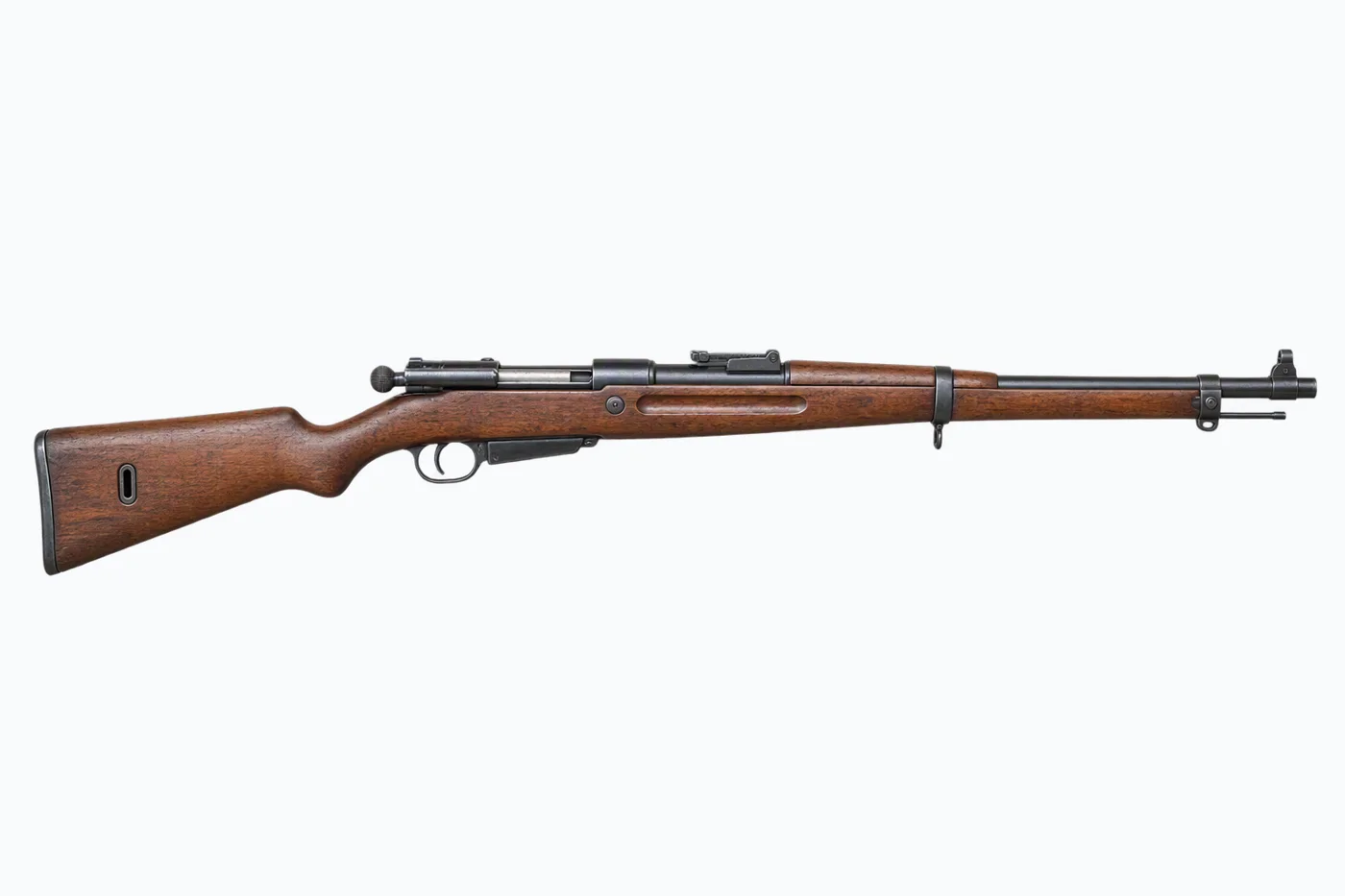
Österreichische · Rifle
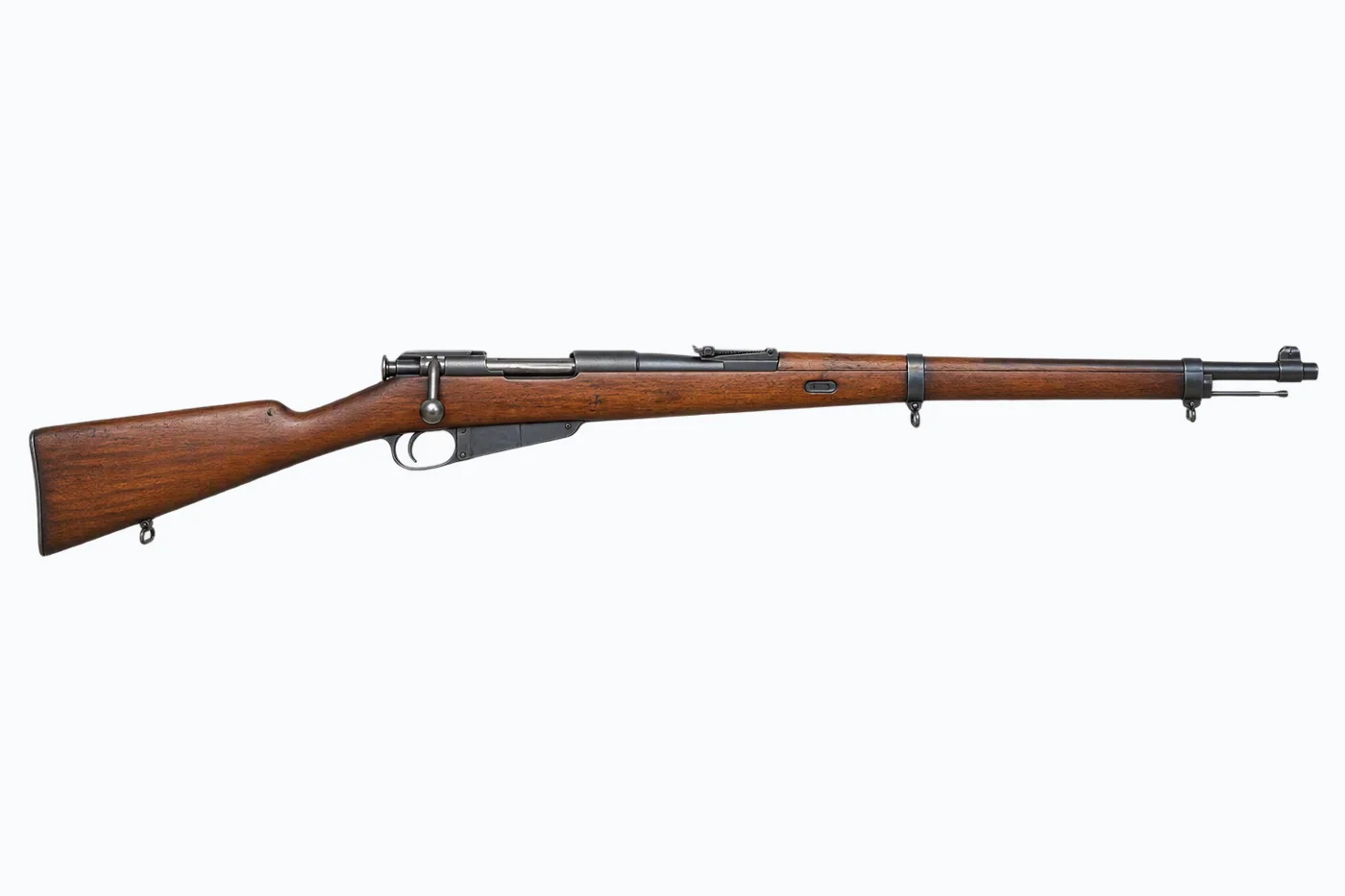
Mannlicher M1895
Bolt action · 8x50mmR Mannlicher · introduced 1895
Also known as Repetier-Gewehr M.95, Steyr M1895, Steyr-Mannlicher M1895
About the Mannlicher M1895
The Mannlicher M1895 is an Austro-Hungarian straight-pull bolt-action service rifle designed by Ferdinand Ritter von Mannlicher and manufactured by Oesterreichische Waffenfabrik Steyr and the Hungarian Fegyver- es Gepgyar Reszvenytarsasag (FEG) in Budapest. Its defining mechanical feature is the straight-pull bolt action: rather than the four-motion lift-pull-push-turn cycle of a Mauser, the M1895's bolt handle is drawn straight back and pushed straight forward, with a rotating bolt head that locks into the receiver via helical cam surfaces machined into the bolt sleeve. This greatly increased the practical rate of fire, allowing a trained soldier to deliver 30-35 aimed rounds per minute compared to 15-20 for contemporary rotating-bolt rifles. The rifle feeds from a five-round en-bloc clip inserted from above; the clip remains inside the integral magazine while rounds are stripped off by the bolt, and once the last round is chambered the empty clip falls free through an opening in the bottom of the magazine. Chambered originally in 8x50mmR Mannlicher, the M1895 served as the primary infantry rifle of Austria-Hungary throughout World War I, with approximately 3.5 million produced before and during the war. Postwar, huge surplus stocks were converted by Austria and Hungary to the more powerful 8x56mmR cartridge (as the M95/30 and 31M), while Yugoslavia rebarreled captured rifles to 7.92x57mm Mauser as the M95M. Variants included a full-length Infantry Rifle, a shorter Stutzen for specialist troops, and a handy Kavalleriekarabiner for cavalry and artillery. The M1895 remained in frontline and reserve service with multiple European armies into World War II and saw final combat service as late as the Korean War.
The straight-pull bolt of the M1895 allowed Austro-Hungarian troops to fire 30-35 aimed rounds per minute against the 15-20 of a Mauser-armed opponent, and Italian infantry in the 1915-1918 Alpine campaigns often reported that a single Austrian rifleman seemed to be firing a machine gun. The price of that speed was a notorious weakness: the open en-bloc clip system ejects the empty clip out the bottom of the magazine after the last round, and a pinch of Carpathian mud or a few flakes of snow in the clipway could jam the rifle solid until it was stripped down with a bayonet tip.
Mannlicher M1895 specifications
General
- Type
- Rifle
- Action
- Bolt action
- Firing mechanism
- Striker-fired
- Trigger
- Two stage
- Calibres
- 8x50mmR Mannlicher, 8x56mmR Mannlicher
- Magazine capacity
- 5 rounds
- Magazine
- En bloc clip
Dimensions
- Barrel length
- 765 mm (30.1 in)
- Overall length
- 1272 mm (50.1 in)
- Weight (empty)
- 3.78 kg (8.33 lb)
Barrel
- Rifling twist
- 1:10 in (250 mm)
- Rifling
- Right hand
- Grooves
- 4
Materials
- Barrel
- Steel
- Receiver / frame
- Steel
- Stock
- Walnut
- Finish
- blued
Performance
- Muzzle velocity (typical)
- 620 m/s (2034 fps)
- Muzzle energy (typical)
- 3035 J (2239 ft·lb)
- Effective range
- 500 m
History
- Introduced
- 1895
- Discontinued
- 1945
- Production status
- Out of production
- Country of origin
- AT
- Designer
- Ferdinand Ritter von Mannlicher
Available calibres
Features
- Straight pull bolt
- Rotating bolt head
- En bloc clip loading
- Bottom ejection clip
- Open iron sights
- Bayonet lug
Safety
- Manual safety
- Bolt mounted wing safety
The straight-pull action is the M1895's most famous characteristic but also its most polarizing: while it enabled high rates of fire, the open action and bottom-ejection en-bloc system were notoriously vulnerable to mud, snow, and the trench conditions of the Italian Alps and Galician fronts. The two-piece wedge-locking bolt is more mechanically complex than a Mauser bolt but surprisingly durable when properly maintained. Steyr produced the majority of rifles, but Hungarian FEG in Budapest produced a substantial share for the Honved (Hungarian Landwehr). The M95/30 and 31M conversions lengthened the chamber, rebored the barrel, and restamped the rear sight for the new 8x56mmR cartridge; converted rifles are marked with a prominent 'S' on the barrel or receiver.
Mannlicher M1895 variants
Similar models
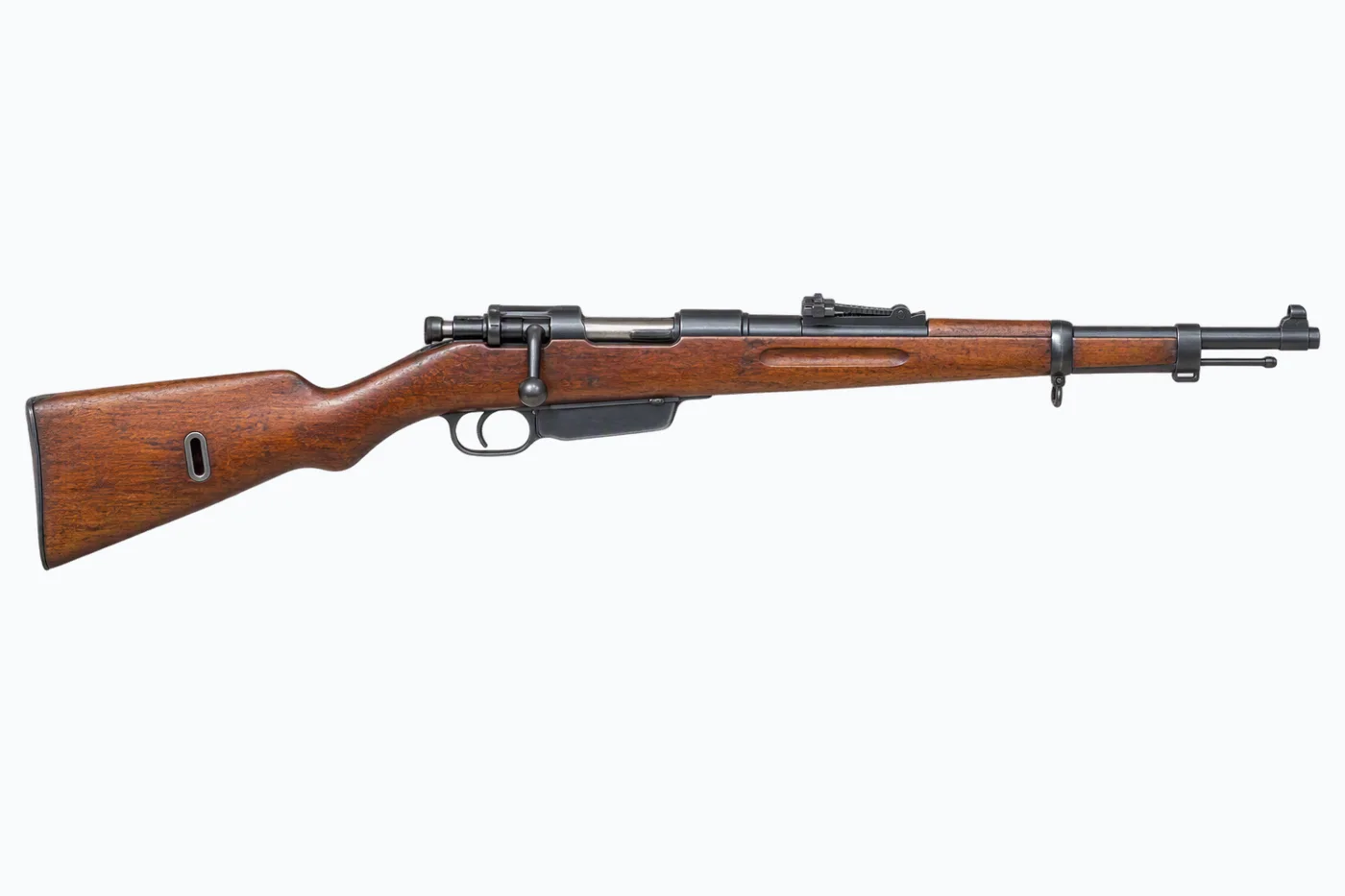
Benjamin Bulldog
Bolt action · .357 Air (9mm)
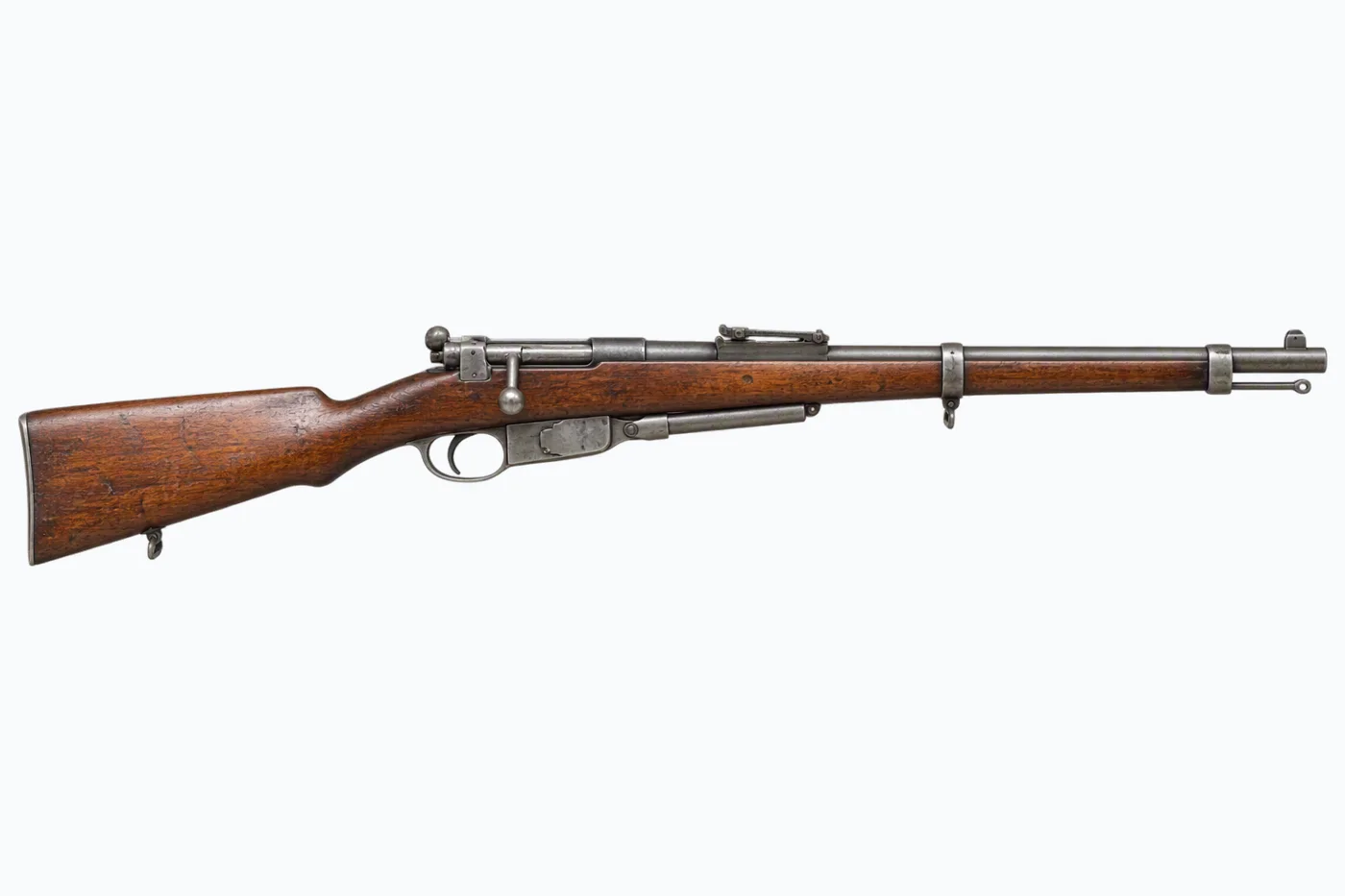
Fruwirth M1872
Bolt action · 11.15×36mmR Fruwirth
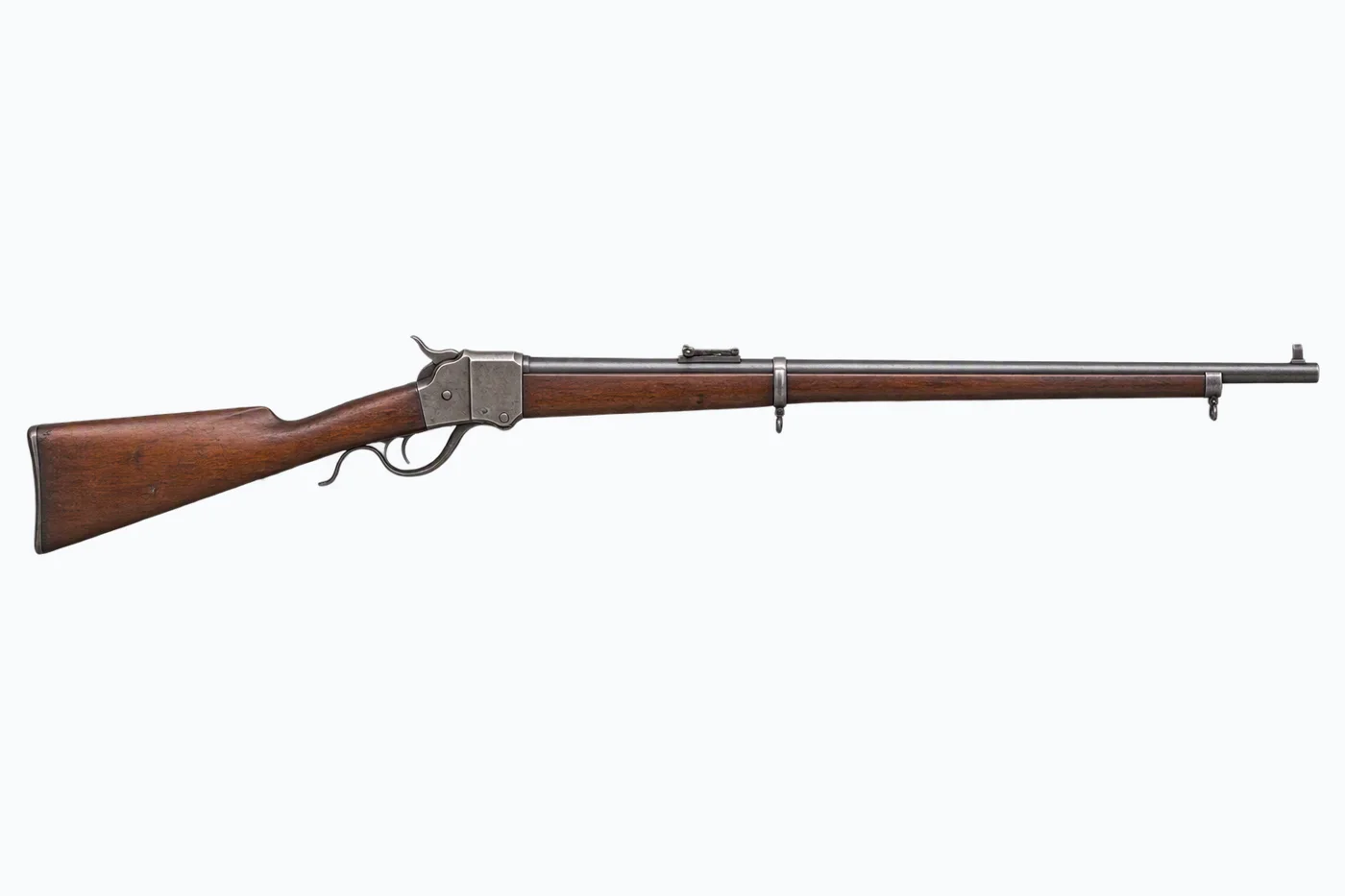
Guedes M1885
Falling block · 8×60mmR Guedes
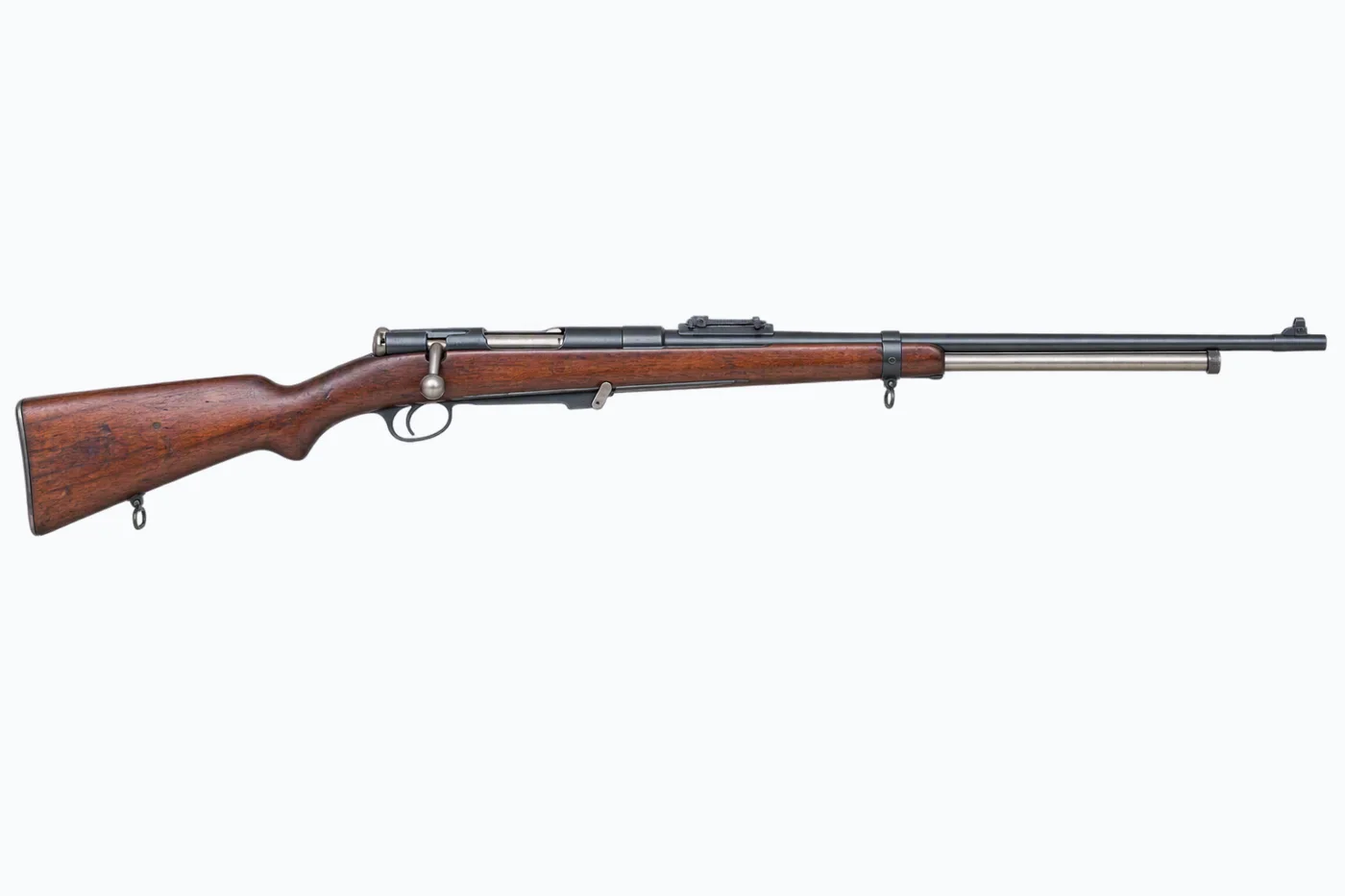
Kropatschek M1886
Bolt action · 8x60mmR Kropatschek
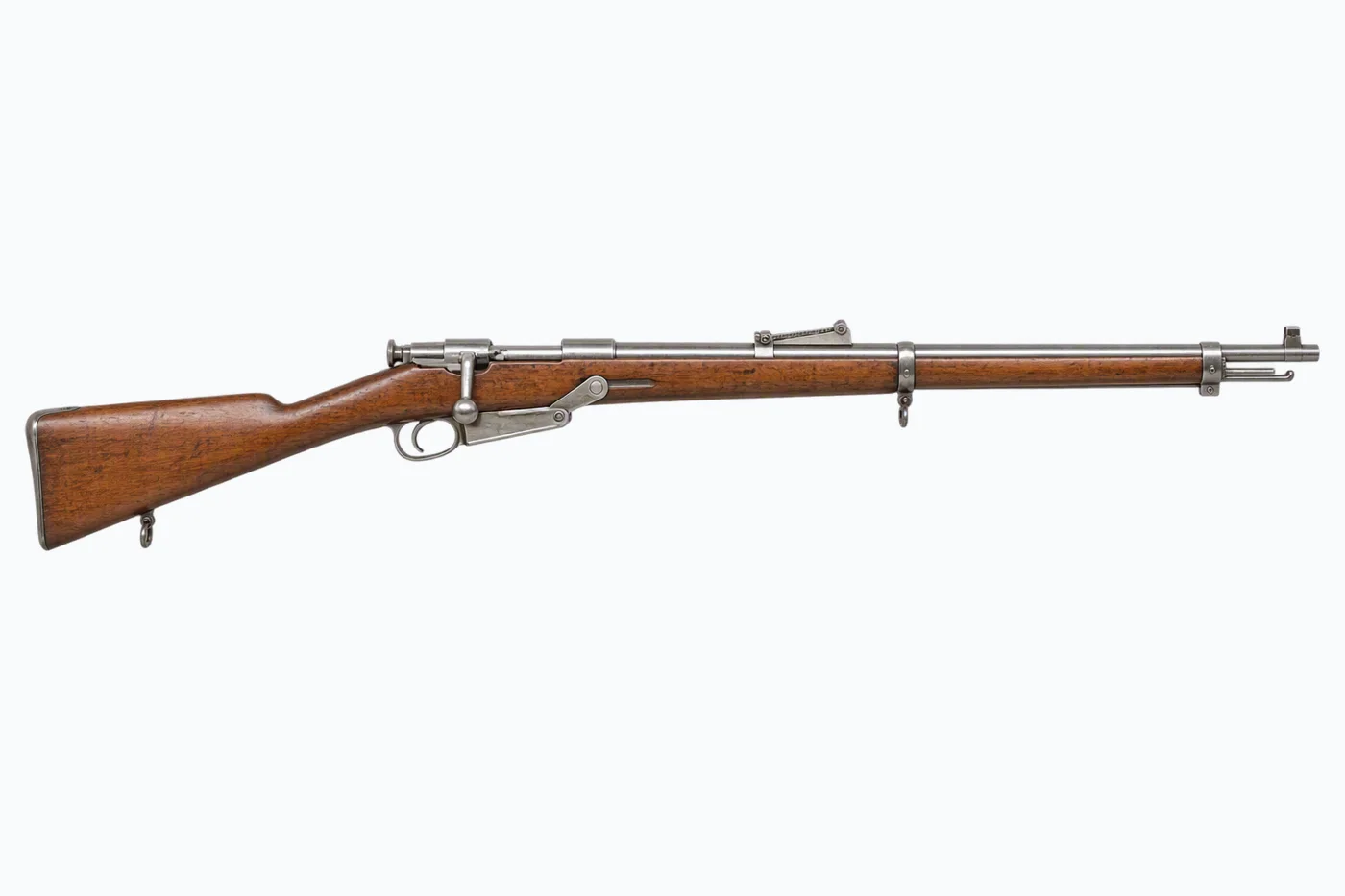
Kropatschek Mle 1878 Marine
Bolt action · 11x59mmR Gras
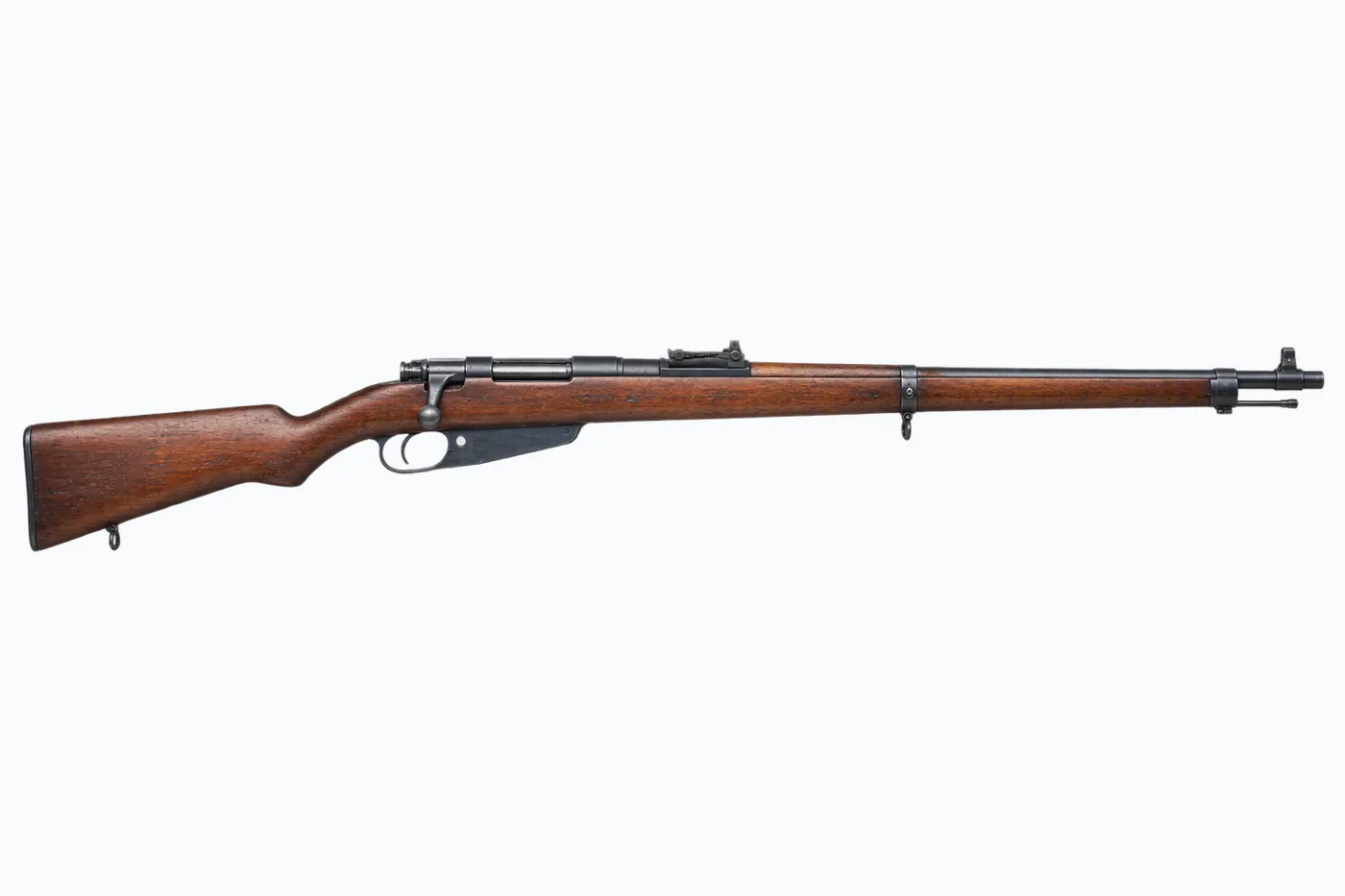
Mannlicher M1886
Bolt action · 11x58mmR Werndl
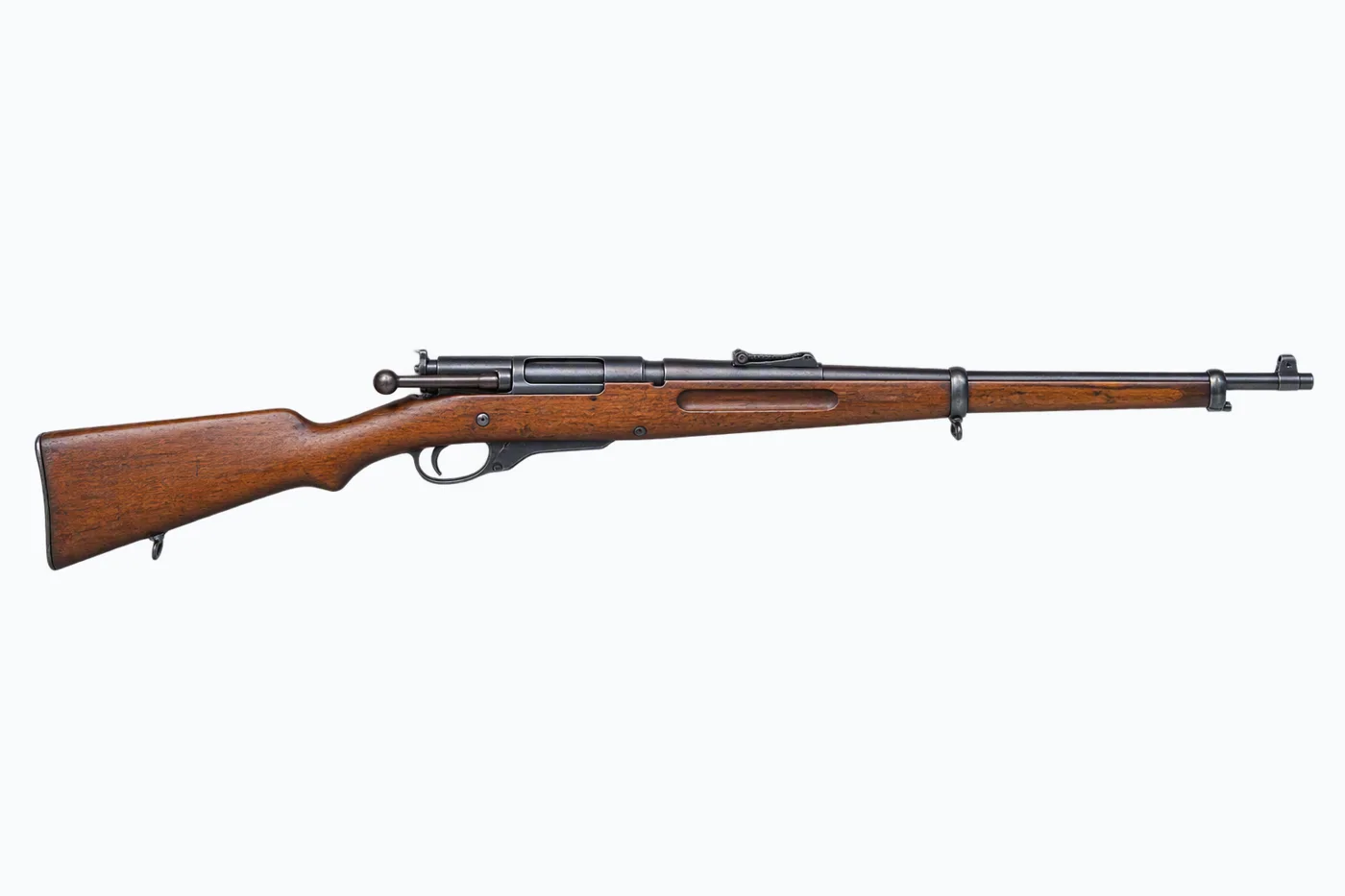
Mannlicher M1888
Bolt action · 8x50mmR Mannlicher
Mannlicher M1893
Bolt action · 6.5x53mmR