
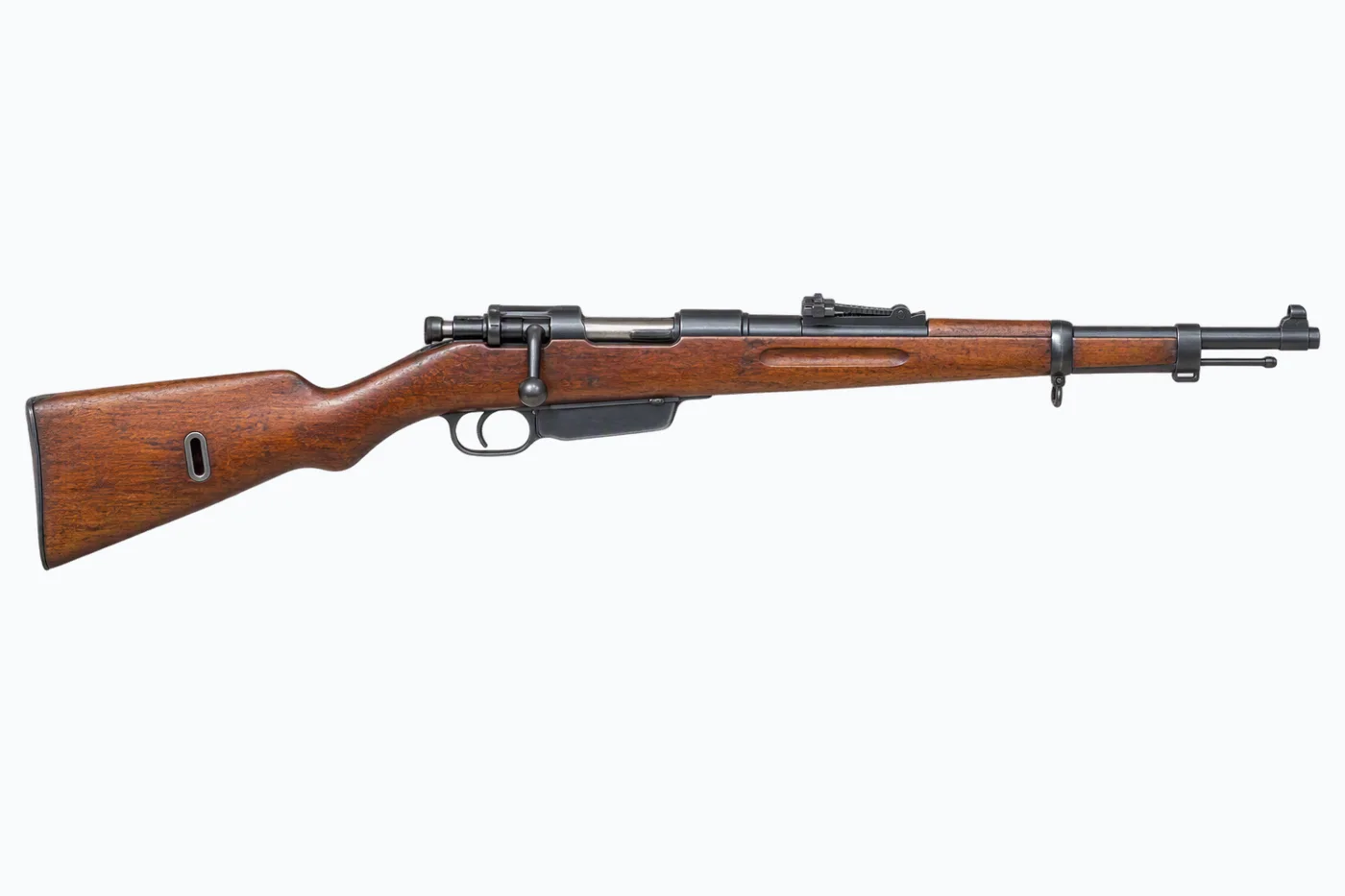
Österreichische · Carbine
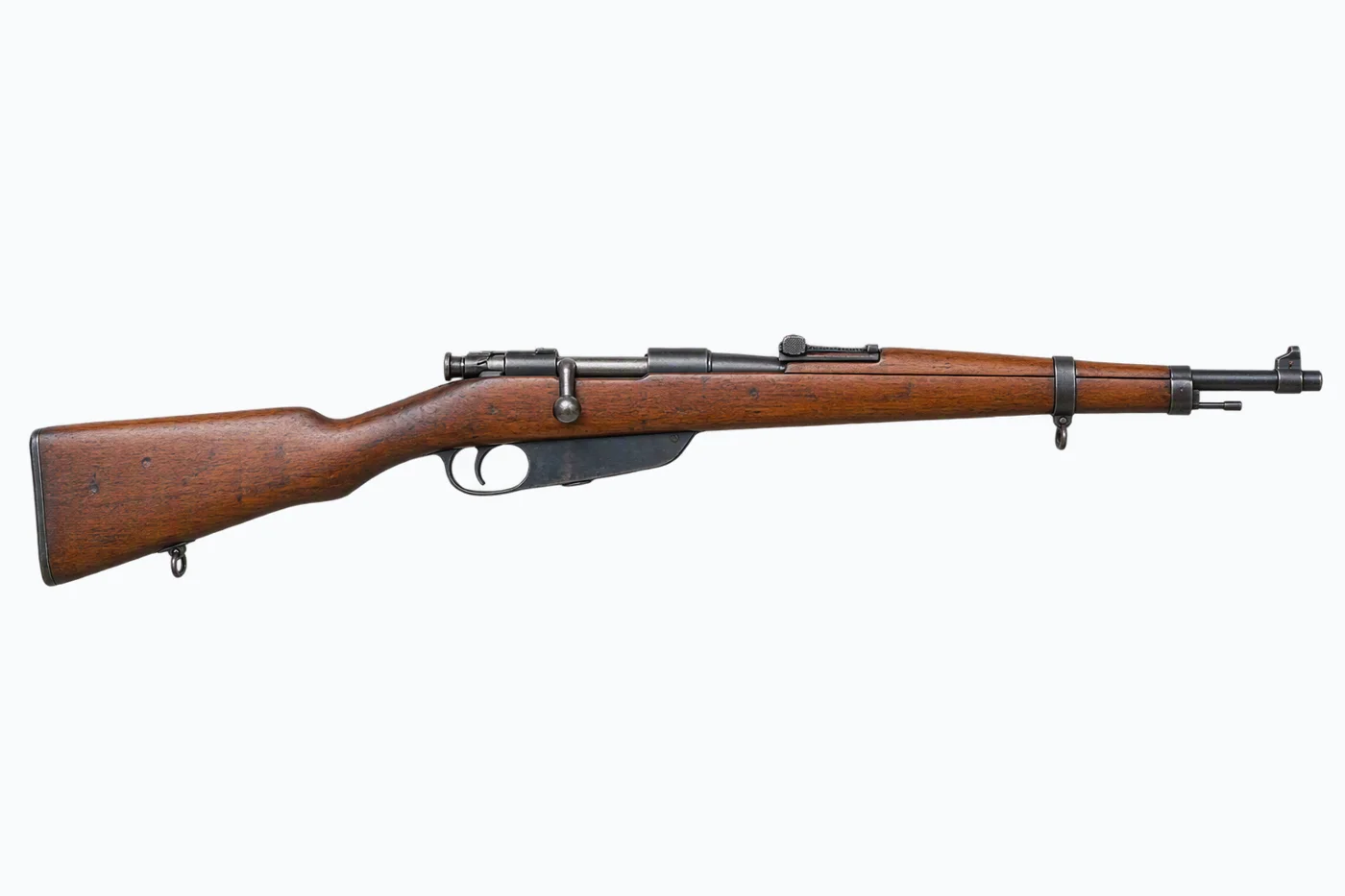
Steyr M95 Stutzen
Bolt action · 8x56mmR Mannlicher · introduced 1895
Also known as Repetier-Stutzen M.95, Mannlicher M95 Stutzen, Steyr-Mannlicher M95 Stutzen
About the Steyr M95 Stutzen
The Steyr M95 Stutzen is the short-rifle (carbine) variant of the Austro-Hungarian Mannlicher M1895 straight-pull bolt-action service rifle, designed by Ferdinand Ritter von Mannlicher and produced by Oesterreichische Waffenfabrik Steyr and Hungarian FEG. The Stutzen ('short rifle') was issued to specialist and second-line troops who needed a handier weapon than the full-length infantry rifle but a longer arm than the cavalry Kavalleriekarabiner. It shares the M1895's defining straight-pull bolt: rather than the lift-pull-push-turn cycle of a Mauser, the bolt handle is drawn straight back and pushed straight forward while a rotating bolt head locks into the receiver, allowing a trained soldier to deliver roughly 30-35 aimed rounds per minute. It feeds from a five-round en-bloc clip loaded from the top, with the empty clip falling free through the bottom of the magazine after the last round is chambered. Originally chambered in 8x50mmR Mannlicher, the bulk of surviving Stutzen carbines were rebarreled and rechambered in the 1930s for the more powerful 8x56mmR cartridge as the Austrian M95/30 and Hungarian 31M, both marked with a prominent 'S'. The M95 Stutzen served through World War I and remained in frontline and reserve use through World War II.
Issued to engineers, mountain troops, and other specialists who found the full-length infantry rifle unwieldy, the M95 Stutzen kept the M1895's signature trick: the straight-pull bolt that let an Austro-Hungarian soldier fire so quickly that opposing infantry in the Alpine campaigns sometimes mistook a single rifleman for a machine gunner. Its handiness made it a favourite for close terrain, though the open clipway that gave it speed also gave it the same appetite for jamming on Carpathian mud and snow.
Steyr M95 Stutzen specifications
General
- Type
- Carbine
- Action
- Bolt action
- Firing mechanism
- Striker-fired
- Trigger
- Two stage
- Calibres
- 8x56mmR Mannlicher, 8x50mmR Mannlicher
- Magazine capacity
- 5 rounds
- Magazine
- En bloc clip
Dimensions
- Barrel length
- 480 mm (18.9 in)
- Overall length
- 1003 mm (39.5 in)
- Weight (empty)
- 3.19 kg (7.03 lb)
Barrel
- Rifling twist
- 1:10 in (250 mm)
- Rifling
- Right hand
- Grooves
- 4
Materials
- Barrel
- Steel
- Receiver / frame
- Steel
- Stock
- Walnut
- Finish
- blued
Performance
- Muzzle velocity (typical)
- 680 m/s (2231 fps)
- Muzzle energy (typical)
- 3005 J (2216 ft·lb)
- Effective range
- 400 m
History
- Introduced
- 1895
- Discontinued
- 1945
- Production status
- Out of production
- Country of origin
- AT
- Designer
- Ferdinand Ritter von Mannlicher
Available calibres
Features
- Straight pull bolt
- Rotating bolt head
- En bloc clip loading
- Bottom ejection clip
- Open iron sights
- Bayonet lug
- Carbine length barrel
Safety
- Manual safety
- Bolt mounted wing safety
The Stutzen is distinguished from the full infantry rifle by its shorter barrel and forearm, a side-mounted sling configuration, and a stacking hook/bayonet arrangement suited to mountain and specialist troops. Like all M1895 pattern arms, the open en-bloc clip system and bottom ejection made it fast-firing but vulnerable to mud and snow. Most surviving examples encountered today are the 8x56mmR M95/30 conversions; original unconverted 8x50mmR Stutzen carbines are comparatively scarce.
This is a variant of the Mannlicher M1895.
Similar models
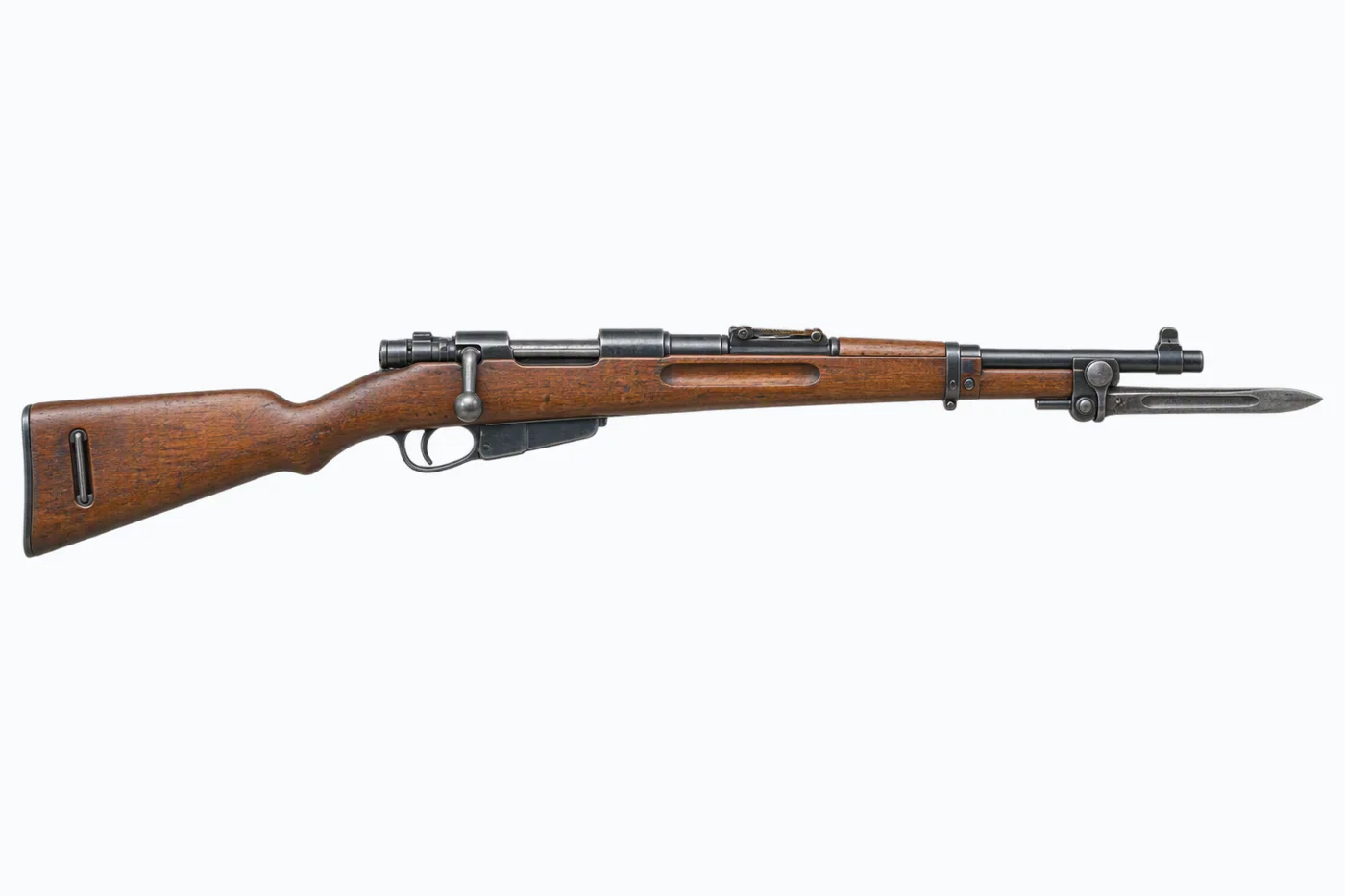
Carcano M38 Cavalry Carbine
Bolt action · 7.35x51mm Carcano
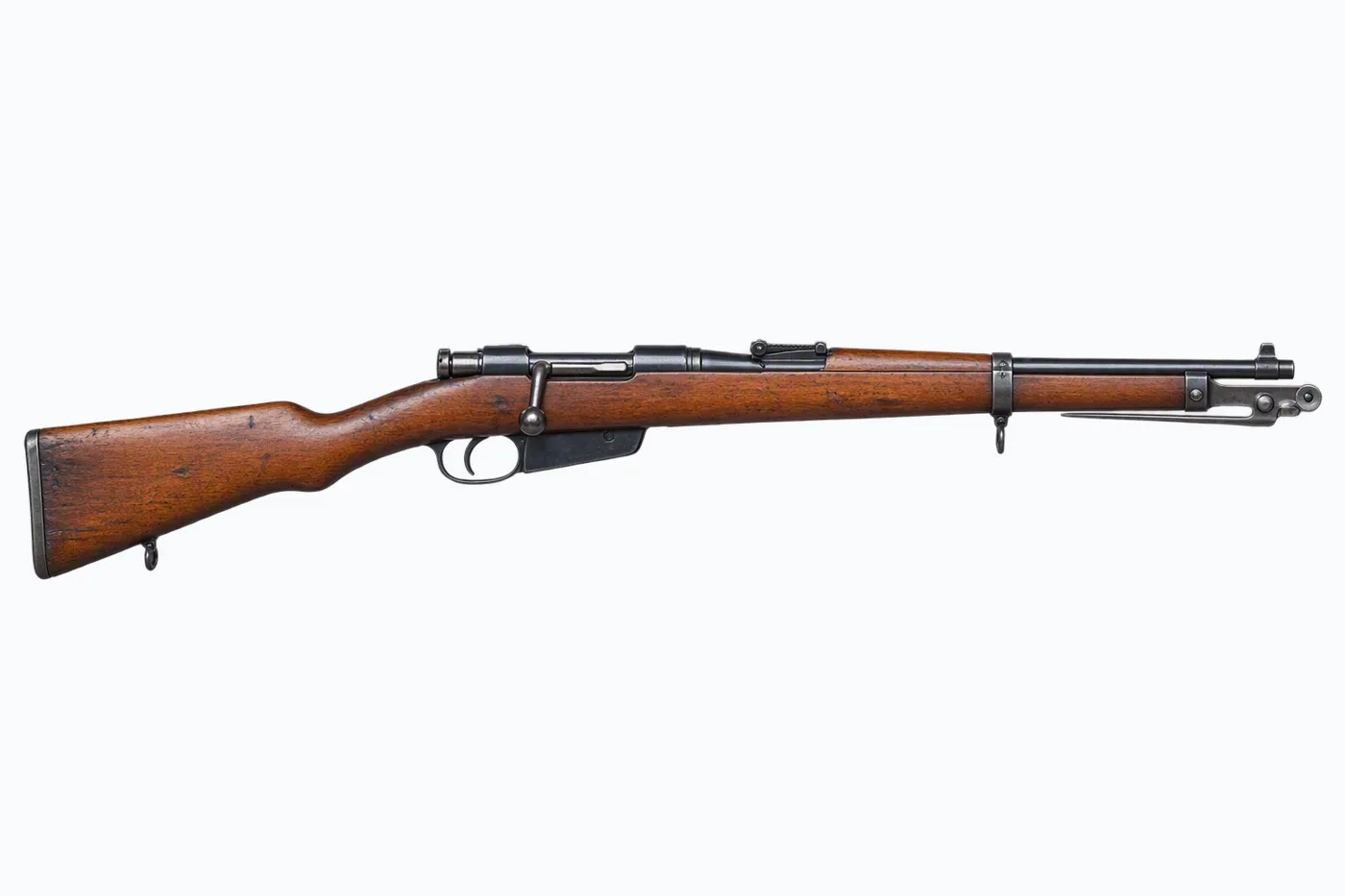
Carcano M91 Cavalry Carbine
Bolt action · 6.5x52mm Mannlicher-Carcano
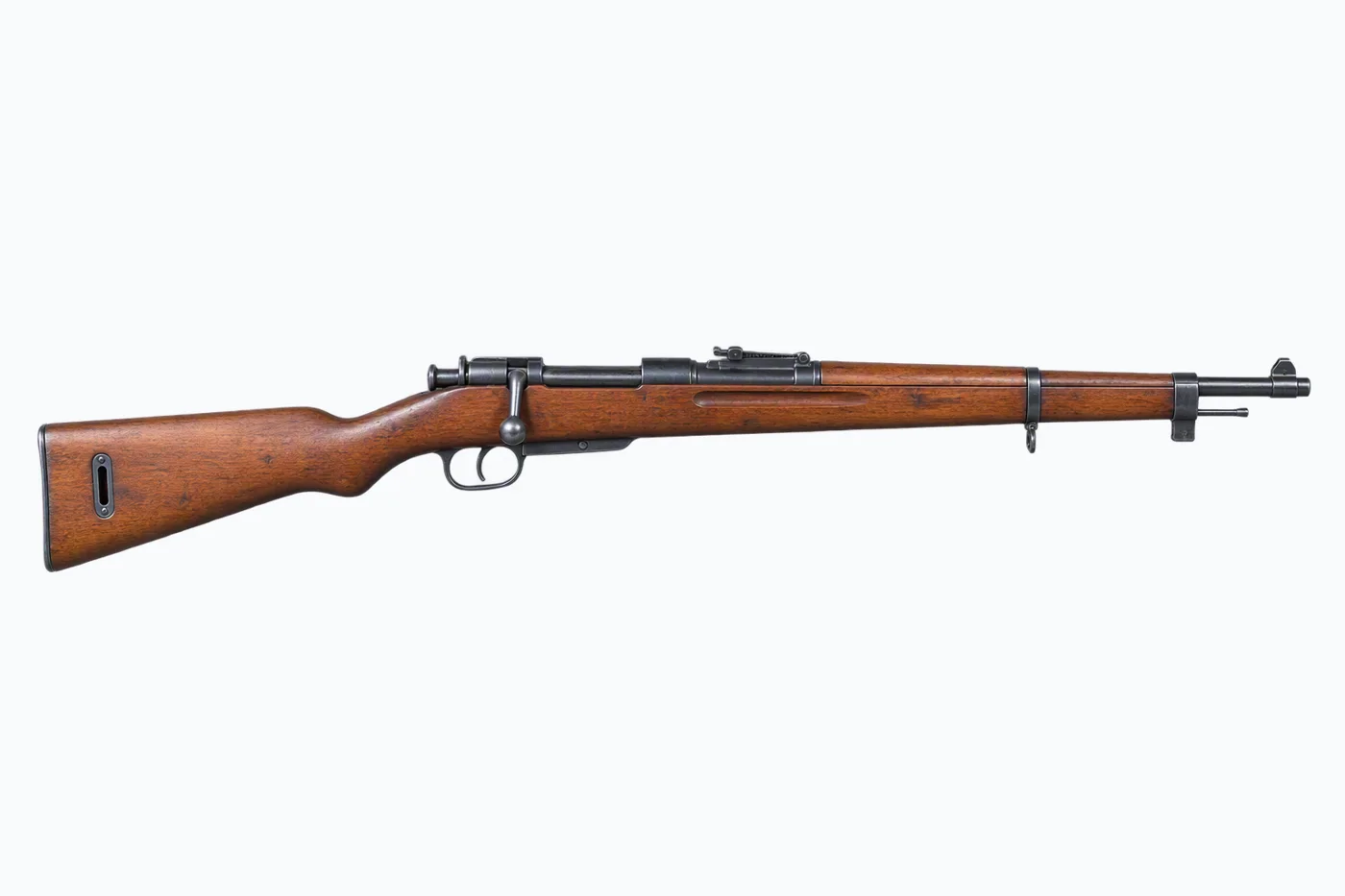
Carcano M91 TS
Bolt action · 6.5x52mm Mannlicher-Carcano
Carcano Moschetto Mod. 1891/38
Bolt action · 6.5x52mm Mannlicher-Carcano
Carcano Moschetto TS
Bolt action · 6.5x52mm Mannlicher-Carcano
Carl Gustaf m/94 Carbine
Bolt action · 6.5x55mm Swedish