
Springfield Armory · Rifle
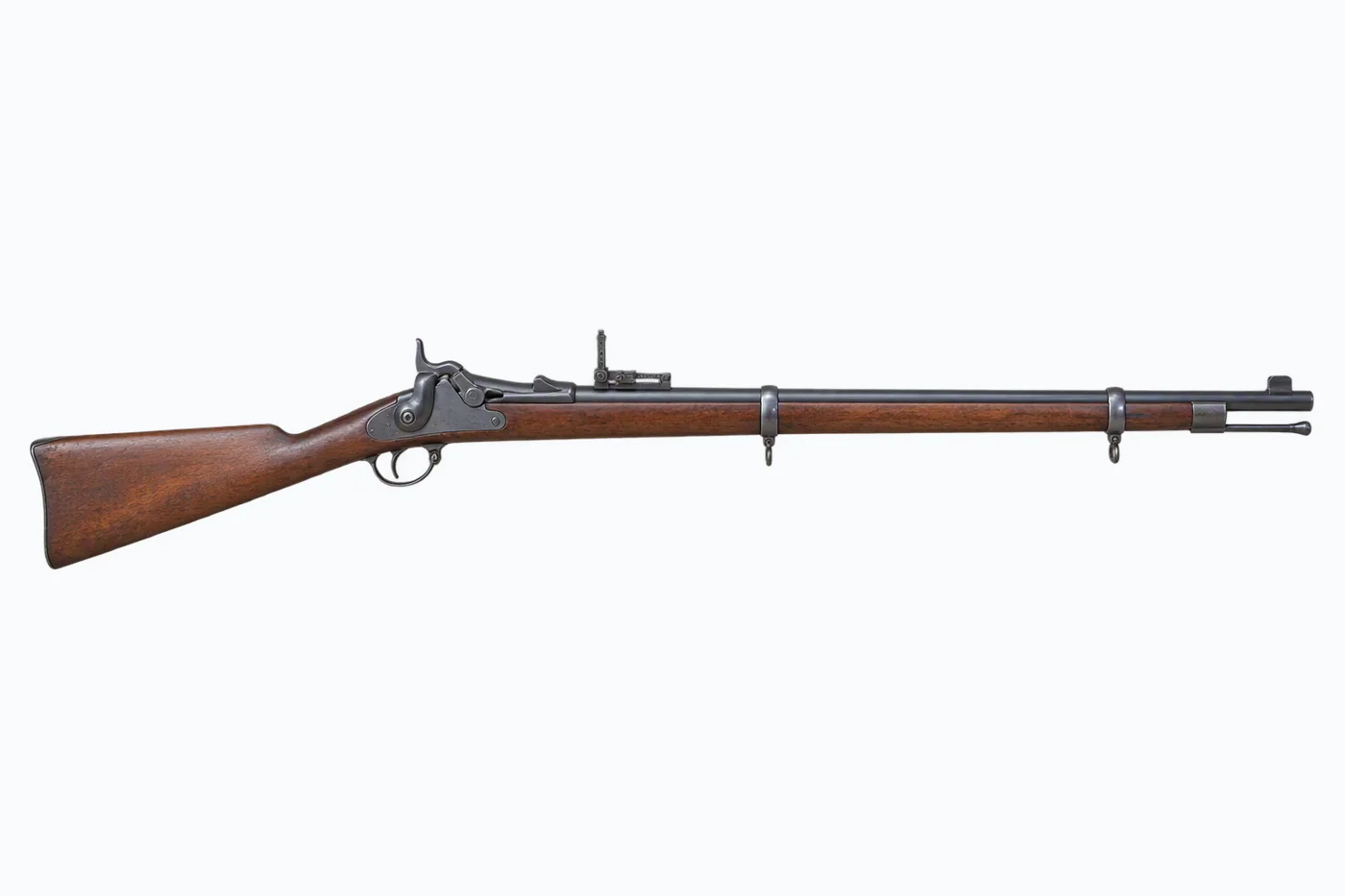
Springfield Model 1873 Trapdoor
Bolt action · .45-70 Government · introduced 1873
Also known as U.S. Rifle Model 1873, Trapdoor Springfield, Allin Conversion
About the Springfield Model 1873 Trapdoor
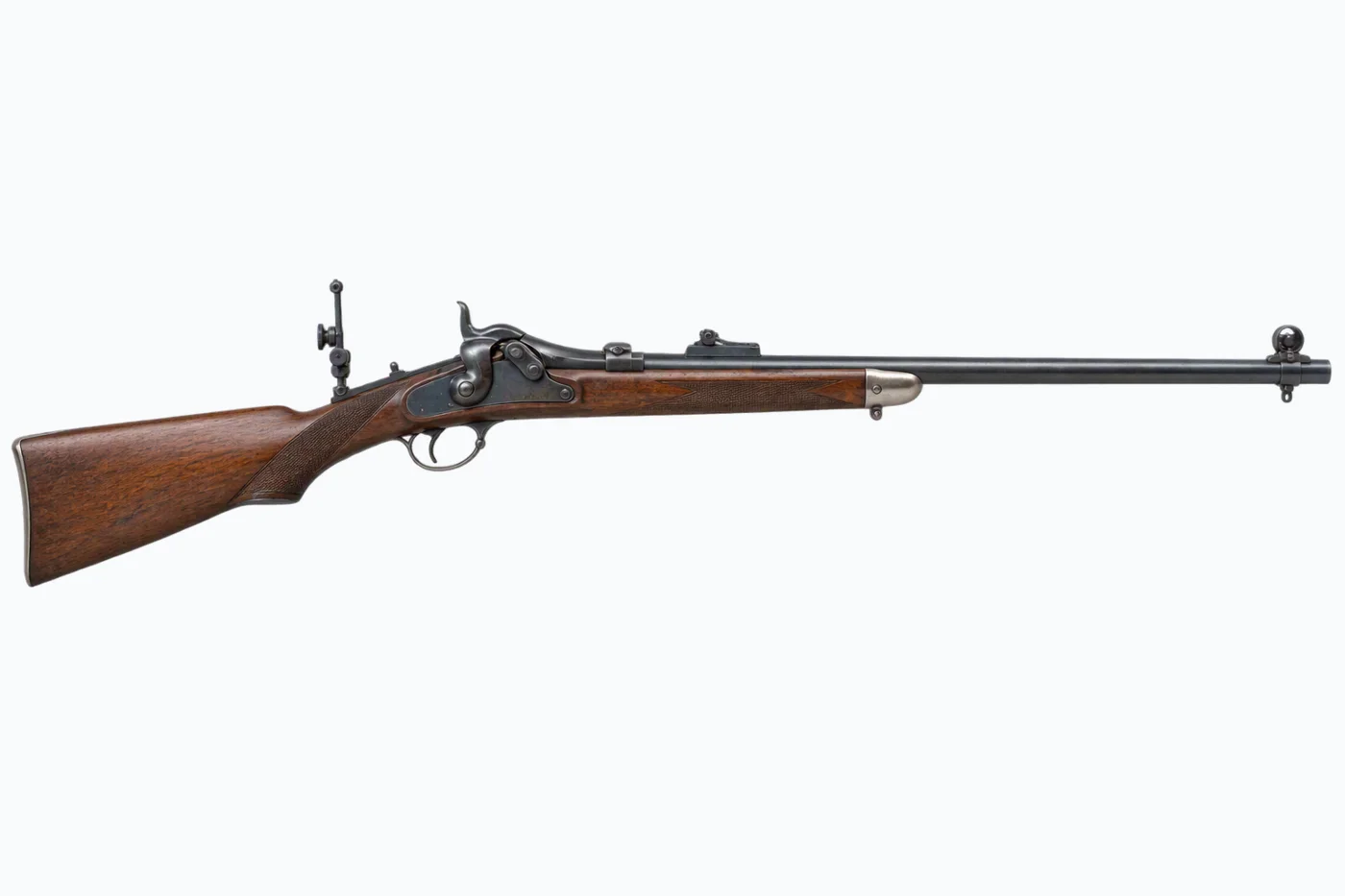
The Springfield Model 1873 'Trapdoor' was the first standard-issue breech-loading rifle of the United States Army, adopted in 1873 and serving as the principal U.S. service rifle through the Indian Wars and into the Spanish-American War. Designed by Master Armorer Erskine S. Allin at the Springfield Armory, the rifle employs a distinctive hinged 'trapdoor' breech-block that pivots upward and forward for loading, earning it the enduring nickname by which it is universally known. Chambered originally in the powerful new .45-70 Government centerfire cartridge, the single-shot rifle offered a dramatic improvement in range and accuracy over the muzzle-loading rifle-muskets of the Civil War era. The Army variant featured a long 32.6-inch barrel for infantry use while the Cavalry Carbine version used a shorter 22-inch barrel suited to mounted troops. The hammer-fired action, operated by thumbing back an external side hammer and then flipping open the breech-block to insert a single cartridge, reflected a conservative institutional preference for a simple, rugged, and economical design that could be manufactured by converting existing stocks of Civil War rifle-muskets. Approximately 700,000 Trapdoors of all patterns were produced at the Springfield Armory between 1873 and 1893 before being superseded by the bolt-action, magazine-fed Krag-Jorgensen M1892. The Trapdoor is forever associated with the catastrophic defeat of the 7th Cavalry at the Little Bighorn in 1876, where contemporary accounts and later investigations cited spent copper cartridge cases fouling the extractor as a contributing factor to the unit's destruction by Lakota, Northern Cheyenne, and Arapaho warriors.
On 25 June 1876 the Trapdoor Springfield stood in the hands of every trooper of the 7th Cavalry as Lieutenant Colonel George Armstrong Custer was annihilated at the Little Bighorn; later archaeological surveys of the battlefield recovered scores of pried-open copper cartridge cases, lending weight to the grim legend that the rifle's own extractor jammed on spent brass while Lakota and Cheyenne warriors armed with Winchester and Henry repeaters closed in. Erskine Allin, a civilian Master Armorer at Springfield, received no royalty for his design because he had developed it on government time using government tools - a detail that helped the Ordnance Department win a decade-long patent dispute against outside inventors.
Springfield Model 1873 Trapdoor specifications
General
- Type
- Rifle
- Action
- Bolt action
- Firing mechanism
- Hammer-fired
- Trigger
- Single stage
- Calibres
- .45-70 Government, .50-70 Government
- Magazine capacity
- 1 rounds
- Magazine
- Internal
Dimensions
- Barrel length
- 826 mm (32.5 in)
- Overall length
- 1321 mm (52.0 in)
- Weight (empty)
- 4.08 kg (9.00 lb)
Barrel
- Rifling twist
- 1:22 in (558 mm)
- Rifling
- Right hand
- Grooves
- 3
Materials
- Barrel
- Steel
- Receiver / frame
- Steel
- Stock
- Walnut
- Finish
- blued
Performance
- Muzzle velocity (typical)
- 410 m/s (1345 fps)
- Muzzle energy (typical)
- 2200 J (1623 ft·lb)
- Effective range
- 275 m
History
- Introduced
- 1873
- Discontinued
- 1893
- Production status
- Out of production
- Country of origin
- US
- Designer
- Erskine S. Allin
Available calibres
Features
- Trapdoor breech block
- Single shot
- Hinged breech
- Buffington rear sight
- Ramrod
- Bayonet lug
- Walnut full stock
- Iron military sights
Safety
- Half cock notch
Though mechanically a falling/tilting hinged breech-block rather than a turning bolt, the closest schema match for the Trapdoor's manually-operated single-shot action is 'bolt_action'; the defining 'trapdoor breech-block' is documented in the features list and description. The Model 1873 Rifle (Army) has a 32.6-inch barrel and overall length of 51.9 inches; the Cavalry Carbine has a 22-inch barrel and overall length of 41.3 inches and weighs approximately 7 pounds. Earlier First (1865) and Second (1866-1868) Allin conversions were chambered in .50-70 Government before the Army standardized on the .45-70 Government with the Model 1873. The rear sight was upgraded to the sophisticated Buffington pattern on the Model 1884. The rifle's service life spanned nearly every major Indian Wars engagement including the Red River War, Great Sioux War, Nez Perce War, and Ghost Dance War. Issues with the copper-cased early cartridges expanding and jamming in hot chambers contributed to extractor failures that became infamous after Custer's defeat; brass cases were adopted shortly thereafter.
Springfield Model 1873 Trapdoor variants
Similar models
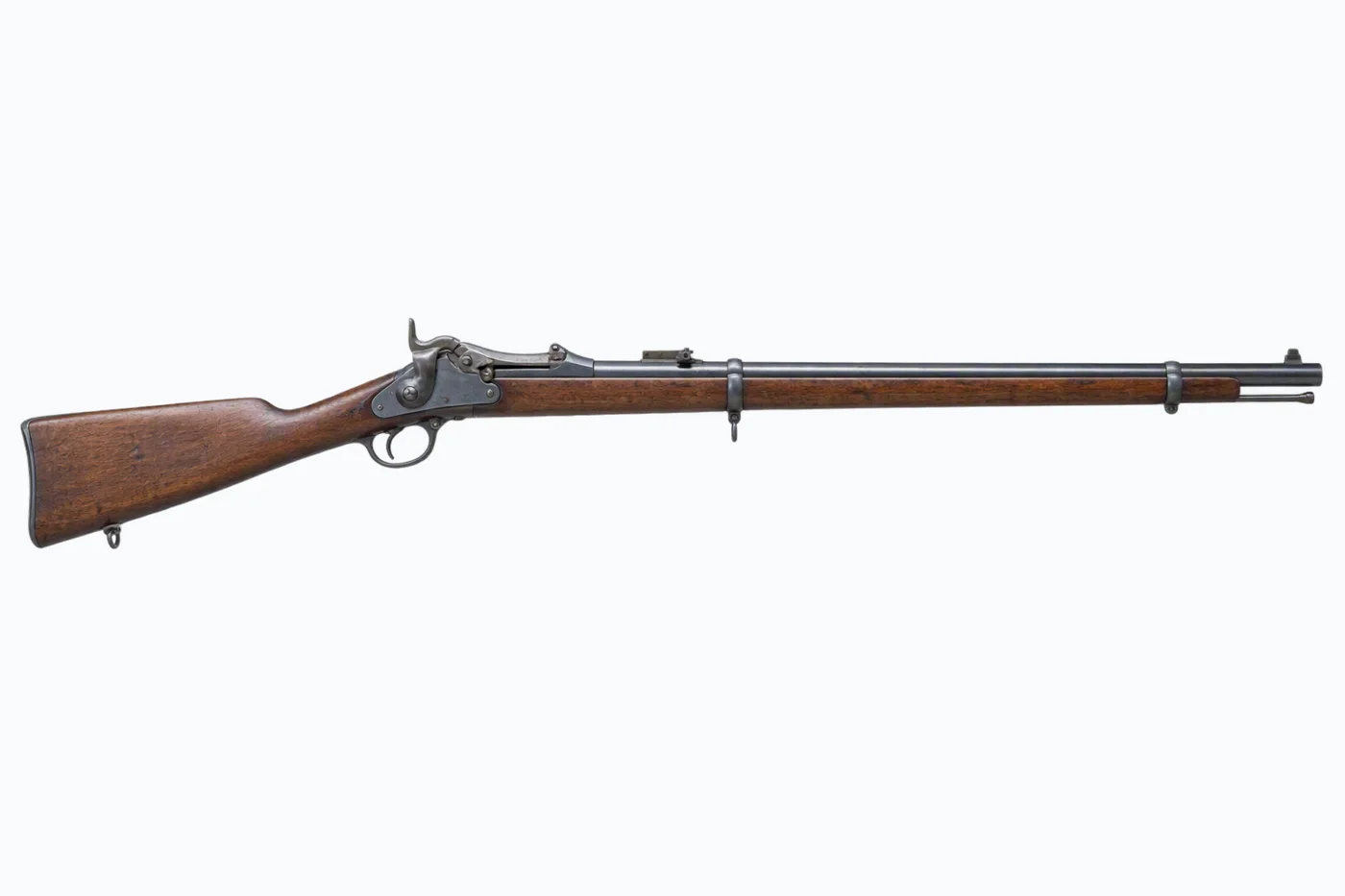
Allin Conversion
Trapdoor · .50-70 Government
Ballard No. 1½ Hunter's Rifle
Falling block · .45-70 Government
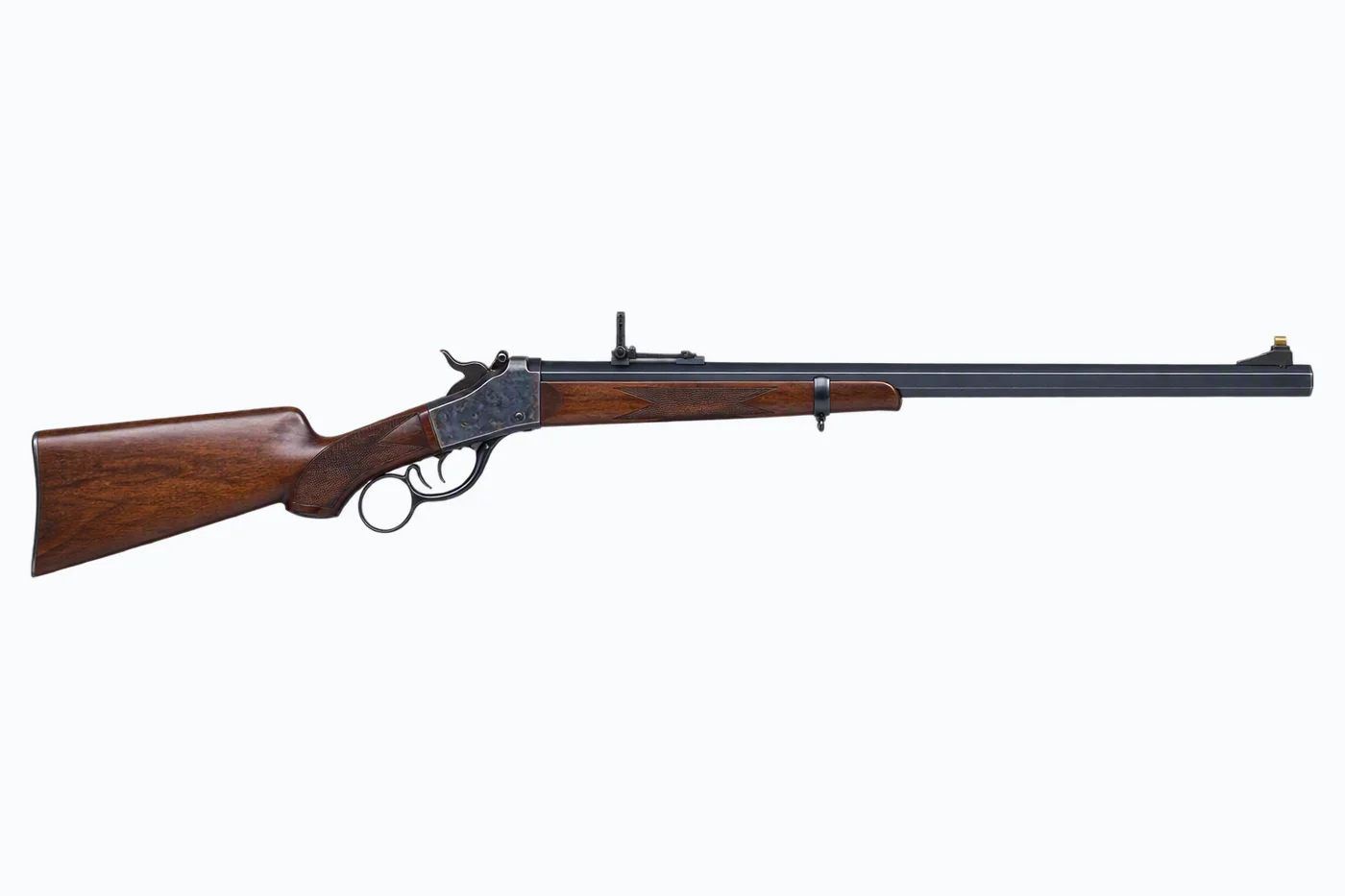
Ballard No. 5 Pacific
Falling block · .45-70 Government
Ballard No. 5 Pacific
Falling block · .45-70 Government