
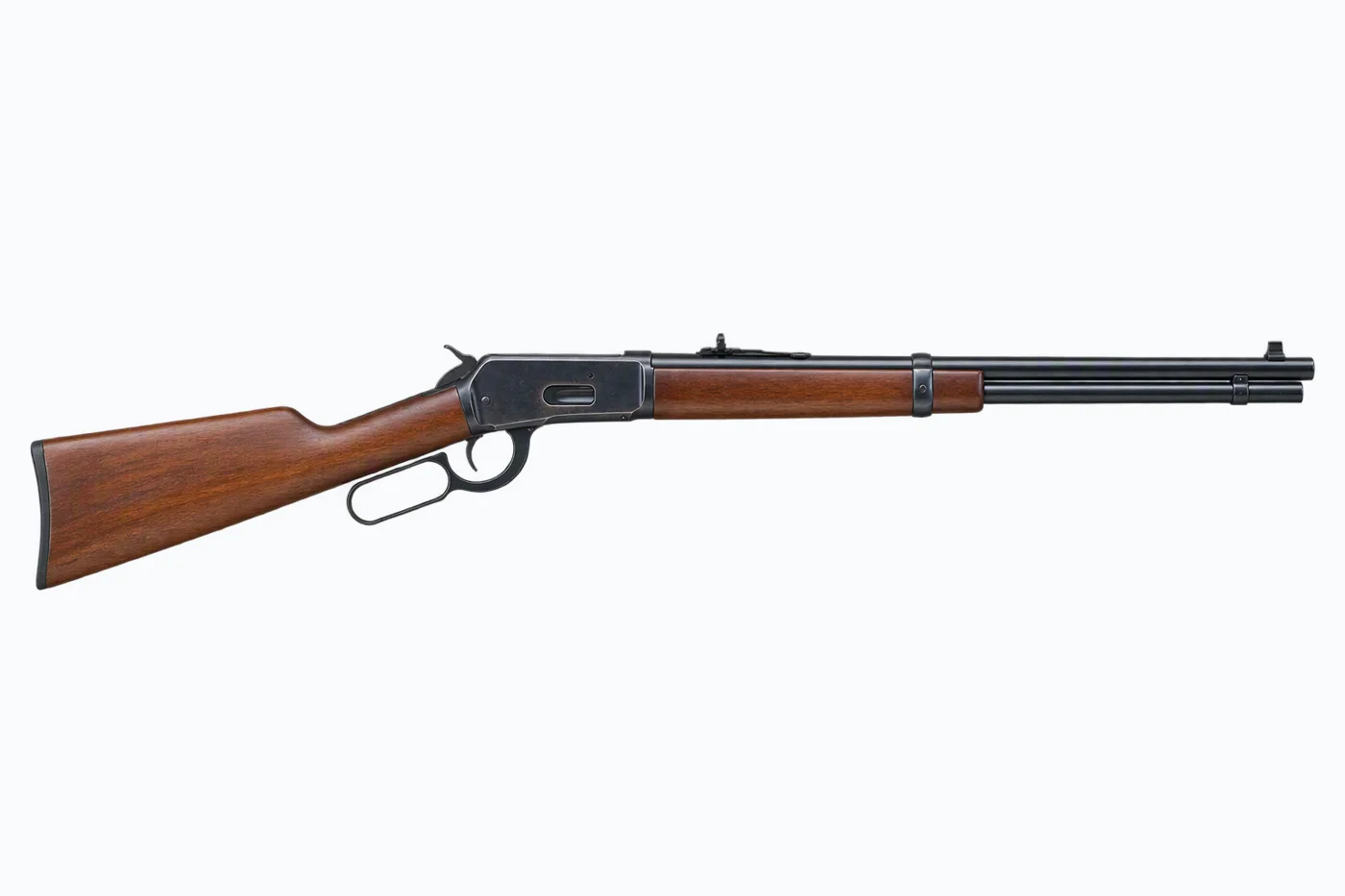
Winchester · Rifle
Winchester Model 1892
Lever action · .44-40 Winchester · introduced 1892
Also known as Model 92, Winchester '92, Model 1892 Winchester
About the Winchester Model 1892
The Winchester Model 1892 is a lever-action repeating rifle designed by John Moses Browning and produced by the Winchester Repeating Arms Company of New Haven, Connecticut from 1892 to 1941. Intended as a lighter, more compact replacement for the Model 1873 in pistol-caliber chamberings, the Model 1892 borrowed its rugged twin vertical-sliding locking-bolt mechanism from Browning's large-frame Model 1886, producing a remarkably strong action on a small frame. Chambered primarily in the .44-40 Winchester, with additional offerings in .38-40, .32-20, .25-20, and a rare late-production .218 Bee, the '92 could share cartridges with contemporary Colt, Remington, and Smith & Wesson revolvers, making it a practical companion for lawmen, cowboys, and frontier settlers alike. Produced in rifle, carbine, musket, Trapper's Carbine, and takedown configurations with barrel lengths ranging from 14 to 30 inches, the Model 1892 went on to arm Pancho Villa's revolutionaries during the Mexican Revolution, Royal Canadian Mounted Police patrols, and civilian shooters across the globe. Over one million units were produced in the original New Haven run, and modern reproductions continue to be manufactured by Miroku of Japan under the Winchester brand as well as by Rossi, Chiappa, and Uberti. Immortalized on-screen by John Wayne in Stagecoach and dozens of other Westerns and by Chuck Connors' trick-spinning large-loop rifle in The Rifleman, the Model 1892 is perhaps the most iconic lever-action ever to appear in Hollywood.
John Wayne first wielded a big-loop cut-down Model 1892 Trapper in John Ford's Stagecoach (1939), twirling it one-handed to cock the action in a sequence so iconic that the same rifle reportedly became Chuck Connors' flip-cocking signature weapon in The Rifleman two decades later. Pancho Villa's Villistas and Emiliano Zapata's peasant army carried Model 1892s into battle alongside 7x57mm Mausers during the Mexican Revolution, preferring the '92 because its .44-40 and .38-40 cartridges were interchangeable with their Colt revolvers. John Browning famously bet Winchester's management he could deliver a working prototype in under a month, with free rights if he failed; he delivered it in two weeks.
Winchester Model 1892 specifications
General
- Type
- Rifle
- Action
- Lever action
- Firing mechanism
- Hammer-fired
- Trigger
- Single stage
- Calibres
- .44-40 Winchester, .218 Bee, .25-20 Winchester, .32-20 Winchester, .38-40 Winchester
- Magazine capacity
- 13 rounds
- Magazine
- Tubular magazine
Dimensions
- Barrel length
- 620 mm (24.4 in)
- Overall length
- 1250 mm (49.2 in)
- Weight (empty)
- 4.50 kg (9.92 lb)
Barrel
- Rifling twist
- 1:36 in (914 mm)
- Rifling
- Right hand
- Grooves
- 6
Materials
- Barrel
- Steel
- Receiver / frame
- Steel
- Stock
- Wood
- Finish
- blued
Performance
- Muzzle velocity (typical)
- 379 m/s (1243 fps)
- Muzzle energy (typical)
- 930 J (686 ft·lb)
- Effective range
- 91 m
History
- Introduced
- 1892
- Discontinued
- 1941
- Production status
- In production
- Country of origin
- US
- Designer
- John Moses Browning
Available calibres
Features
- Lever action
- Tubular magazine
- Steel receiver
- Side loading gate
- Exposed hammer
- Twin locking bolts
- Graduated rear sight
- Fixed post front sight
- Walnut stock
- Crescent metal buttplate
- Pistol cartridge chambering
- Octagonal or round barrel options
- Takedown option available
- Saddle ring option
- Large loop lever option
Safety
- Half cock safety
- Trigger block safety
Specifications reflect the standard 24-inch round-barrel sporting rifle in .44-40 Winchester with a full-length tubular magazine holding approximately 13 cartridges. The carbine variant uses a 20-inch barrel, weighs roughly 2.7 kg, and holds 10 rounds. The rare Trapper's Carbine (called 'Baby Carbine' or 'Special Short Carbine' by Winchester) was available with 14, 15, and 16-inch barrels, with a handful produced in 12 inches. A solid-frame takedown version was introduced in October 1893. Only 574 muskets were ever built. A small run of rifles and carbines in .218 Bee was produced between 1936 and 1938 using Model 65 receivers and barrels. Original production totaled 1,004,675 to 1,007,608 units (sources vary slightly) before manufacture ended in 1941. Modern production continues at Miroku in Kochi, Japan, for Winchester (since 1995), as well as Rossi (Brazil), Chiappa (Italy), and Uberti (Italy), chambered in modern calibers including .357 Magnum, .44 Remington Magnum, and .45 Colt in addition to legacy chamberings.
Similar models
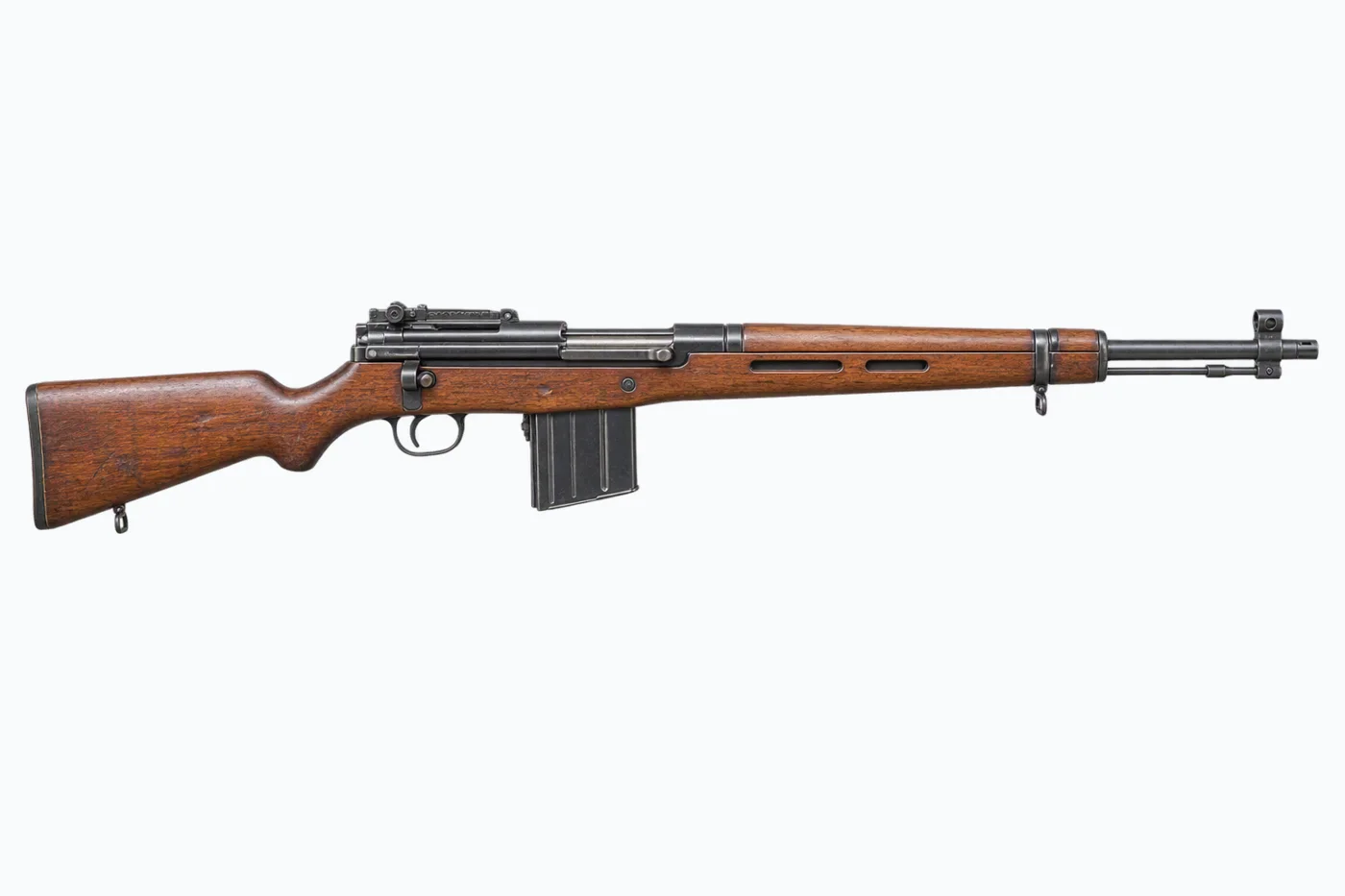
Automatgevär m/42 (Ljungman)
Gas-operated (direct impingement) · 6.5x55mm Swedish
Anschutz 1761 APR
Bolt action · .22 Long Rifle
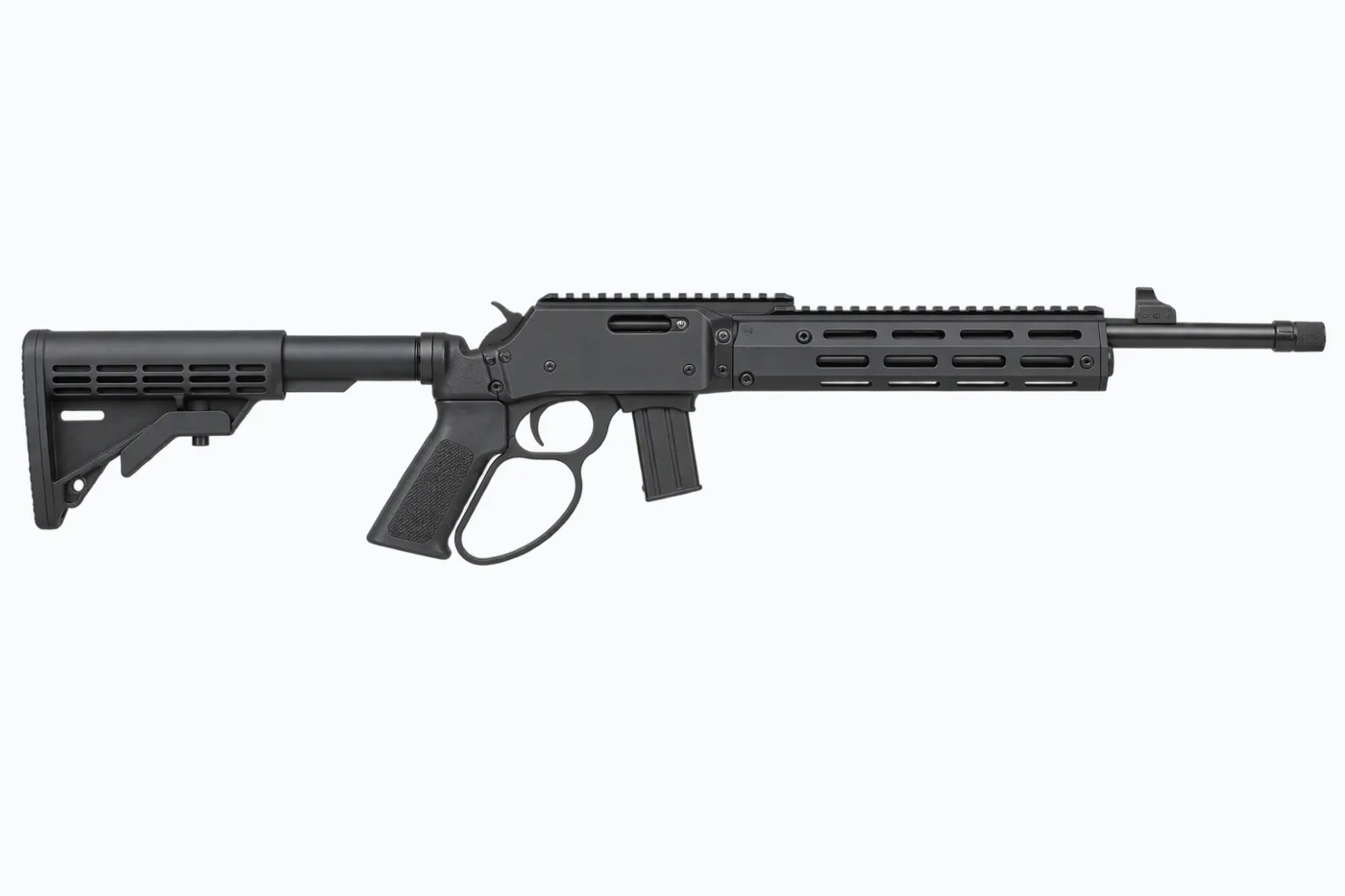
Armscor TM22 Lever Action
Lever action · .22 Long Rifle
Ballard No. 1 Hunter's Rifle
Falling block · .44 Long Rimfire
Ballard No. 10 Schuetzen Junior
Falling block · .32-40 Winchester
Ballard No. 6½ Rigby
Falling block · .40-65 Ballard
Ballard No. 8 Union Hill
Falling block · .32-40 Winchester
Ballard No. 9 Union Hill
Falling block · .38-55 Winchester