
Winchester · Shotgun
Winchester Model 12 Trench Gun
Pump action · 12 Gauge · introduced 1918
Also known as Winchester Model 1912 Trench Gun, M12 Trench Gun, Winchester Model 12 Trench Shotgun
About the Winchester Model 12 Trench Gun
The Winchester Model 12 Trench Gun is the military combat variant of the Model 12 pump-action shotgun, developed for close-quarters trench and jungle fighting. Distinguished from the sporting Model 12 by a shortened 508 mm (20-inch) cylinder-bore barrel, a ventilated sheet-steel heat shield encasing the barrel, and lugs to accept the M1917 bayonet, the trench gun delivered devastating short-range firepower with a six-round tubular magazine of 12-gauge buckshot. First procured by the U.S. Army late in World War I, it retained the smooth, all-machined steel action and internal hammer that made the parent Model 12 famous, and could be slam-fired by holding the trigger while working the slide. Roughly 20,000 were bought during World War I, and more than 80,000 additional trench and riot guns were procured during World War II, where the type saw heavy use clearing Japanese-held positions across the Pacific. It continued to serve through the Korean and Vietnam Wars until wartime stocks were exhausted.
The Model 12 Trench Gun carried the fearsome close-quarters reputation of the trench shotgun into a second world war. U.S. Marines prized it for clearing bunkers, caves, and jungle positions in the Pacific, where a load of 00 buckshot proved decisive at bad-breath range. Its slam-fire capability let a practiced Marine empty the magazine almost as fast as he could work the slide, and the bayonet lug meant it doubled as a short pike when the shells ran dry. Together with the earlier Model 1897, it cemented the American 'trench broom' as one of the most feared close-combat weapons of the 20th century.
Winchester Model 12 Trench Gun specifications
General
- Type
- Shotgun
- Action
- Pump action
- Firing mechanism
- Hammer-fired
- Trigger
- Single stage
- Calibres
- 12 Gauge
- Magazine capacity
- 6 rounds
- Magazine
- Tubular
Dimensions
- Barrel length
- 508 mm (20.0 in)
- Overall length
- 1003 mm (39.5 in)
- Weight (empty)
- 3.63 kg (8.00 lb)
Barrel
- Rifling
- Smoothbore
Materials
- Barrel
- Steel
- Receiver / frame
- Steel
- Stock
- Walnut
- Finish
- parkerized
Performance
- Effective range
- 40 m
History
- Introduced
- 1918
- Discontinued
- 1963
- Production status
- Discontinued
- Country of origin
- US
- Designer
- Thomas Crossley Johnson
Features
- Perforated heat shield
- M1917 bayonet lug
- Cylinder bore
- Internal hammer
- Machined steel construction
- Side ejection
- Bottom loading
- Slam fire capable
Safety
- Crossbolt safety
- Trigger disconnect
The World War I trench gun used a perforated heat shield with six rows of ventilation holes; from 1942 wartime production simplified this to a four-row shield. Late-production and WWII-era guns typically wore a Parkerized (phosphate) finish rather than the blued finish of commercial guns. The 20-inch cylinder-bore barrel maximized buckshot spread for close combat. The trench gun differed from the riot gun, which shared the short barrel but lacked the heat shield and bayonet adapter. In WWI, German authorities formally protested the combat use of shotguns as a violation of the laws of war; the U.S. Judge Advocate General rejected the protest and affirmed their legality.
This is a variant of the Winchester Model 12.
Similar models
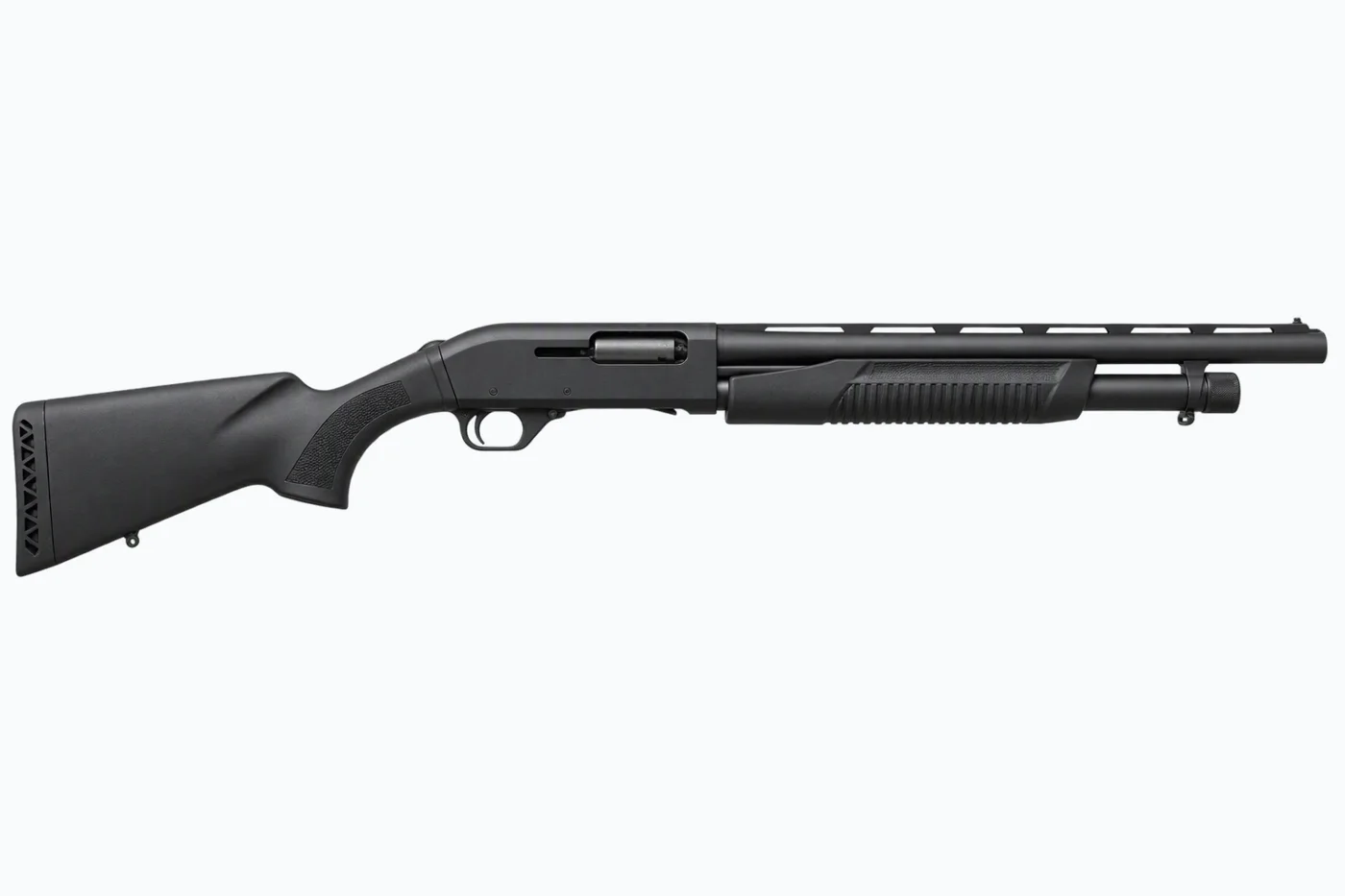
Akkar Churchill 612
Pump action · 12 Gauge
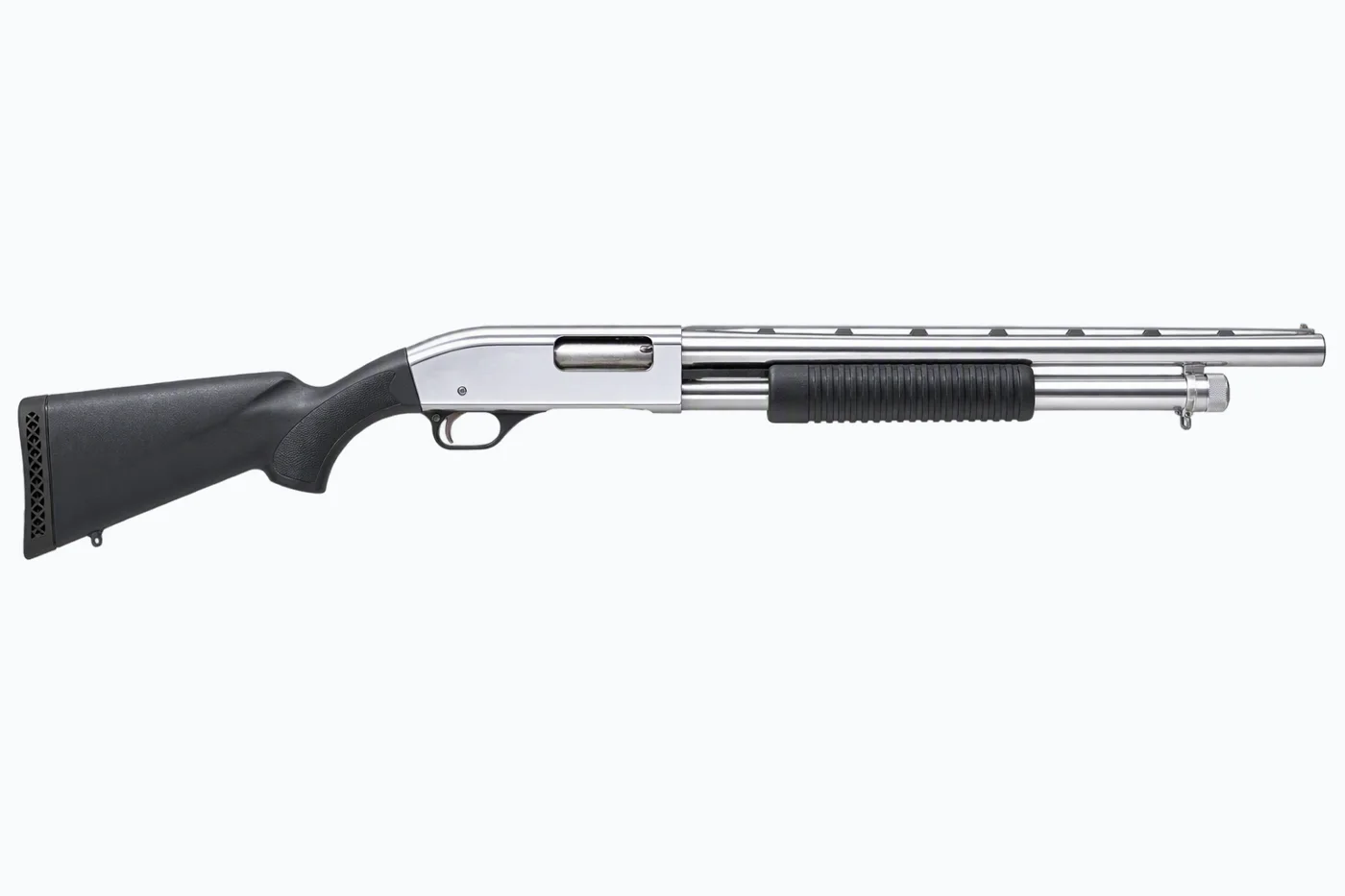
Armscor Meriva 3-in-1
Pump action · 12 Gauge
Baikal IZH-81
Pump action · 12 Gauge
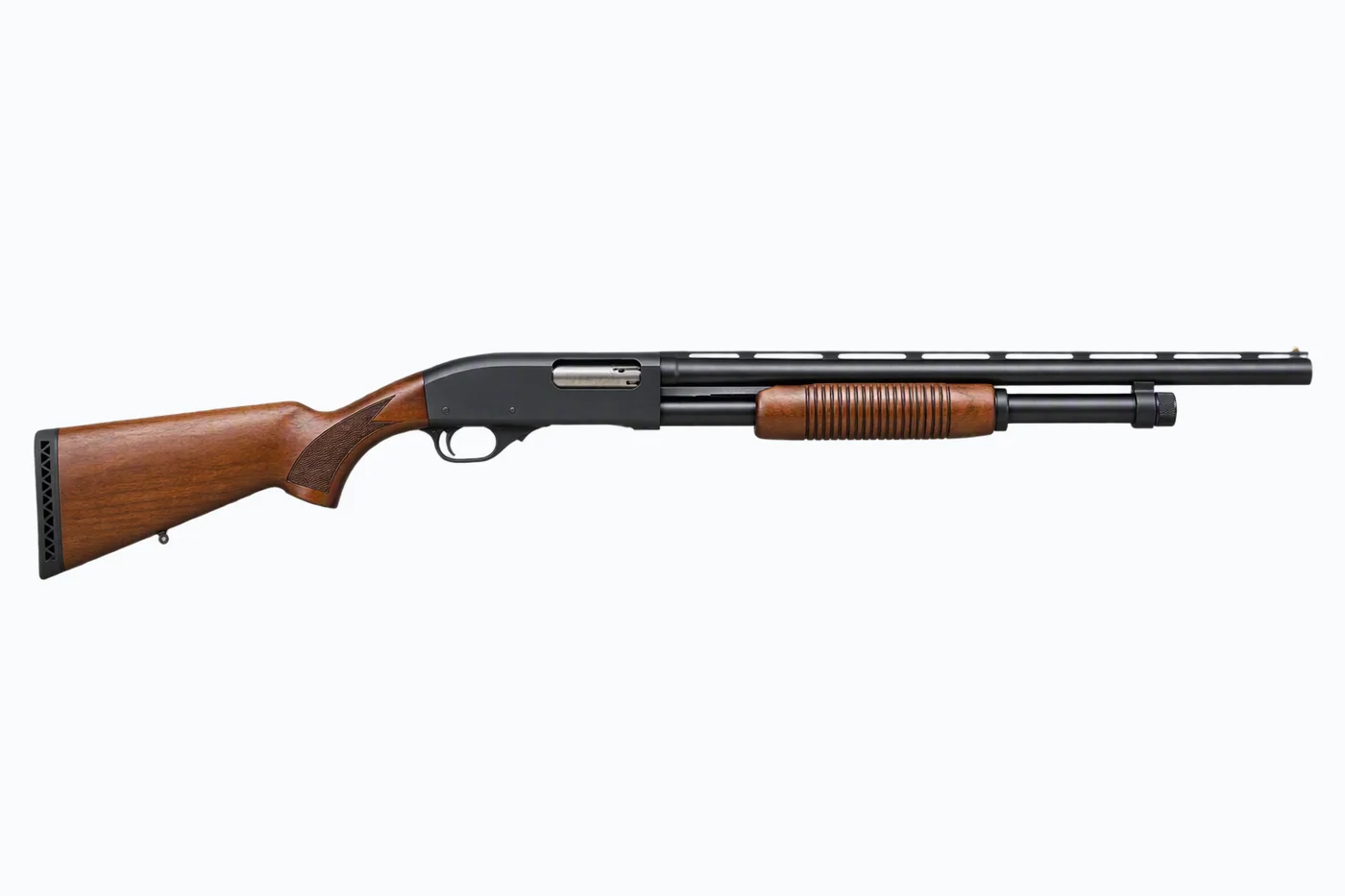
Baikal MP-133
Pump action · 12 Gauge
Baikal MP-135
Pump action · 12 Gauge
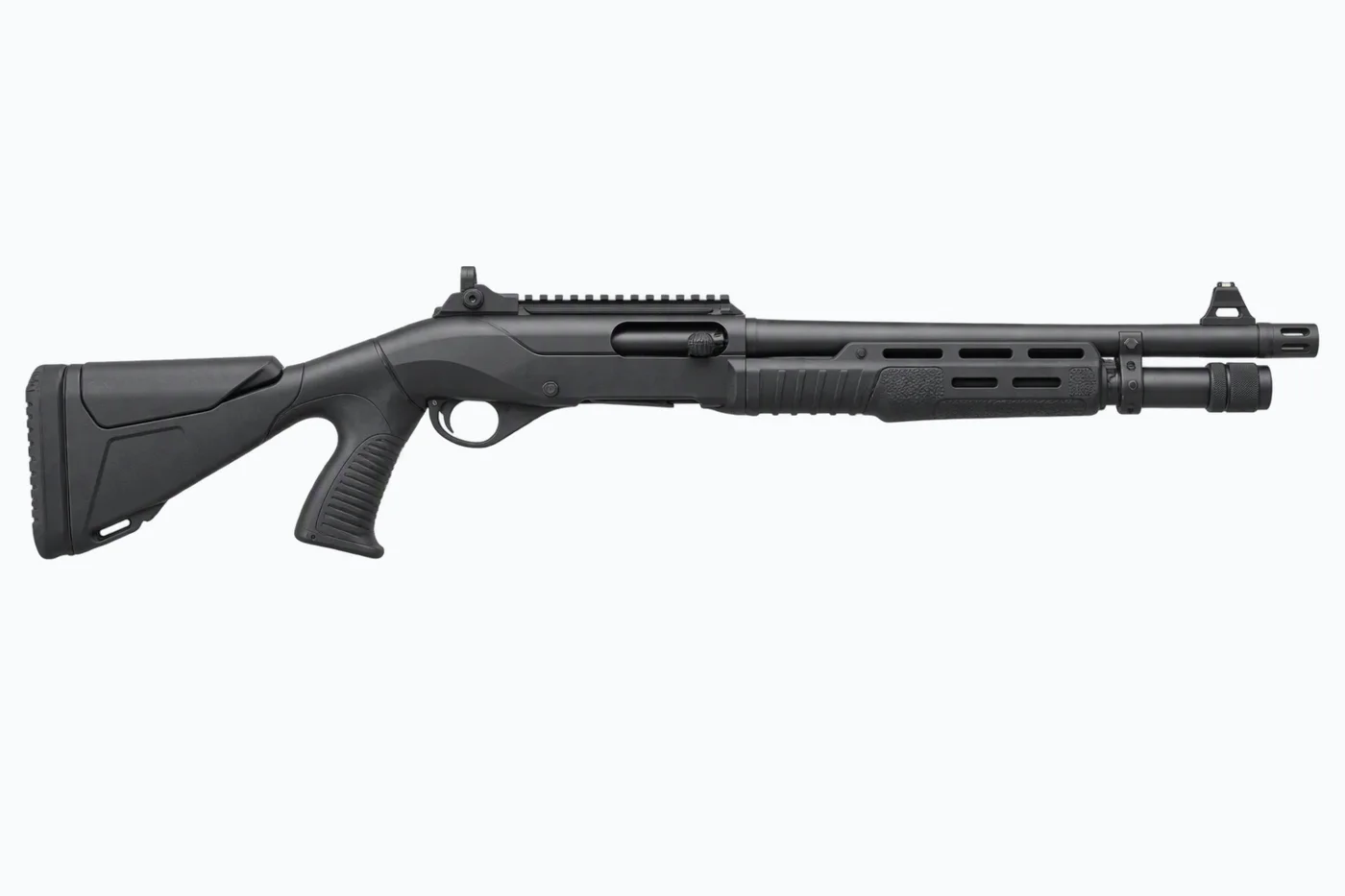
Benelli Nova 3 Tactical
Pump action · 12 Gauge
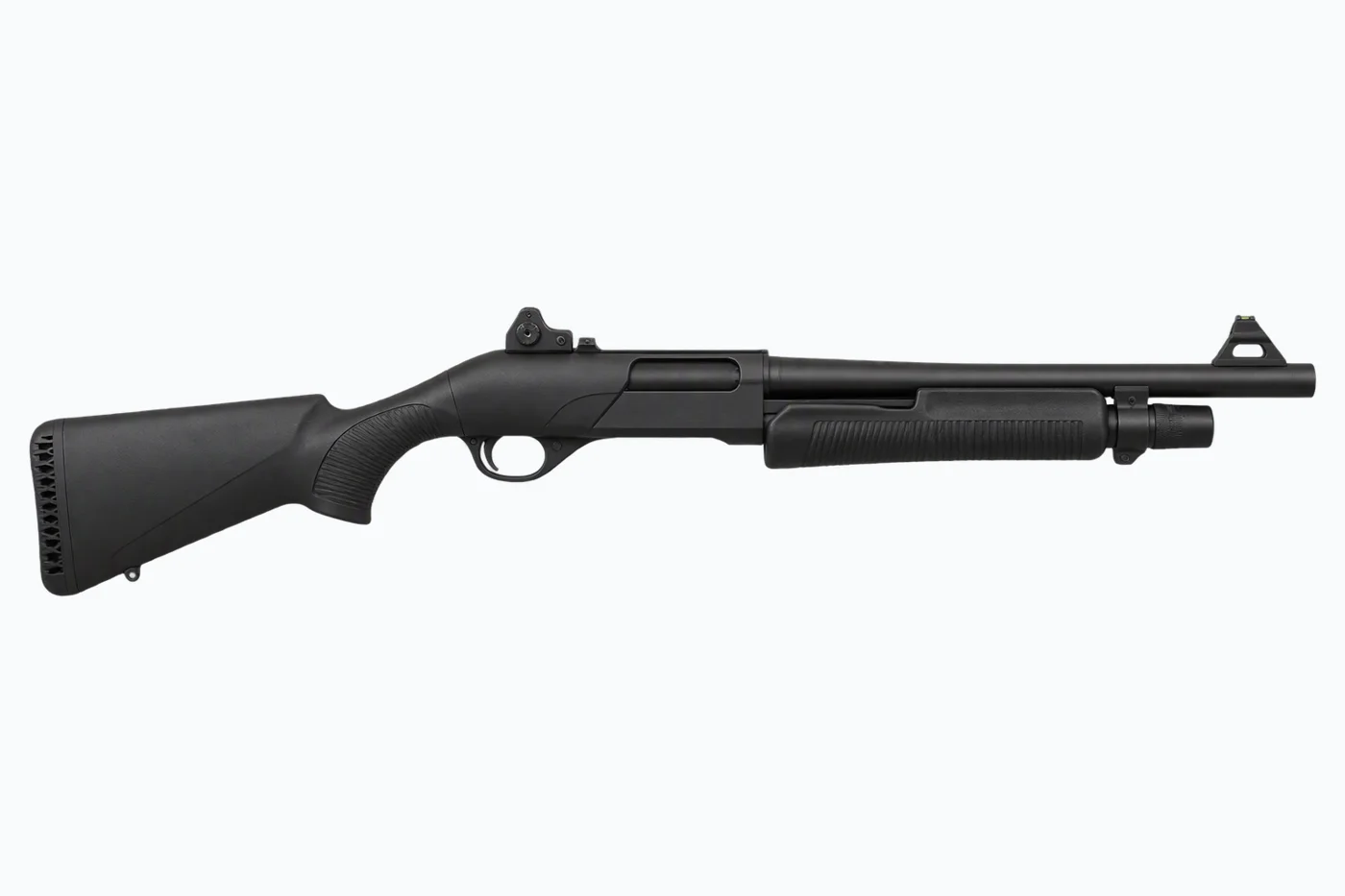
Benelli Nova Tactical
Pump action · 12 Gauge
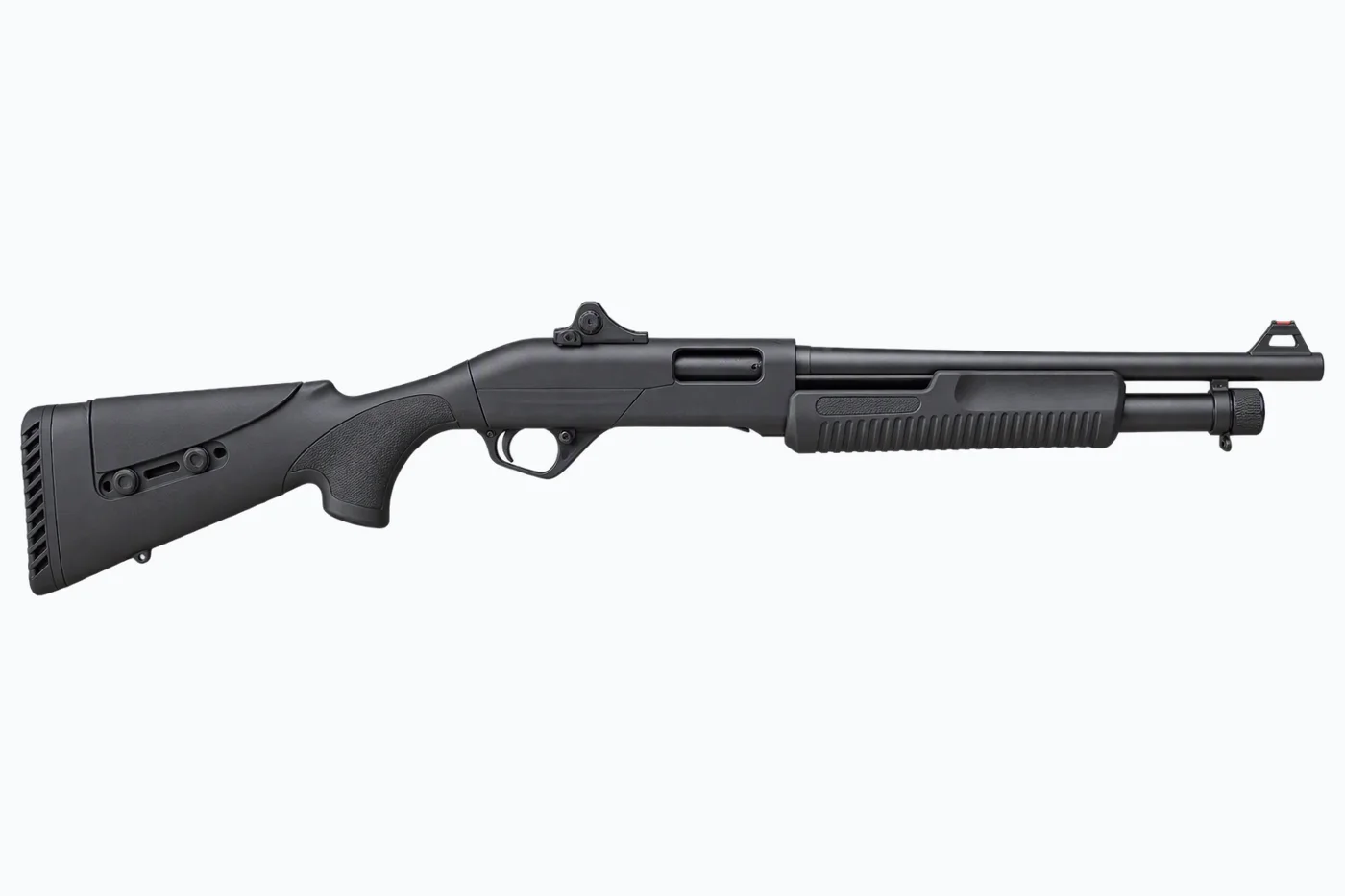
Benelli SuperNova Tactical
Pump action · 12 Gauge