
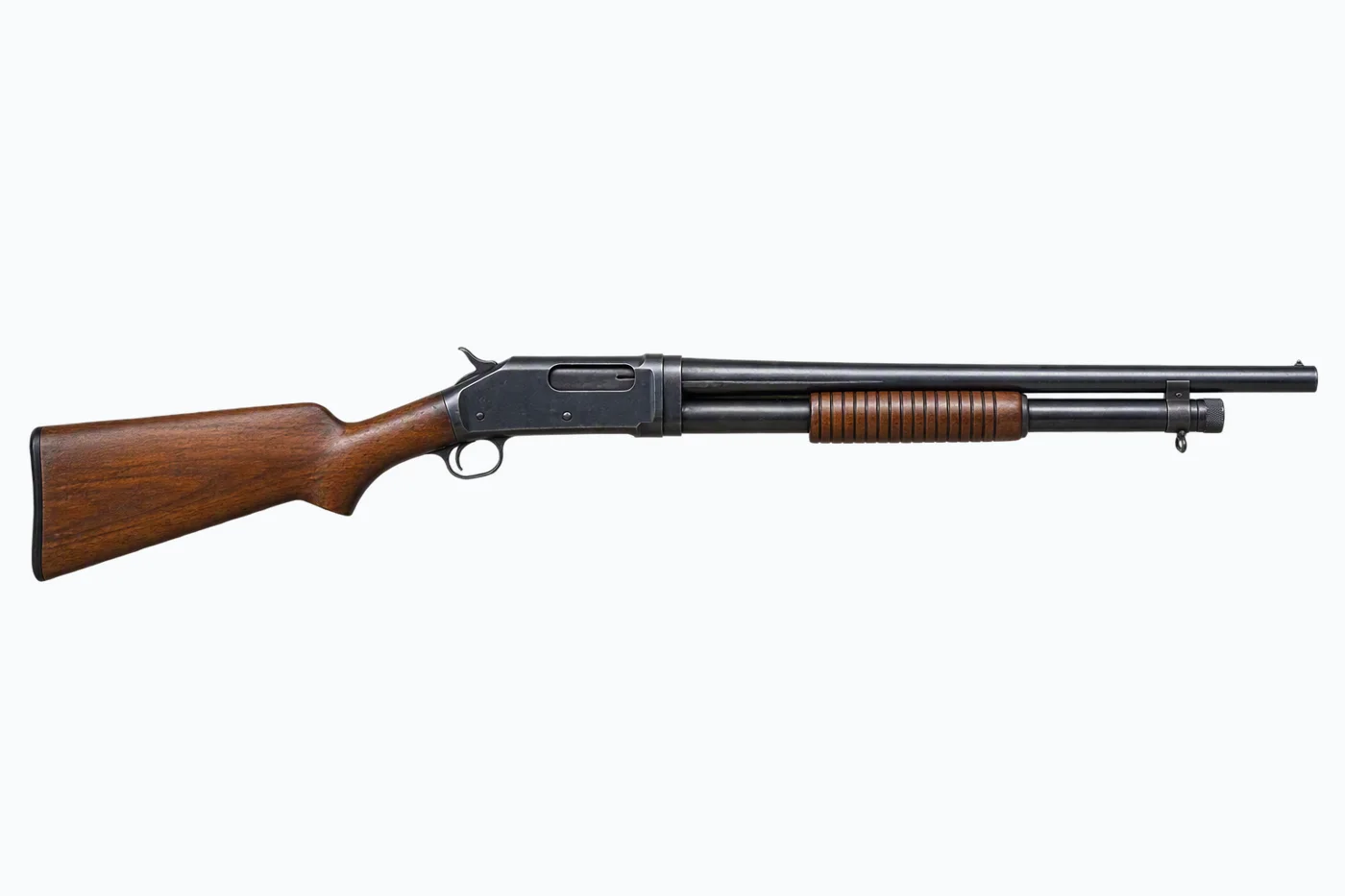
Winchester · Shotgun
Winchester Model 1897
Pump action · 12 Gauge · introduced 1897
Also known as Model 97, M97, Trench Gun
About the Winchester Model 1897
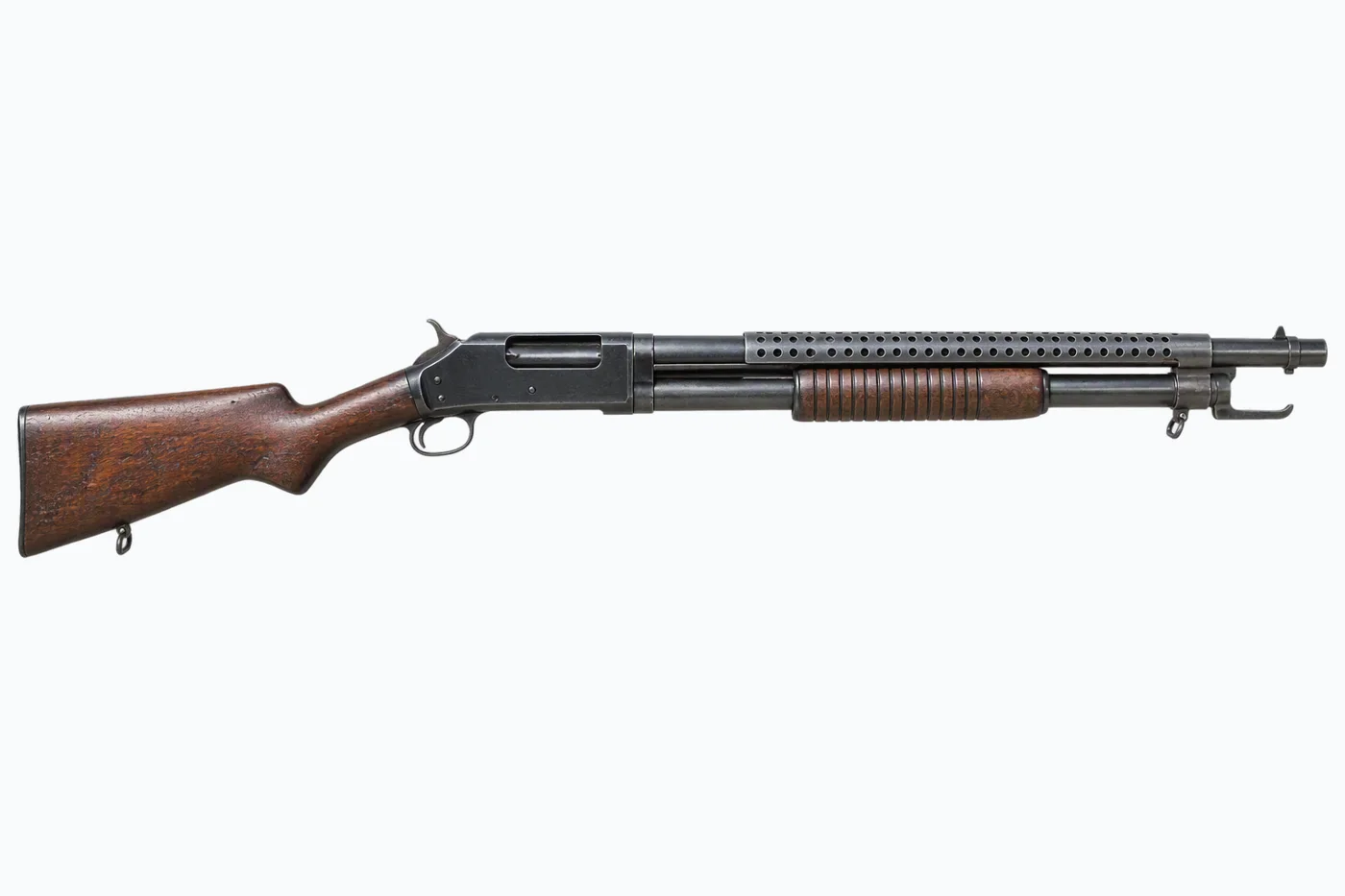
The Winchester Model 1897 is a pump-action shotgun designed by John Moses Browning and manufactured by the Winchester Repeating Arms Company from 1897 to 1957. An improved iteration of Browning's earlier Model 1893, the Model 1897 was strengthened to safely handle the higher pressures of smokeless powder ammunition. Produced in both 12-gauge and 16-gauge, in solid-frame and takedown configurations, with barrel lengths ranging from 20 to 30 inches, the Model 1897 became one of the most versatile and widely produced shotguns in American firearms history, with approximately 1,024,700 units manufactured over its 60-year production run. The Model 1897 is most famous for its service as the 'Trench Gun' during World War I, where its devastating close-quarters effectiveness in the trenches of the Western Front prompted a formal diplomatic protest from the German government. The Trench Gun variant featured a 20-inch cylinder-bore barrel, a perforated steel heat shield to protect the operator's hands, and an adapter with bayonet lug for mounting the M1917 bayonet. The weapon's most distinctive characteristic is its lack of a trigger disconnector, which enables 'slam firing' -- a technique where the operator holds the trigger depressed and rapidly cycles the pump action, causing the weapon to fire each time the action closes. This allowed an experienced operator to empty the five-round magazine with extraordinary speed, creating a devastating wall of buckshot in the confined spaces of trench warfare. Each round of 00 buckshot contained nine .33-caliber pellets, meaning a single magazine dump could send 45 projectiles downrange in seconds. The Model 1897 continued in military service through World War II, the Korean War, and the Vietnam War, making it one of the longest-serving combat shotguns in American military history.
The Winchester Model 1897 holds the extraordinary distinction of being a weapon so effective that its use prompted a formal diplomatic protest during wartime. On September 19, 1918, the Imperial German government filed a protest with the United States through diplomatic channels, claiming that the use of shotguns by American forces in the trenches violated Article 23(e) of the 1907 Hague Convention, which prohibits 'arms, projectiles, or material calculated to cause unnecessary suffering.' Germany threatened that any American soldier captured with a trench shotgun or shotgun ammunition would be summarily executed. The United States government, through Secretary of State Robert Lansing, firmly rejected the protest. Acting Judge Advocate General Brigadier General Samuel T. Ansell prepared a detailed legal rebuttal arguing that the shotgun was a lawful weapon of war, drawing a comparison to shrapnel shells and canister rounds already accepted under the laws of war. The JAG opinion noted the bitter irony that Germany -- which had introduced poison gas, flamethrowers, and explosive bullets on the Western Front -- would object to a shotgun. The American response was unequivocal: not only would the U.S. continue using shotguns, but it would retaliate against any nation that executed prisoners for carrying lawful weapons. The slam-fire capability made the Model 1897 particularly terrifying in trench raids. American 'Doughboys' would go over the top at night, entering enemy trenches with fixed bayonets and loaded shotguns. In the narrow confines of a trench, a single soldier slam-firing 00 buckshot could clear an entire bay. German soldiers reportedly feared the trench gun more than any other American weapon. The weapon earned nicknames including 'Trench Sweeper' and 'Trench Broom' for its ability to sweep trenches clean of defenders. Its legacy extended well beyond WWI -- the Model 1897 served in every major American conflict from the Philippine-American War through Vietnam, an operational lifespan of over 70 years.
Winchester Model 1897 specifications
General
- Type
- Shotgun
- Action
- Pump action
- Firing mechanism
- Hammer-fired
- Trigger
- Single stage
- Calibres
- 12 Gauge, 16 Gauge
- Magazine capacity
- 5 rounds
- Magazine
- Tubular
Dimensions
- Barrel length
- 508 mm (20.0 in)
- Overall length
- 998 mm (39.3 in)
- Weight (empty)
- 3.60 kg (7.94 lb)
Barrel
- Rifling
- Smoothbore
- Grooves
- 6
Materials
- Barrel
- Steel
- Receiver / frame
- Steel
- Slide
- Steel
- Stock
- Wood
- Finish
- blued
Performance
- Effective range
- 20 m
History
- Introduced
- 1897
- Discontinued
- 1957
- Production status
- Discontinued
- Country of origin
- US
- Designer
- John Moses Browning
Available calibres
Features
- Exposed hammer
- Slam fire capable
- No trigger disconnector
- Solid frame and takedown versions
- Bayonet lug trench variant
- Perforated heat shield trench variant
- Cylinder bore trench variant
- Walnut stock
Safety
- Half cock hammer
The Winchester Model 1897 was originally chambered for 2 5/8-inch shells, though 12-gauge models were standardized to 2 3/4-inch chambers. The 16-gauge variant was originally chambered for 2 9/16-inch shells, standardized to 2 3/4-inch in 1927. Early production models (before serial number ~50,000 in April 1898) featured fixed barrels; takedown models with detachable barrels were introduced afterward. Receivers produced after approximately serial number 47,000 (February 1898) bear a 'C' stamp indicating updated internal components. The exposed hammer design, while considered archaic by later standards, was valued by military users because it provided a visible indication of the weapon's cocked/uncocked status. Modern reproductions are manufactured by Norinco (China), IAC Imports, and Cimarron Firearms. Original trench gun variants in good condition are highly sought by collectors and can command prices exceeding $5,000.
Winchester Model 1897 variants
Similar models
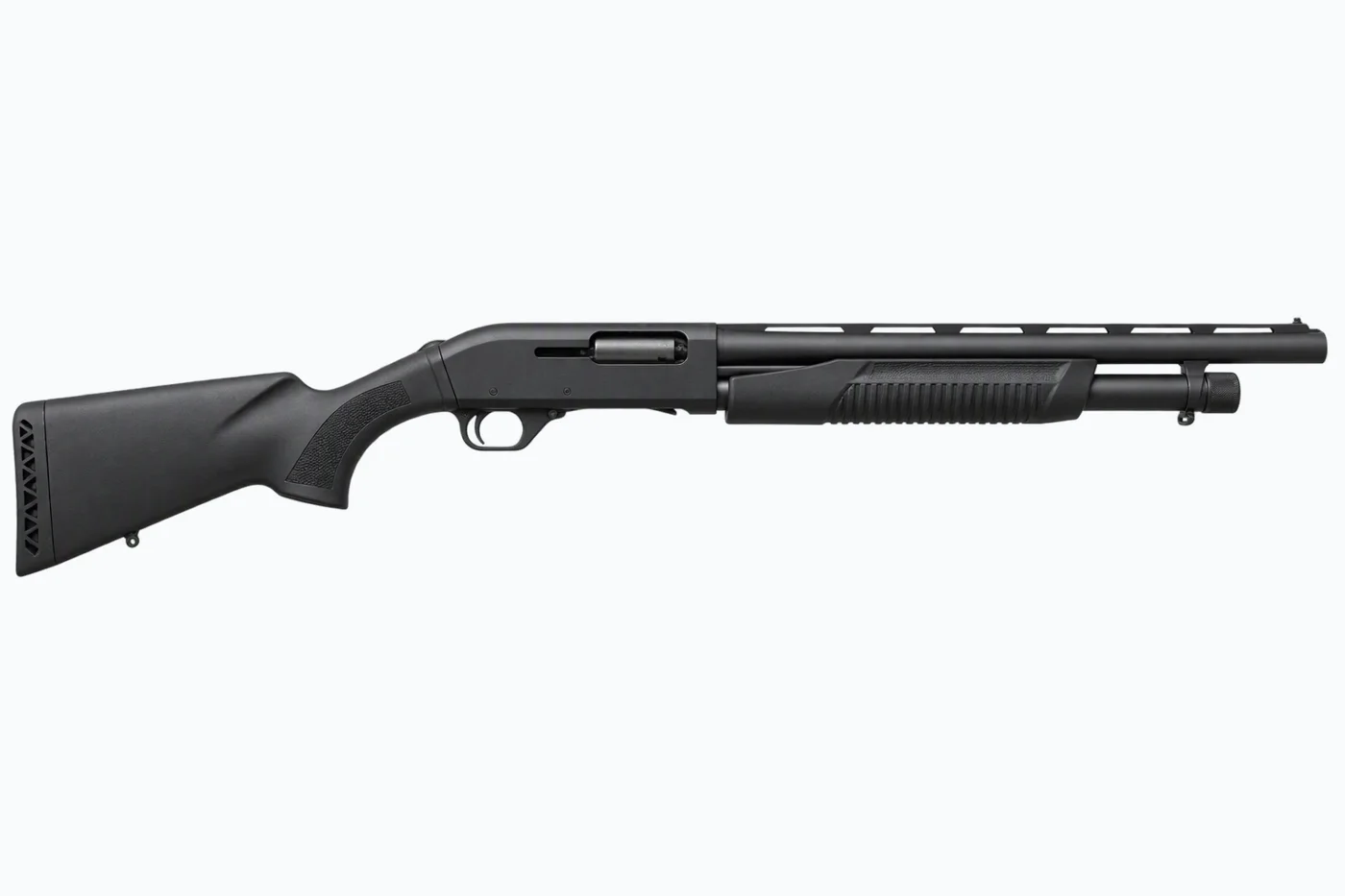
Akkar Churchill 612
Pump action · 12 Gauge
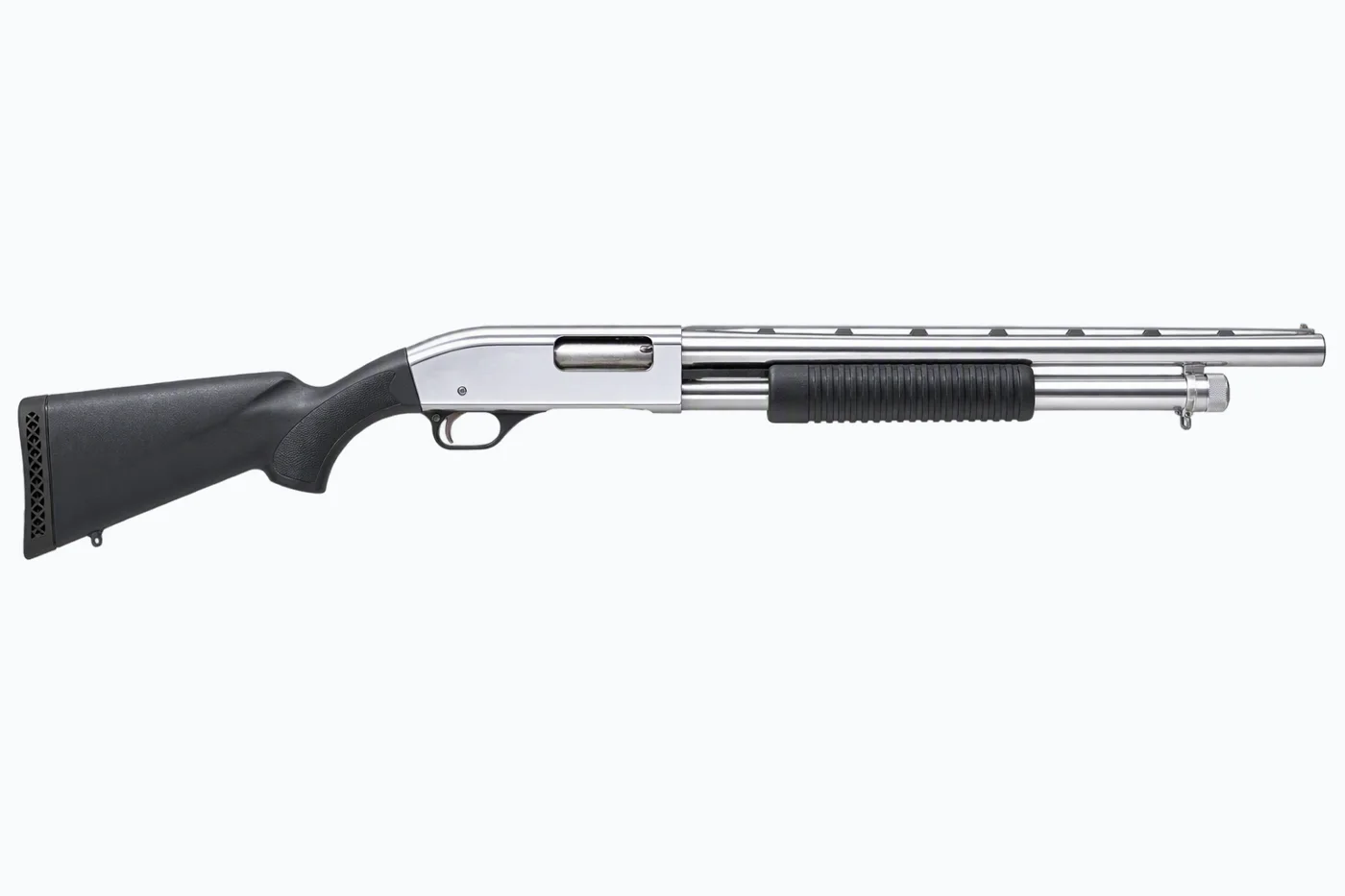
Armscor Meriva 3-in-1
Pump action · 12 Gauge
Baikal IZH-81
Pump action · 12 Gauge
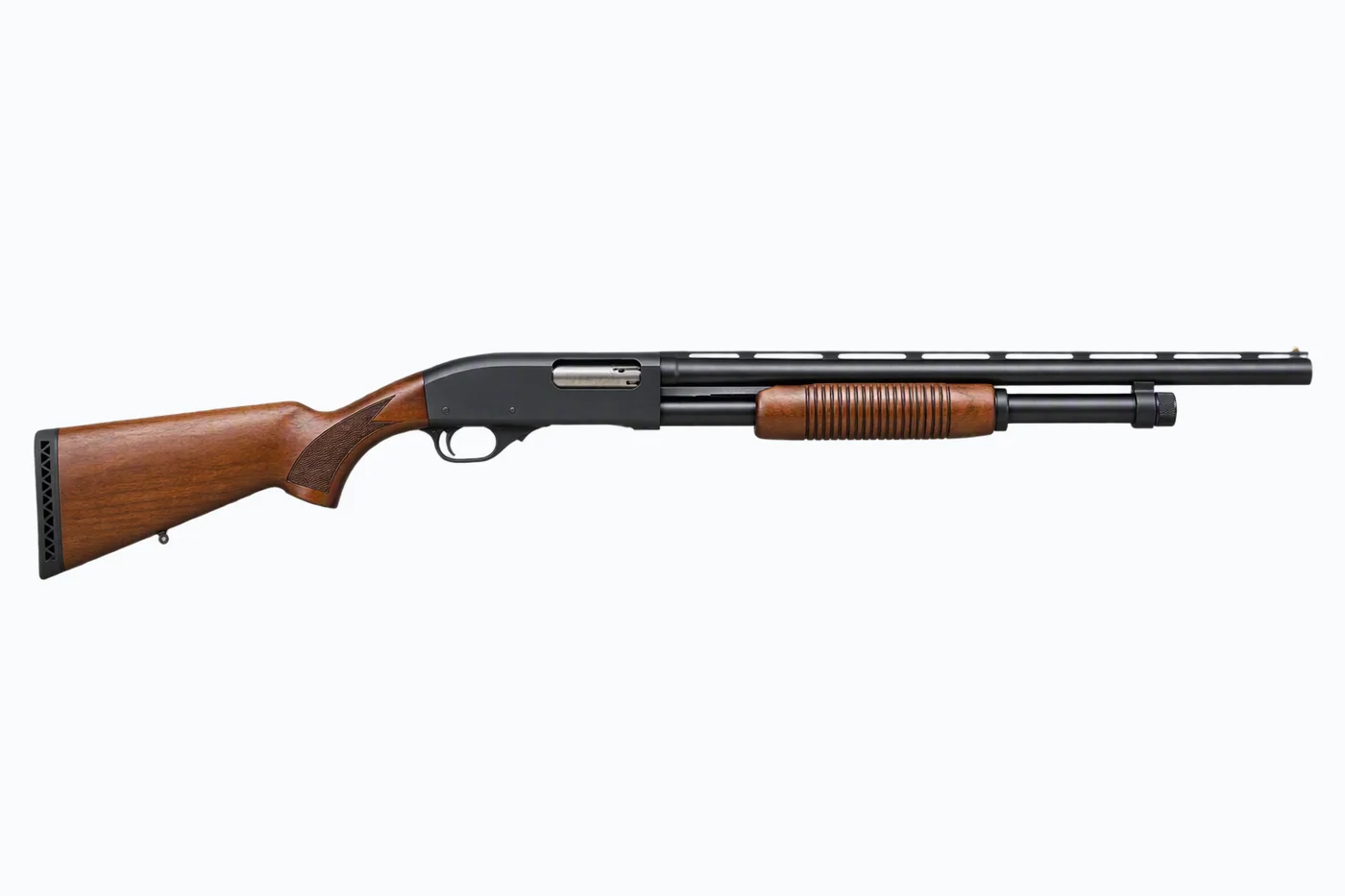
Baikal MP-133
Pump action · 12 Gauge
Baikal MP-135
Pump action · 12 Gauge
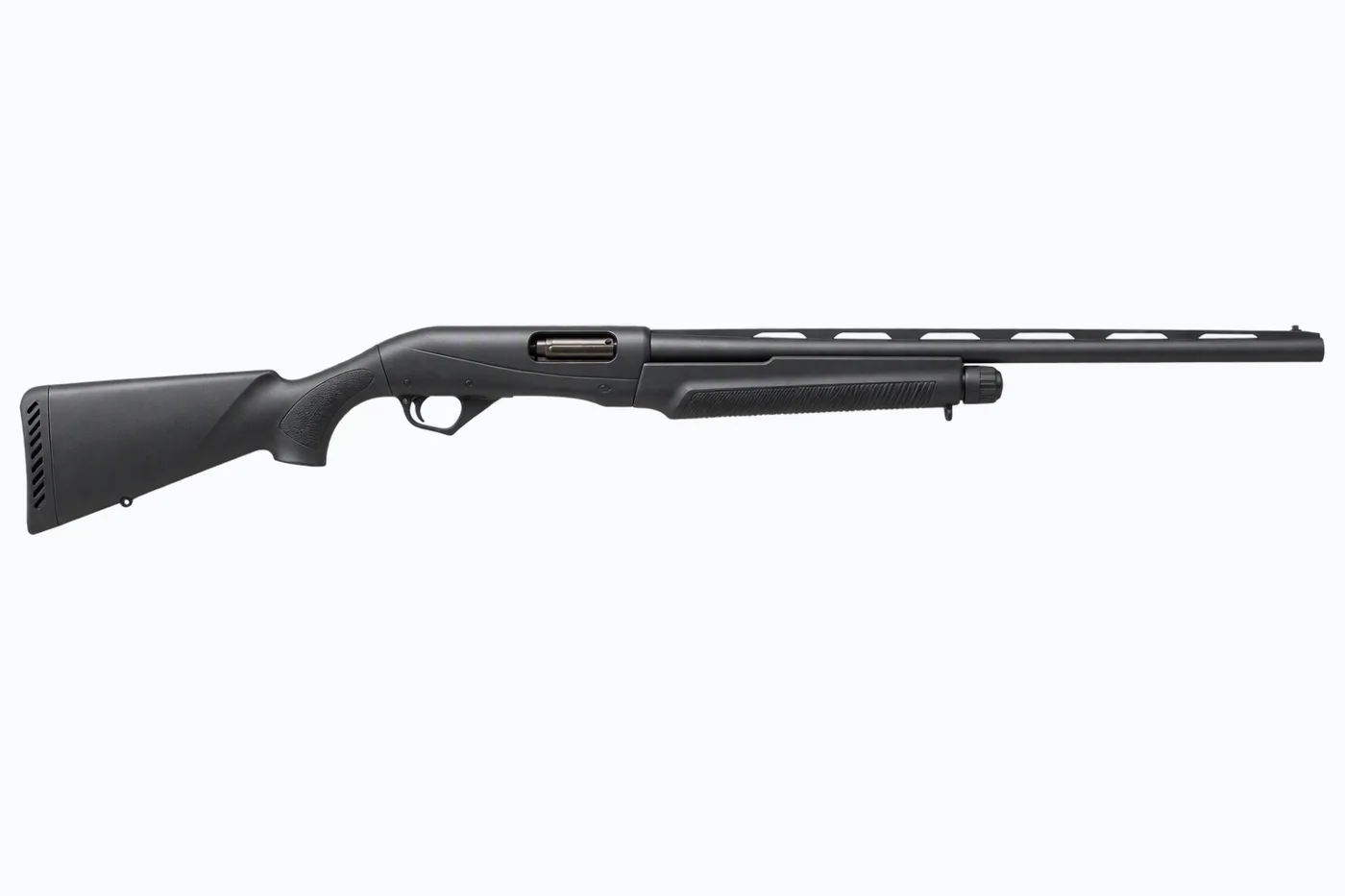
Benelli Nova
Pump action · 12 Gauge
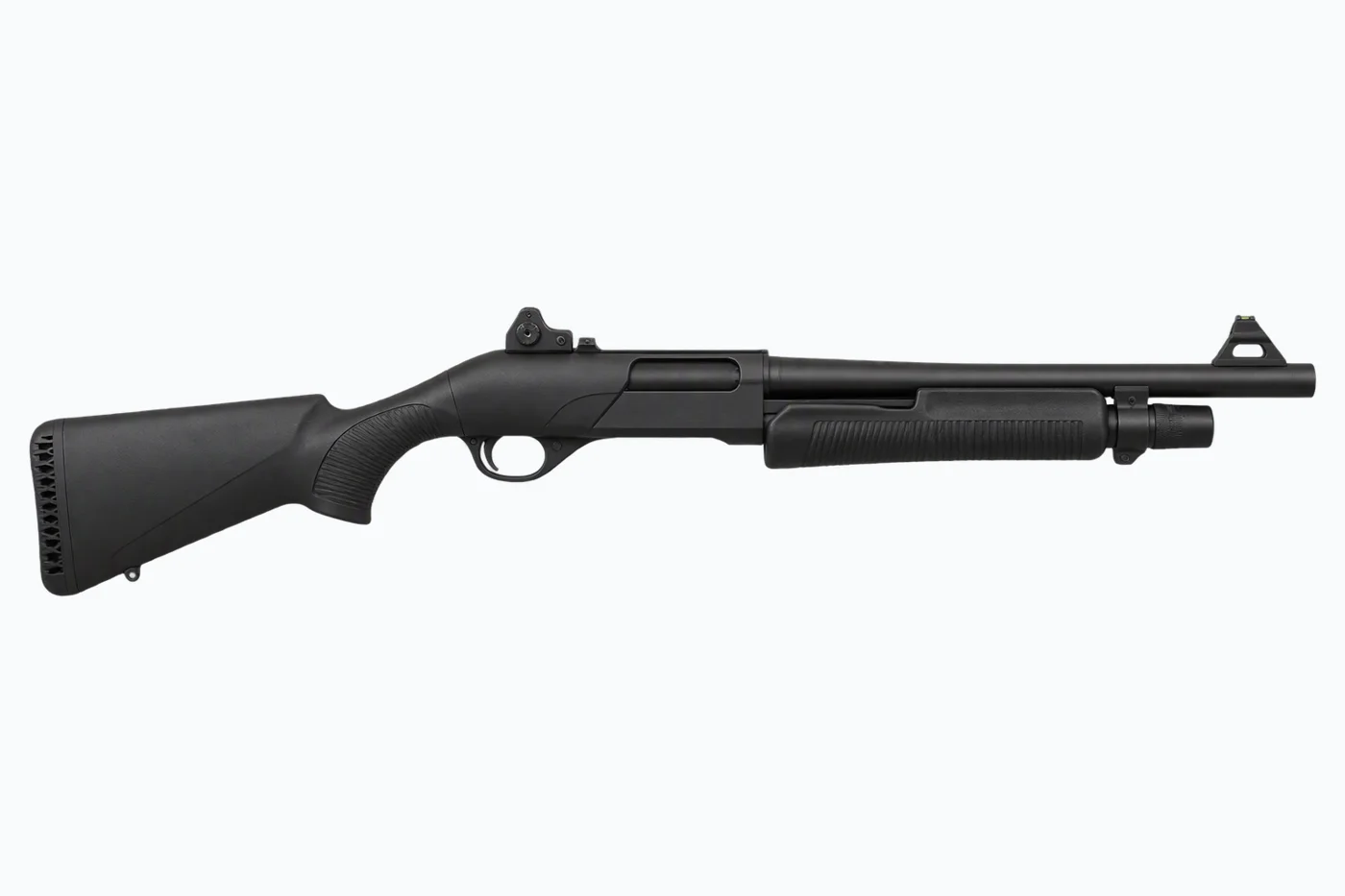
Benelli Nova Tactical
Pump action · 12 Gauge
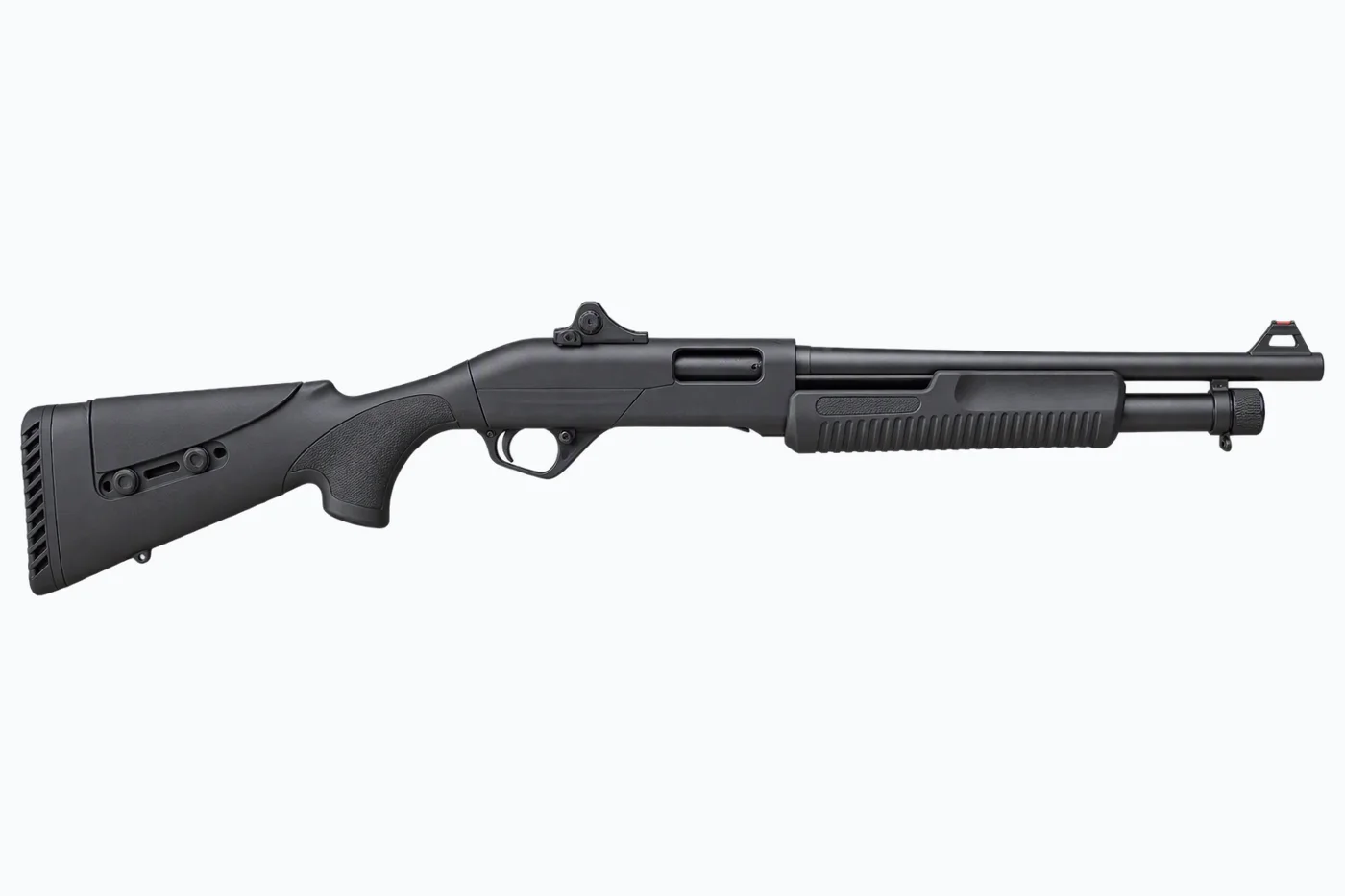
Benelli SuperNova Tactical
Pump action · 12 Gauge