
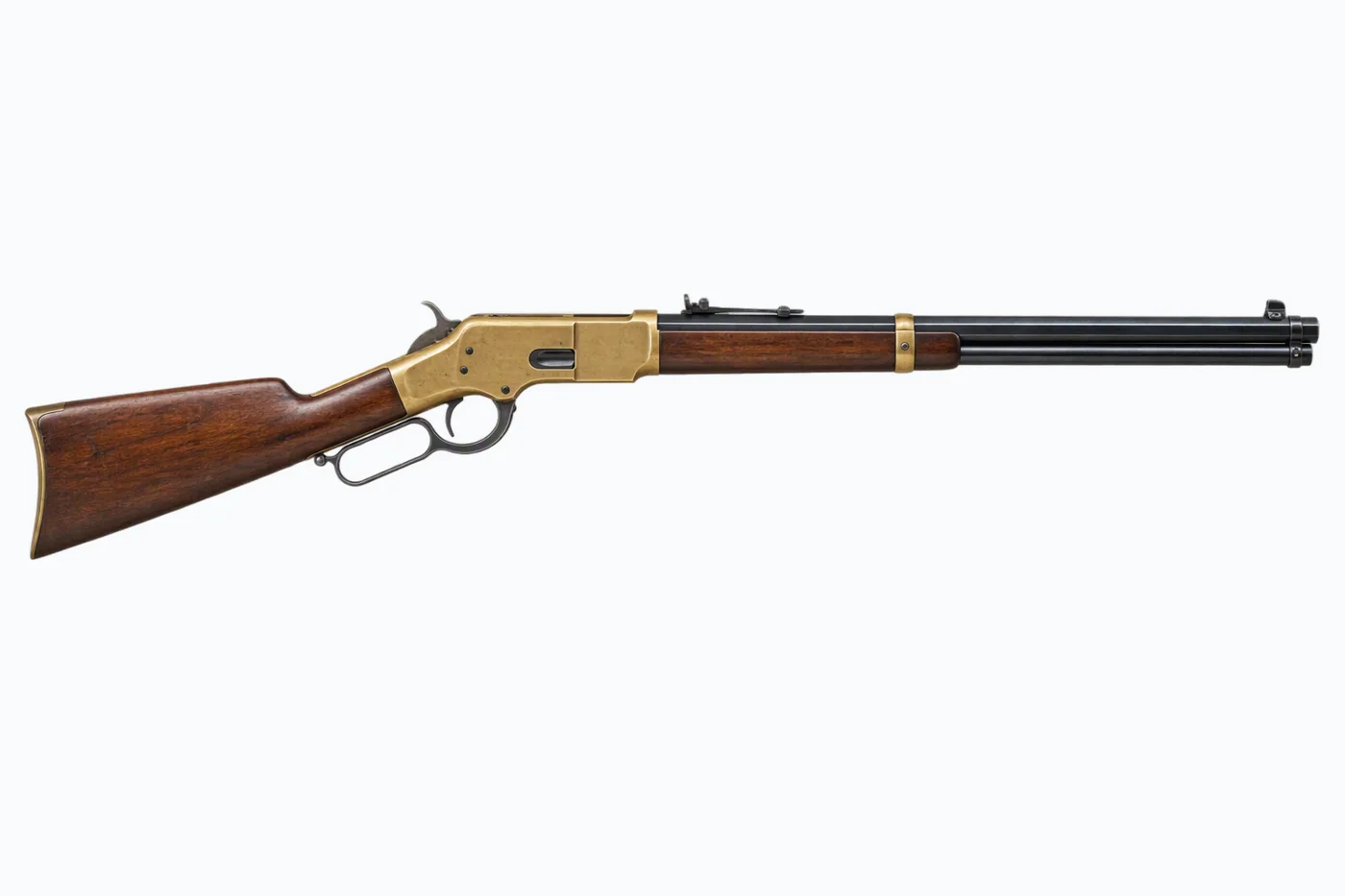
Winchester · Rifle
Winchester Model 1866
Lever action · .44 Henry Rimfire · introduced 1866
Also known as Yellow Boy, Model 66, Winchester '66
About the Winchester Model 1866
The Winchester Model 1866 is a lever-action repeating rifle manufactured by the Winchester Repeating Arms Company of New Haven, Connecticut, and was the first firearm to bear the Winchester name. Evolved directly from the earlier Henry rifle of 1860 by the newly reorganized company under Oliver Winchester, the Model 1866 retained the Henry's toggle-link lever action and brass gunmetal receiver while incorporating shop foreman Nelson King's patented improvements: a sealed receiver with a side-mounted spring-loaded loading gate (the 'King's Improvement') and a separate wooden forearm. These changes allowed the rifle to be loaded from the side without inverting the firearm, kept debris out of the magazine tube, and eliminated the Henry's tendency to scorch the shooter's supporting hand. Chambered in .44 Henry rimfire and fed from a 17-round tubular magazine on the rifle, 13 rounds on the carbine, and 17 rounds on the musket, the Model 1866 offered unprecedented sustained firepower for its era. The distinctive golden-yellow gunmetal receiver earned it the enduring nickname 'Yellow Boy' and made it a favorite among frontiersmen, lawmen, Native American warriors, and foreign armies alike. Approximately 170,000 were produced between 1866 and 1898 across rifle, carbine, and musket configurations, and it secured Winchester's reputation as the premier maker of American repeating rifles.
Nicknamed the 'Yellow Boy' for its golden gunmetal receiver, the Model 1866 became notorious at the 1867 Wagon Box Fight and the 1877 Battle of the Little Bighorn, where Lakota and Cheyenne warriors armed with Yellow Boys outgunned Custer's single-shot cavalry carbines. In 1877 during the Russo-Turkish War, some 30,000 Ottoman soldiers wielding Model 1866 muskets held the siege of Plevna against the Russian Imperial Army, inflicting catastrophic losses and directly inspiring Tsar Alexander II to begin modernizing the Russian army with repeating rifles.
Winchester Model 1866 specifications
General
- Type
- Rifle
- Action
- Lever action
- Firing mechanism
- Hammer-fired
- Trigger
- Single stage
- Calibres
- .44 Henry Rimfire, .44 Winchester Centerfire
- Magazine capacity
- 17 rounds
- Magazine
- Tubular magazine
Dimensions
- Barrel length
- 610 mm (24.0 in)
- Overall length
- 1125 mm (44.3 in)
- Weight (empty)
- 4.20 kg (9.26 lb)
Barrel
- Rifling twist
- 1:36 in (914 mm)
- Rifling
- Right hand
- Grooves
- 6
Materials
- Barrel
- Steel
- Receiver / frame
- Brass
- Stock
- Wood
- Finish
- blued
Performance
- Muzzle velocity (typical)
- 347 m/s (1138 fps)
- Muzzle energy (typical)
- 818 J (603 ft·lb)
- Effective range
- 100 m
History
- Introduced
- 1866
- Discontinued
- 1899
- Production status
- Discontinued
- Country of origin
- US
- Designer
- Nelson King
Available calibres
Features
- Lever action
- Tubular magazine
- Brass receiver
- Kings improvement loading gate
- Side loading gate
- Closed receiver
- Wooden forearm
- Graduated rear sight
- Fixed post front sight
- Walnut stock
- Crescent metal buttplate
- Octagonal or round barrel options
Safety
- Half cock safety
Specifications are based on the standard rifle configuration with a 24-inch octagonal barrel in .44 Henry rimfire. Carbine variant used a 20-inch round barrel with 13-round magazine; musket variant used a 27-inch round barrel with 17-round magazine and accepted a socket bayonet. The receiver was made from an alloy originally referred to as 'gunmetal' - a bronze/brass alloy with a yellow-gold color - which gave the rifle its 'Yellow Boy' nickname. A limited number of late-production rifles were chambered in .44 Winchester Centerfire after 1873 to keep the design viable. Modern reproductions are produced by Uberti, Chiappa, Cimarron Firearms, Taylor's & Co., and Winchester/Miroku.
Similar models
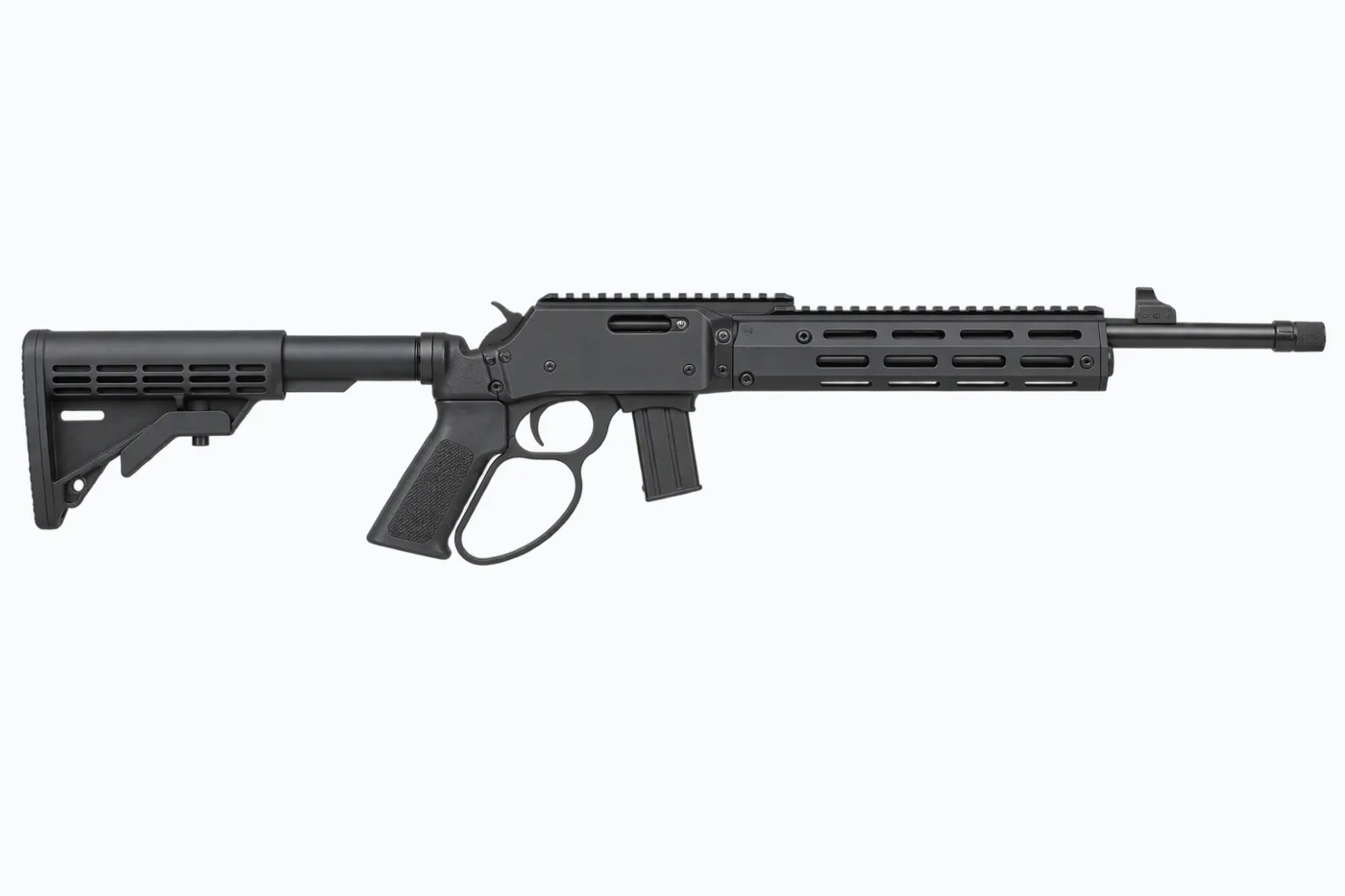
Armscor TM22 Lever Action
Lever action · .22 Long Rifle
Ballard No. 1 Hunter's Rifle
Falling block · .44 Long Rimfire
Ballard No. 3 Gallery Rifle
Falling block · .22 Long Rifle
Ballard No. 4 Perfection
Falling block · .38-55 Winchester
Ballard No. 5 Pacific
Falling block · .45-70 Government
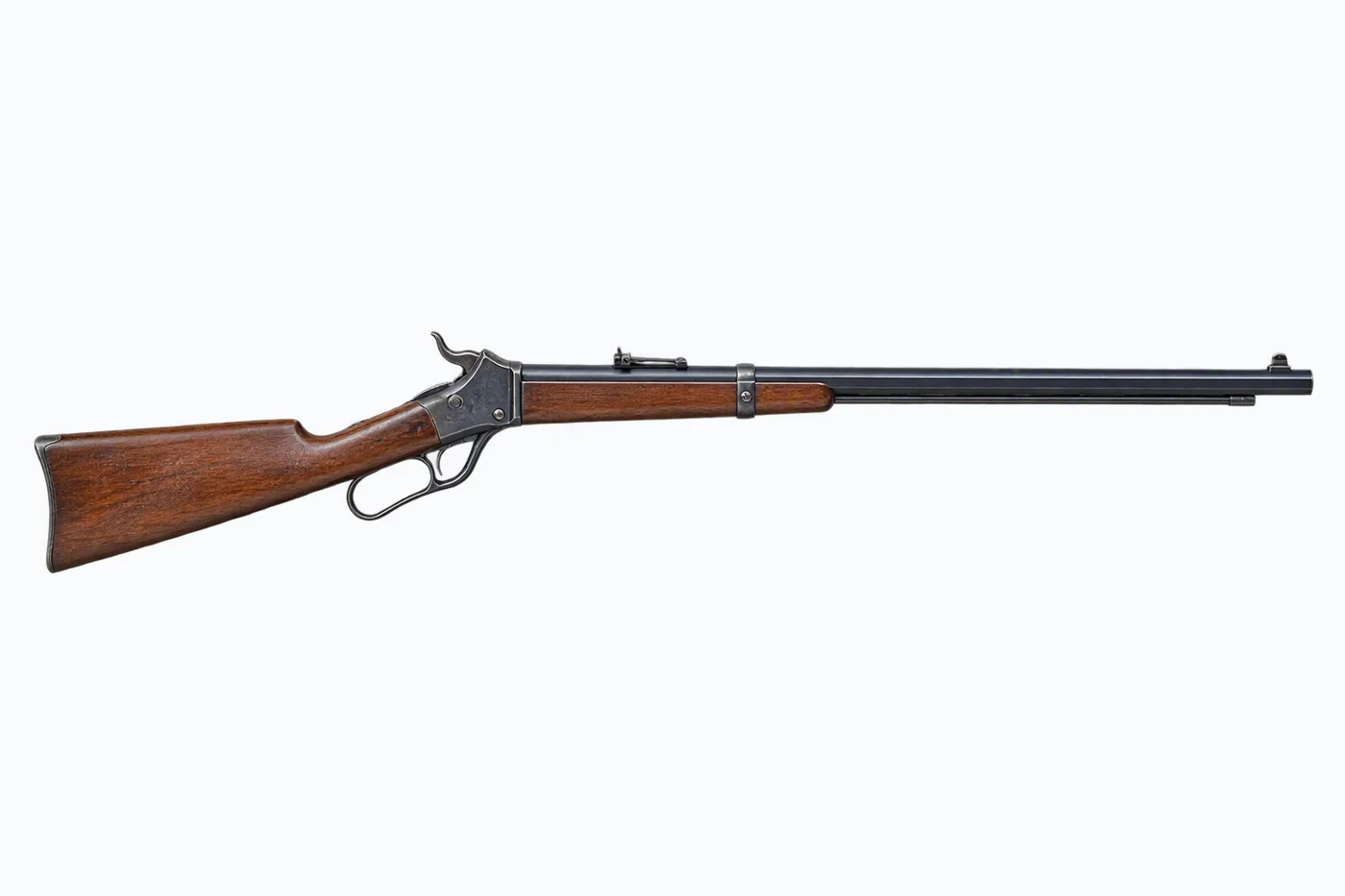
Ballard Rifle
Falling block · .44 Long Rimfire