
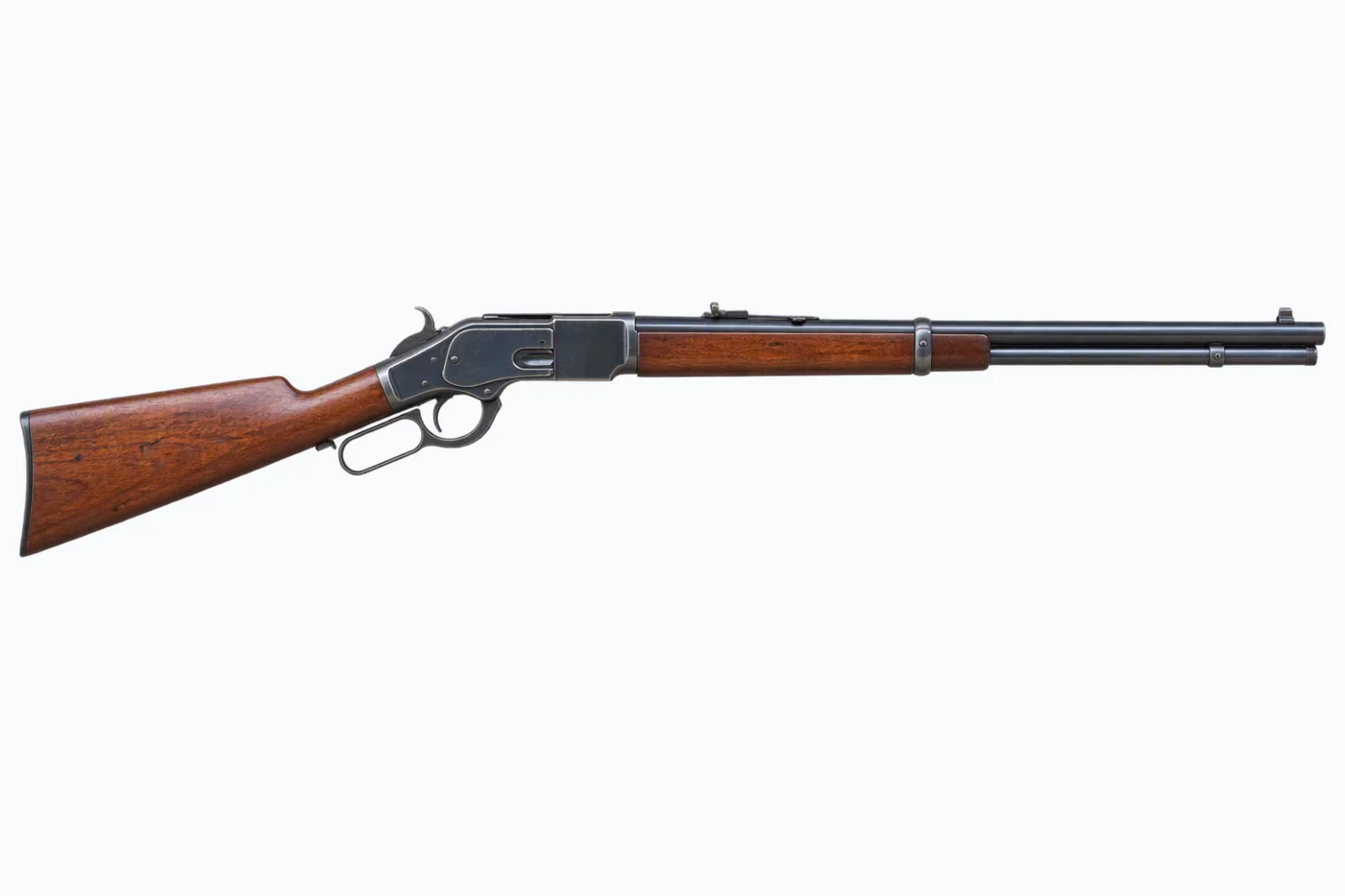
Winchester · Rifle
Winchester Model 1873
Lever action · .44-40 Winchester · introduced 1873
Also known as Model 73, Winchester '73, The Gun That Won the West
About the Winchester Model 1873
The Winchester Model 1873 is a lever-action repeating rifle chambered primarily in .44-40 Winchester and produced by the Winchester Repeating Arms Company of New Haven, Connecticut from 1873 to 1923. Marketed as 'The Gun That Won the West,' the Model 1873 was a major evolution of the earlier Model 1866, replacing its bronze 'Yellow Boy' frame with a robust iron (later steel) receiver and introducing a new centerfire cartridge family that could be shared between the rifle and period revolvers such as the Colt Single Action Army. Fed by a full-length tubular magazine beneath the octagonal or round barrel, the rifle could hold 15 rounds in the standard 24-inch configuration, offering an unprecedented volume of fire for its era. Produced in rifle (24-inch), carbine (20-inch), and military musket (30-inch) variants, the Model 1873 armed lawmen, outlaws, ranchers, Texas Rangers, Native American warriors, and frontier settlers alike. Over 720,000 units were manufactured across 50 years of production, making it the most iconic and commercially successful lever-action rifle of the American frontier era and a defining symbol of the Old West.
Dubbed 'The Gun That Won the West,' the Model 1873 was carried by Billy the Kid, Buffalo Bill Cody, and Apache leader Geronimo, and archaeological evidence from the Battle of the Little Bighorn shows Lakota, Cheyenne, and Arapaho warriors used at least eight Model 1873s to overwhelm Custer's 7th Cavalry, whose single-shot Springfield carbines could not match the Winchester's 15-round firepower. In 2014, a weathered Model 1873 was discovered leaning against a juniper tree in Great Basin National Park, Nevada, where it had stood undisturbed for an estimated 132 years.
Winchester Model 1873 specifications
General
- Type
- Rifle
- Action
- Lever action
- Firing mechanism
- Hammer-fired
- Trigger
- Single stage
- Calibres
- .44-40 Winchester, .22 Rimfire, .32-20 Winchester, .38-40 Winchester
- Magazine capacity
- 15 rounds
- Magazine
- Tubular magazine
Dimensions
- Barrel length
- 610 mm (24.0 in)
- Overall length
- 1092 mm (43.0 in)
- Weight (empty)
- 4.30 kg (9.48 lb)
Barrel
- Rifling twist
- 1:36 in (914 mm)
- Rifling
- Right hand
- Grooves
- 6
Materials
- Barrel
- Steel
- Receiver / frame
- Steel
- Stock
- Wood
- Finish
- blued
Performance
- Muzzle velocity (typical)
- 379 m/s (1243 fps)
- Muzzle energy (typical)
- 930 J (686 ft·lb)
- Effective range
- 91 m
History
- Introduced
- 1873
- Discontinued
- 1923
- Production status
- Discontinued
- Country of origin
- US
- Designer
- Benjamin Tyler Henry / Nelson King
Available calibres
Features
- Lever action
- Tubular magazine
- Steel receiver
- Sliding dust cover
- Side loading gate
- Graduated rear sight
- Fixed post front sight
- Walnut stock
- Crescent metal buttplate
- Pistol cartridge chambering
- Octagonal or round barrel options
Safety
- Half cock safety
Specifications are based on the standard rifle configuration with a 24-inch octagonal barrel in .44-40 Winchester. Carbine (20-inch round barrel, ~3290 g, 10-round magazine) and musket (30-inch barrel, ~4300 g, 17-round magazine) variants existed. Original production ran from 1873 to 1923; the model was reintroduced in the 21st century by Miroku of Japan under the Winchester brand, with modern reproductions also made by Uberti, Pedersoli, Cimarron, Taylor's & Co., and others. The receiver was originally iron but transitioned to steel in 1884. The .22 rimfire variant was introduced in 1884 and was the first lever-action rifle Winchester produced in .22 caliber. A small number of exceptionally accurate rifles were sold as 'One of One Thousand' and 'One of One Hundred' models at premium prices.
Similar models
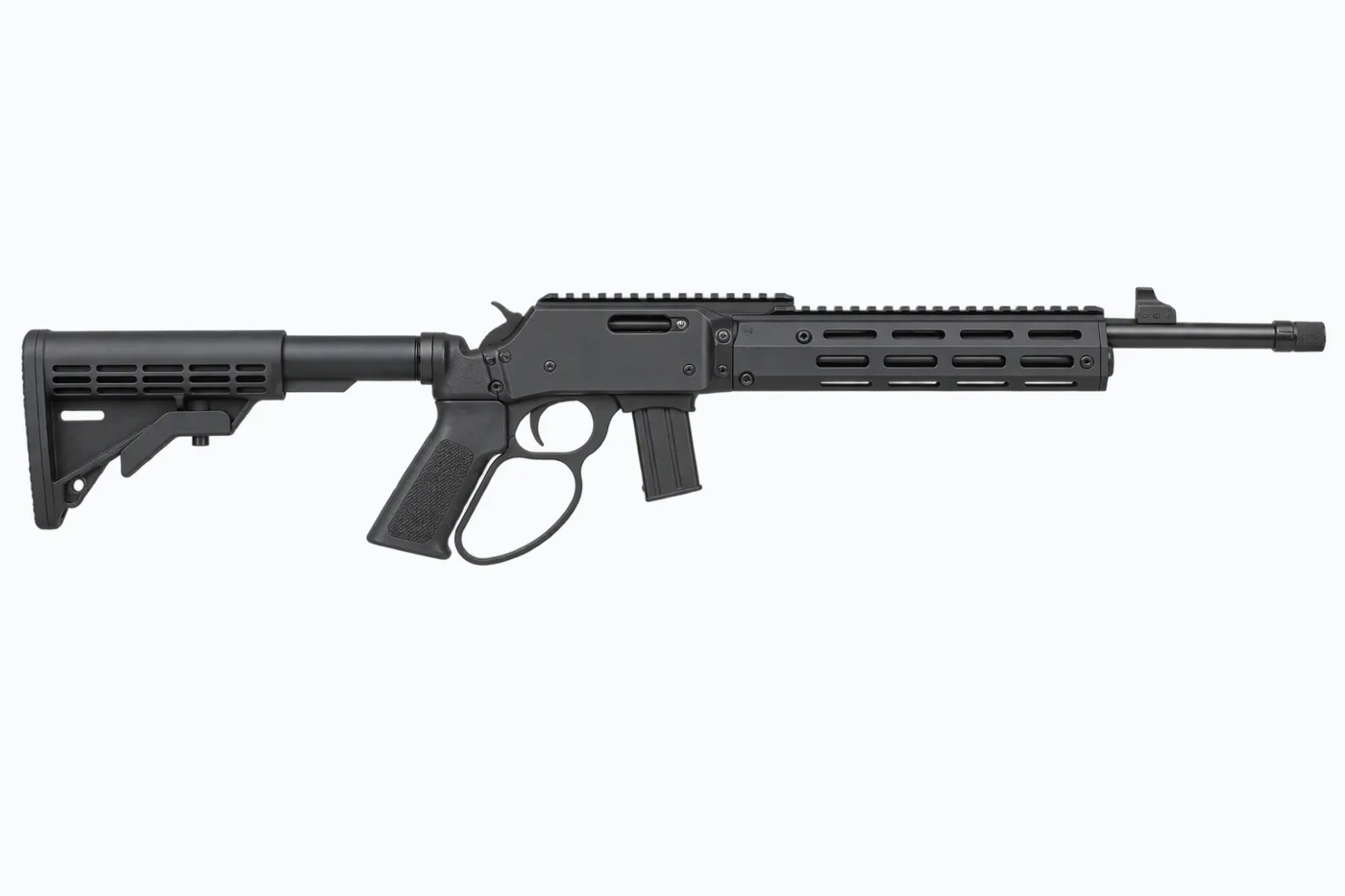
Armscor TM22 Lever Action
Lever action · .22 Long Rifle
Ballard No. 1 Hunter's Rifle
Falling block · .44 Long Rimfire
Ballard No. 1½ Hunter's Rifle
Falling block · .45-70 Government
Ballard No. 3 Gallery Rifle
Falling block · .22 Long Rifle
Ballard No. 4 Perfection
Falling block · .38-55 Winchester
Ballard No. 5 Pacific
Falling block · .45-70 Government
Ballard No. 6½ Rigby
Falling block · .40-65 Ballard