
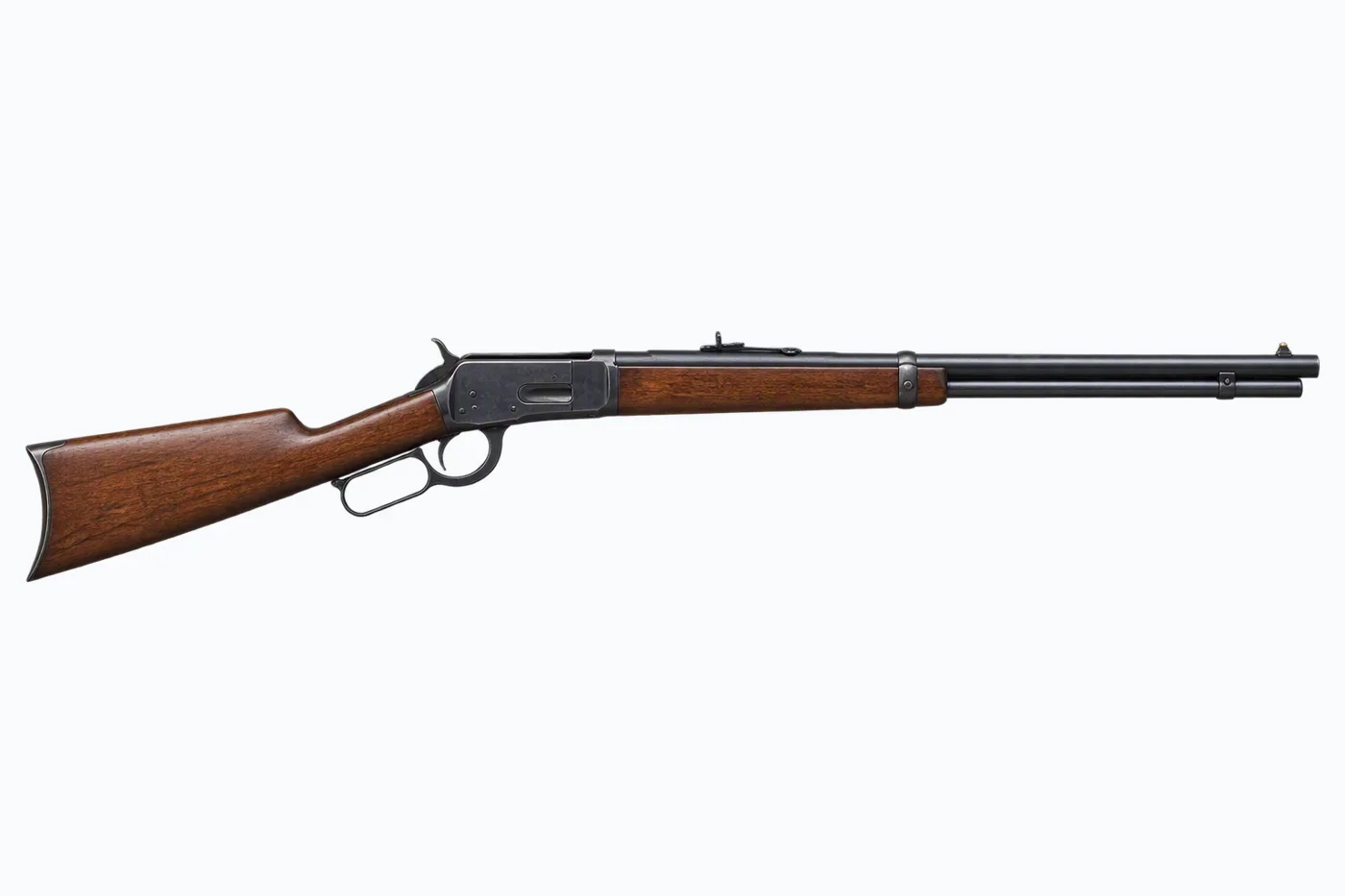
Winchester · Rifle
Winchester Model 1886
Lever action · .45-70 Government · introduced 1886
Also known as Winchester 1886, Model 1886, Win 1886
About the Winchester Model 1886
The Winchester Model 1886 is a lever-action repeating rifle designed by John Moses Browning and introduced by Winchester Repeating Arms Company in 1886. It was the first Winchester lever-action rifle strong enough to chamber full-power, large-caliber black powder cartridges such as the .45-70 Government, .45-90 WCF, and the massive .50-110 Express. Browning's breakthrough was a pair of vertically sliding locking bolts that engaged directly with the receiver walls, abandoning the toggle-link system of earlier Henry and Winchester designs and producing what is widely regarded as one of the strongest, smoothest lever actions ever made. Offered in no fewer than ten chamberings and in rifle, carbine, and musket configurations with barrels from 20 to 36 inches, the Model 1886 established the Winchester name in serious big-game hunting and became the direct engineering ancestor of the Models 1892, 1894, and 1895.
The Model 1886 was John Moses Browning's first rifle design sold to Winchester and the product of his October 14, 1884 U.S. Patent No. 306,577. Legend holds that Winchester superintendent T.G. Bennett traveled to Ogden, Utah to buy the design outright from the 21-year-old Browning, paying $50,000 for it - the beginning of one of the most productive partnerships in American firearms history. Theodore Roosevelt famously ordered a custom .45-90 Model 1886 Extra Light Weight in 1887, specifying a half-magazine and shotgun buttplate to reduce the standard rifle's nine-pound heft for packing on horseback. Roosevelt carried the rifle on his Dakota Territory hunts and helped cement the '86 as the definitive American big-bore lever gun. Gun writers have long called the Model 1886 'the strongest lever action ever built,' and it paved the way for Browning's subsequent masterpieces - the Models 1892, 1894, and 1895.
Winchester Model 1886 specifications
General
- Type
- Rifle
- Action
- Lever action
- Firing mechanism
- Hammer-fired
- Trigger
- Single stage
- Calibres
- .45-70 Government, .33 Winchester, .40-82 Winchester, .45-90 Winchester, .50-110 Winchester
- Magazine capacity
- 8 rounds
- Magazine
- Tubular magazine
Dimensions
- Barrel length
- 660 mm (26.0 in)
- Overall length
- 1130 mm (44.5 in)
- Weight (empty)
- 4.08 kg (9.00 lb)
Barrel
- Rifling twist
- 1:20 in (508 mm)
- Rifling
- Right hand
- Grooves
- 6
Materials
- Barrel
- Steel
- Receiver / frame
- Steel
- Stock
- Walnut
- Finish
- blued
Performance
- Muzzle velocity (typical)
- 411 m/s (1348 fps)
- Muzzle energy (typical)
- 2217 J (1635 ft·lb)
- Effective range
- 150 m
History
- Introduced
- 1886
- Discontinued
- 1935
- Production status
- Discontinued
- Country of origin
- US
- Designer
- John Moses Browning
Available calibres
Features
- Lever action
- Tubular magazine
- Dual vertical locking bolts
- Top ejection
- Exposed hammer
- Crescent steel buttplate
- Buckhorn rear sight
- Bead front sight
- Walnut stock
- Octagonal or round barrel
Safety
- Half cock safety
Original production ran from 1886 to 1935 with 159,441 units made. Specifications listed are for the most common variant: the standard 26-inch octagon-barreled sporting rifle chambered in .45-70 Government, which weighed approximately 9 pounds (4082g) with a full-length tubular magazine holding 8 rounds. Carbines featured 22-inch barrels and are scarcer. The musket variant is extremely rare, with only about 350 produced. A reproduction Model 1886 has been manufactured for Winchester by Miroku in Japan since the 1990s. The action was originally designed for black powder but proved strong enough to handle early smokeless powder loadings, leading to the .33 WCF chambering in 1903.
Similar models
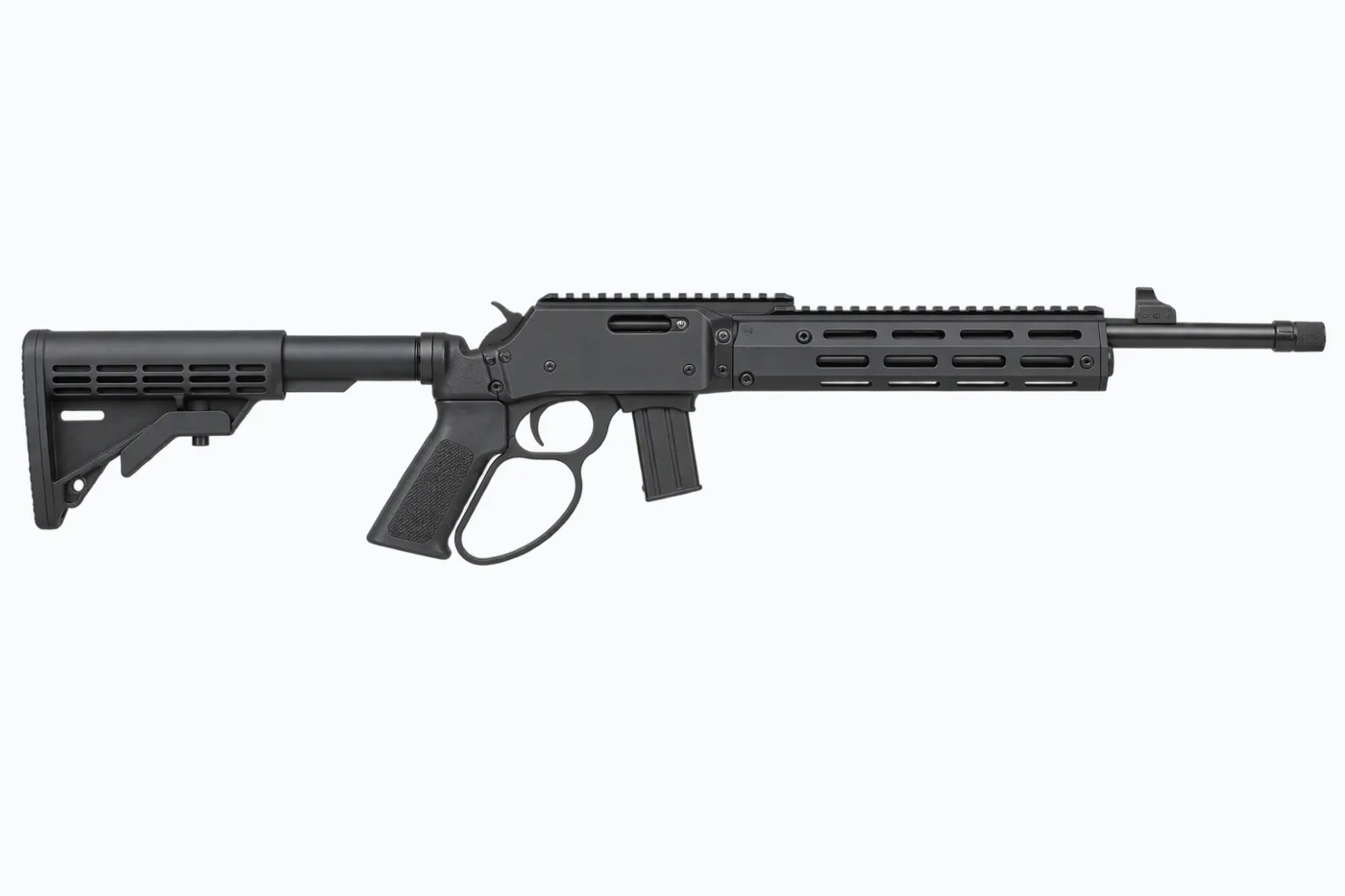
Armscor TM22 Lever Action
Lever action · .22 Long Rifle
Ballard No. 1 Hunter's Rifle
Falling block · .44 Long Rimfire
Ballard No. 1½ Hunter's Rifle
Falling block · .45-70 Government
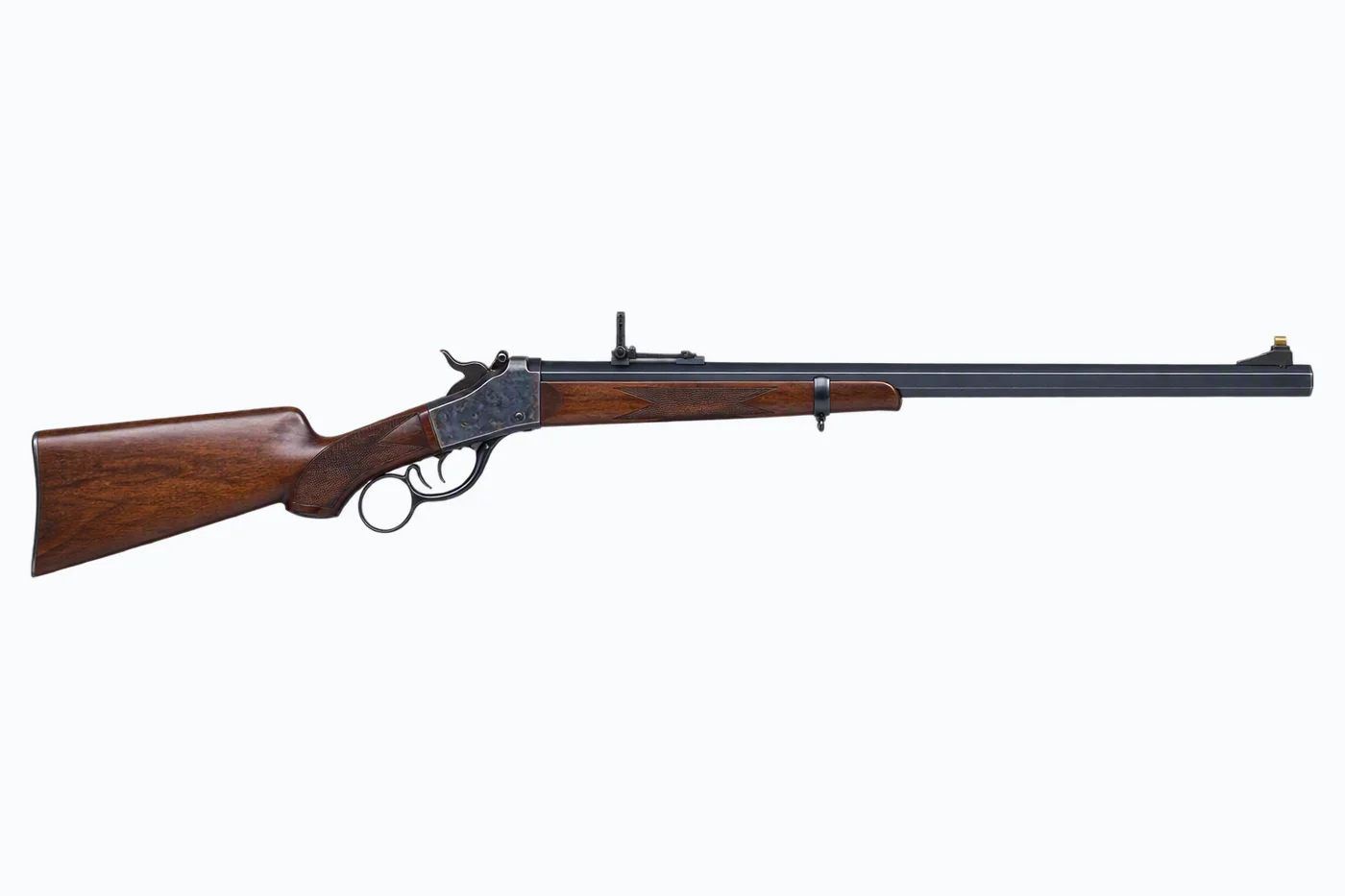
Ballard No. 5 Pacific
Falling block · .45-70 Government
Ballard No. 5 Pacific
Falling block · .45-70 Government